

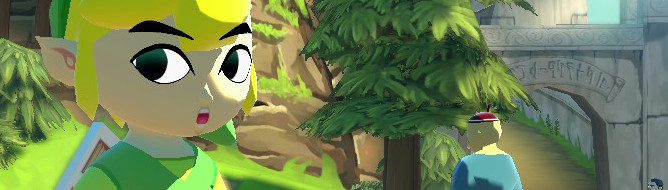
Though the GameCube library for Nintendo`s current or upcoming platforms might seem sparse, The Legend of Zelda: The Wind Waker stands out as an undeniable gem. Link`s audacious seafaring adventure, released over two decades ago, was initially a bold and imaginative departure. While it saw an HD remaster for the Wii U, its re-release now marks the first time the original version has been available in over 20 years. Upon revisiting it today, the most captivating aspect is its profound sense of boundless freedom, a quality that profoundly hinted at the open-world direction the Zelda series would later fully embrace with Breath of the Wild and Tears of the Kingdom.
Today, The Wind Waker is celebrated as a classic, but its 2003 debut was met with significant division. Its bright, cartoon-like graphics especially sparked debate, a sharp contrast to the realistic 2000 Zelda tech demo. Yet, the finished game proved less of a radical departure than first perceived. Beneath its distinctive exterior, The Wind Waker adheres to core series conventions. The adventure`s foundational structure largely mirrors the formula established by A Link to the Past and refined by Ocarina of Time. Nevertheless, the game cleverly introduces pivotal alterations within this familiar framework, completely transforming the overall experience.
The most striking innovation is its setting. The Wind Waker abandons Hyrule`s familiar rolling fields and misty forests for the vast, blue expanse of the Great Sea, dotted with sun-drenched islands. The core journey remains recognizable: players traverse the world`s distant reaches, gathering three magical artifacts, acquiring the Master Sword, and navigating several dungeons before facing Ganon. However, this captivating high-seas environment cultivates an unparalleled sense of mystique and adventure, unlike any prior Zelda installment.
Within this expansive seascape, we can discern the nascent elements of the open-world design that would eventually define the series. Previous Zelda overworlds, though similarly large and perhaps more diverse, always felt somewhat deliberately constructed. Ocarina of Time`s Hyrule, impressive for its time in 1998, functioned more like a carefully maintained garden than a truly open world, guiding Link through a predetermined sequence of distinct, interconnected areas. While it offered some freedom to explore for optional treasures and rewards, progression in the main quest was strictly controlled by requiring players to reach specific story points or acquire particular items before accessing certain regions of Hyrule.

The Great Sea, in contrast, lacks such restrictive barriers. While the initial phase of Link`s journey is carefully structured, with plot-driven guidance between islands, the game significantly expands after the Master Sword is acquired. A clear narrative still propels players toward the ultimate confrontation with Ganon, and many islands encountered on this path require specific tools for full exploration. Nevertheless, players gain substantial freedom to roam as they wish. Once familiar with the rhythm of sea travel—charting courses, controlling the wind, raising sails, and embarking—the game liberates them, encouraging unbridled curiosity and leisurely exploration of the expansive Great Sea.
This design renders The Wind Waker far more open-ended than its predecessors, a characteristic the developers masterfully leveraged. They incentivized players to stray from the primary storyline through numerous compelling side activities. Beyond the main quest, exploration is largely driven by overheard whispers and rumors—tales of a priceless treasure on a frozen island, sightings of an eccentric traveling merchant near a secluded islet, or a cursed ship that haunts the seas during specific lunar phases.
Instead of directly guiding players to these points, The Wind Waker stimulates curiosity with ambiguous hints and anecdotal information, mirroring how Breath of the Wild would later approach its side quests. These aren`t just tasks to complete, but rather intriguing mysteries awaiting investigation. While many of these narrative threads eventually become crucial for game completion, players never feel overtly pushed along a fixed path. Instead, they pursue these leads out of genuine intrigue, fostering a profound sense of discovery as they unravel the origins of these rumors.
This boundless freedom infuses every voyage across the Great Sea with a profound sense of wonder and adventure, particularly in the initial stages. Aside from a few pre-charted islands, the sea map begins entirely blank, requiring players to progressively fill it in, sector by sector, as they navigate between destinations. Far from being a chore, this mapping process amplifies the feeling of being a true explorer. Venturing into unknown waters and uncovering unexpected sights beyond the horizon stands as one of the game`s most exhilarating features. Furthermore, the cryptic insights gleaned from the enigmatic fish-men inhabiting the depths enrich the world`s lore.
The numerous islands dispersed across the sea contribute to this immersive experience. Almost every map square features a landmass, ranging from tiny reefs to vibrant settlements. While some merely serve as scenic backdrops, many conceal treasures or self-contained challenges, such as intricate puzzles or enemy gauntlets. The unpredictability of what awaits upon arrival makes each island feel like a unique discovery. These islands clearly served as inspiration for Skyward Sword`s floating sky islands and, more prominently, Tears of the Kingdom`s aerial archipelago, both of which similarly entice players with engaging trials and hidden riches.

While The Wind Waker`s overall impact on future titles is most evident in its broad design principles, it also subtly foreshadowed Breath of the Wild in several other aspects. Although its distinctive exaggerated cartoon art style was primarily seen again in only a few handheld titles and spin-offs, cel-shading itself became integral to the series` evolving visual identity. This allowed for significantly enhanced expressiveness, particularly evident in enemy behaviors.
Prior to The Wind Waker, Zelda`s adversaries typically exhibited rudimentary behaviors, patrolling fixed routes and single-mindedly chasing Link. However, in developing Wind Waker, designers leveraged the GameCube`s enhanced processing power to render foes not just more intelligent, but also more emotionally expressive. Enemies in this game react in unexpected and often amusing ways, imbuing them with a greater sense of vitality. The fleeting look of panic on a Moblin`s face as it drops its weapon mid-combat and frantically searches for a replacement remains a captivating detail. Nintendo would expand upon this dynamic enemy behavior, leading to the highly expressive and resourceful monsters found across the landscapes of Breath of the Wild and Tears of the Kingdom.
Despite its ambitious concepts, The Wind Waker didn`t always fully realize its potential. While the Great Sea is undeniably captivating, it could sometimes feel empty and monotonous, with extended periods of uneventful travel occasionally detracting from the sense of adventure. Nintendo eventually returned the series to the familiar, lush landscapes of Hyrule, making the Great Sea a unique anomaly among Zelda settings, only revisited in the DS sequel Phantom Hourglass. Nevertheless, its pioneering spirit of freeform exploration lives on in the expansive, open-world design of Breath of the Wild`s Hyrule, which successfully recaptures the same sense of wonder and and discovery that defined Link`s unforgettable high-seas odyssey.