

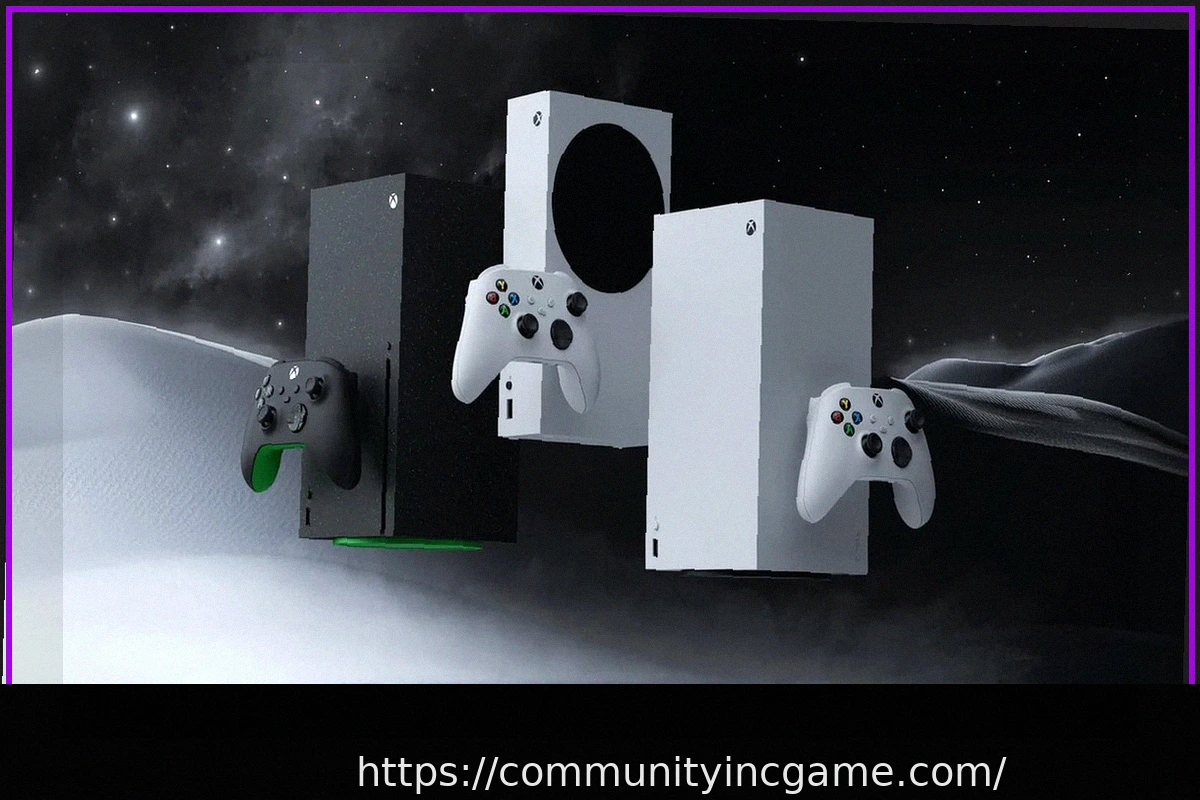
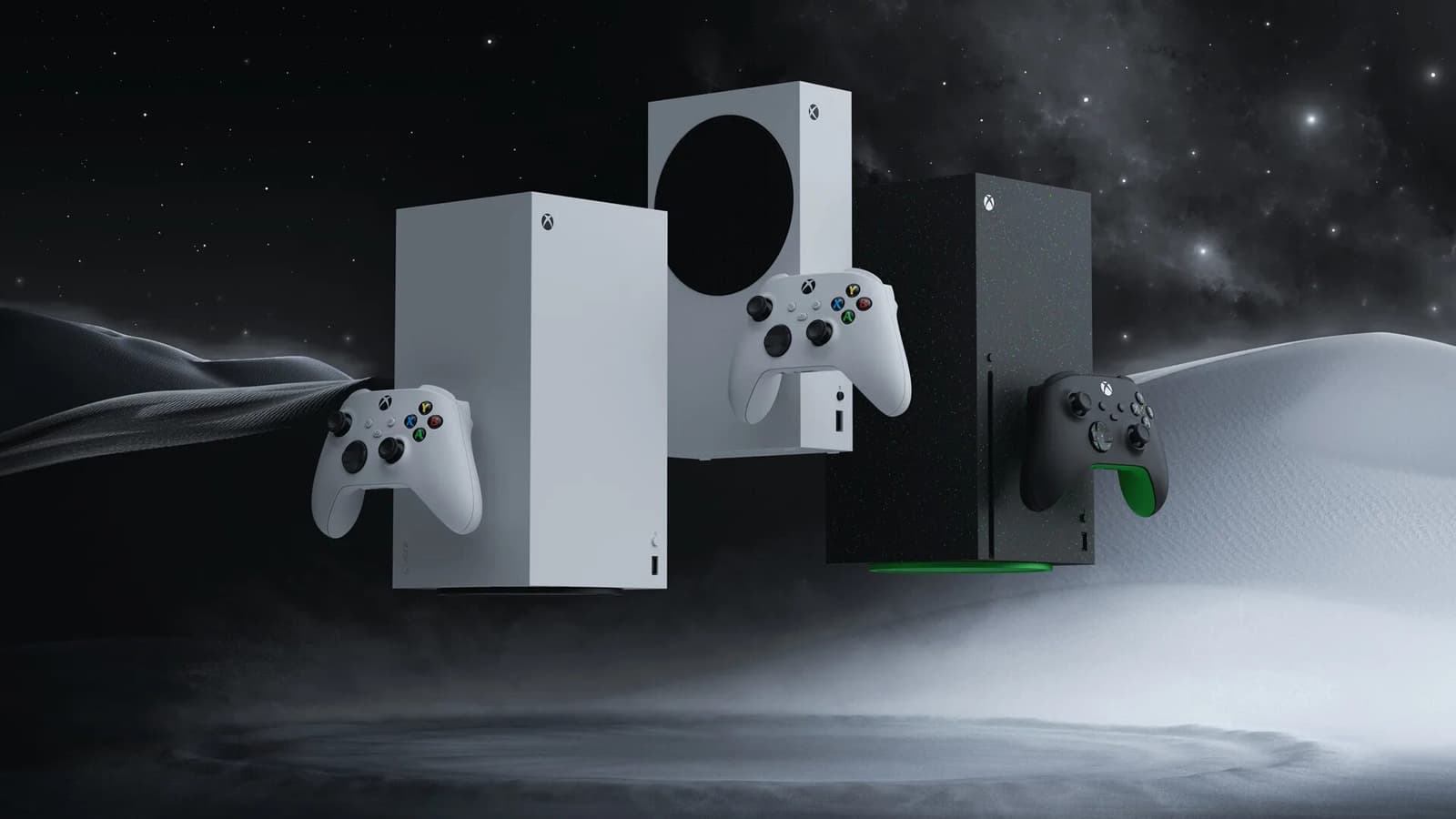
This comprehensive guide explores Microsoft’s past console generations, examining the pros and cons of the original Xbox, Xbox 360, and Xbox One from a modern gamer’s perspective. It includes current secondary market prices, advice on modified devices, and a time-tested selection of top games for each platform.
The Original Xbox
Overview
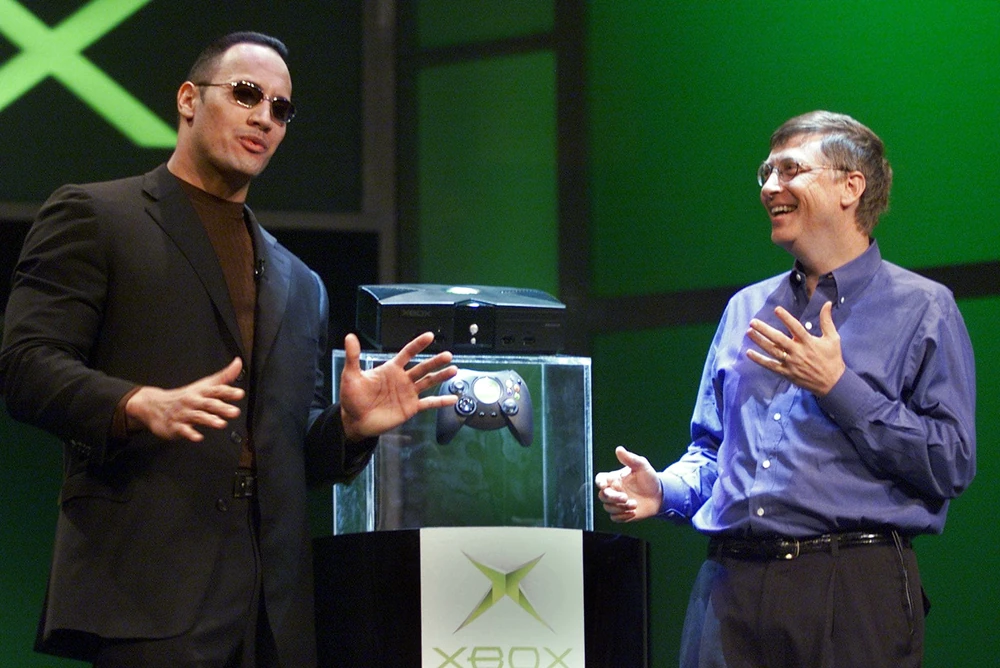
Initially, Microsoft didn’t plan to create its own hardware, instead negotiating with Japanese companies like SEGA and Sony to develop software. However, circumstances led the corporation to develop its own console platform.
The Xbox console was released in late 2001, belonging to the sixth generation of consoles and competing with the PlayStation 2 and Nintendo GameCube.
Microsoft ceased official support for the device in 2009, and on April 15, 2010, the console was permanently disconnected from the Xbox Live service.
Leveraging vast experience in PC software development, Microsoft opted for a familiar approach. Technically, the console was a specialized computer built around an Intel Pentium III processor (733 MHz) and a custom NVIDIA NV2A graphics chip, based on the GeForce 3 architecture. Its performance was estimated to be close to a GeForce 4 Ti. It featured 64 MB of unified DDR RAM. Notably, it was the first console to include a standard hard drive, and games were distributed on DVD media.
While the Xbox’s specifications weren’t revolutionary compared to PCs of its time, it was groundbreaking among its console competitors. It pioneered the integrated HDD, featured an Ethernet port for out-of-the-box online play, and established the Xbox Live infrastructure, setting new industry standards.
Should You Buy Now and What Does It Cost?
Production of the original console and its parts stopped long ago. Nevertheless, the device can still be found for sale. Both original units from the 2000s and refurbished versions are available. The latter are often modified by enthusiasts or workshops: adapted for modern environments, equipped with larger storage drives, and HDMI output for connection to contemporary TVs and monitors.
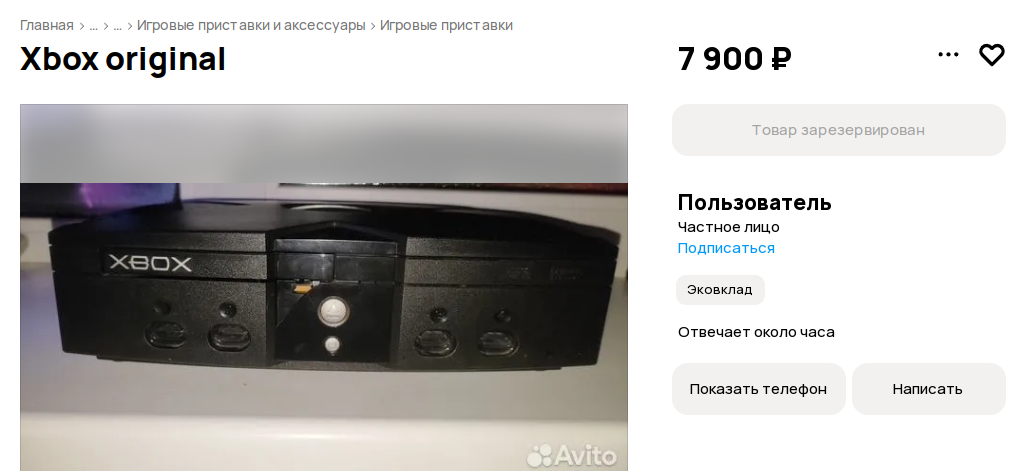
On the secondary market, original Xbox consoles are most common. They sometimes cost around 10,000 rubles without games, or 20,000–40,000 rubles with a good collection of licensed games included.
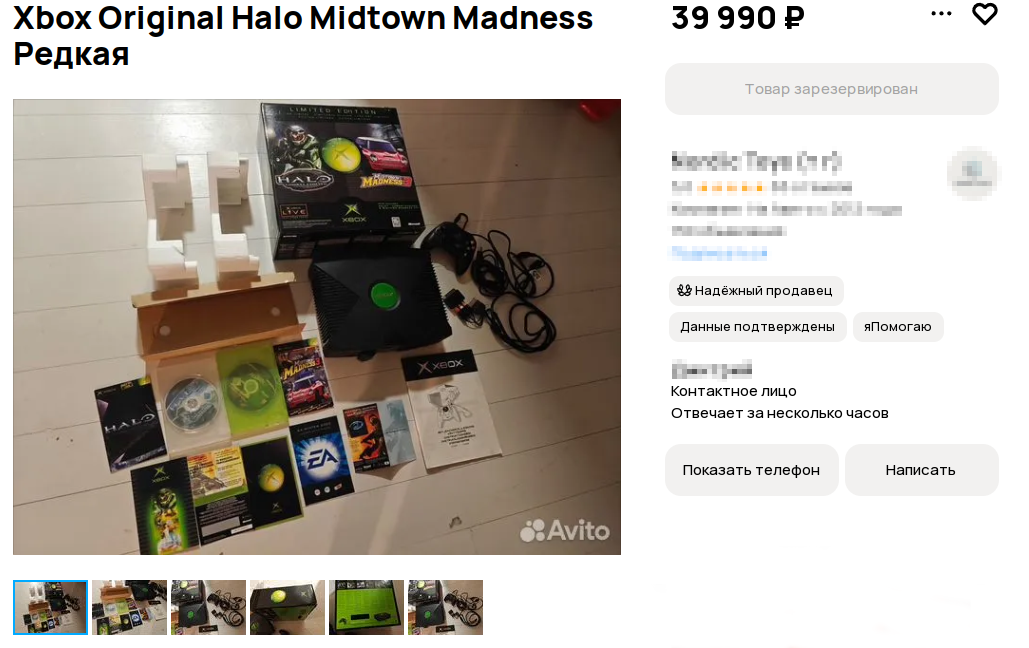
However, the secondary market also offers devices with collector’s value, whose prices can be quite shocking. Given that these consoles have long been out of production, units in excellent cosmetic and technical condition are expensive. Prices for rare editions can even exceed the cost of a new Xbox Series X, let alone a Series S.
The situation with refurbished or custom consoles is more interesting. These take original hardware as a base but significantly modify it: the DVD drive is often removed, a specialized dashboard like XBMC4Gamers is installed for games and multimedia, storage capacity is increased, loading hundreds of popular titles, and sometimes casing parts are updated. The legal status of such products is questionable. Moreover, these involve hardware modifications, so purchasing such a device is at your own risk.
Is it worth buying refurbished or original consoles?
Acquiring a first-generation Xbox is akin to buying a classic car, with similar cost considerations. There are few rational reasons to specifically chase an original: most iconic games have PC versions that often look as good or better, with rare exceptions. Some (but not all) titles are available via backward compatibility on Xbox One and Series X|S. Furthermore, these devices are at best over 15 years old, and their long-term reliability is not guaranteed. For the same price as an original Xbox on the secondary market, you could often find a well-maintained Xbox 360 or One S.
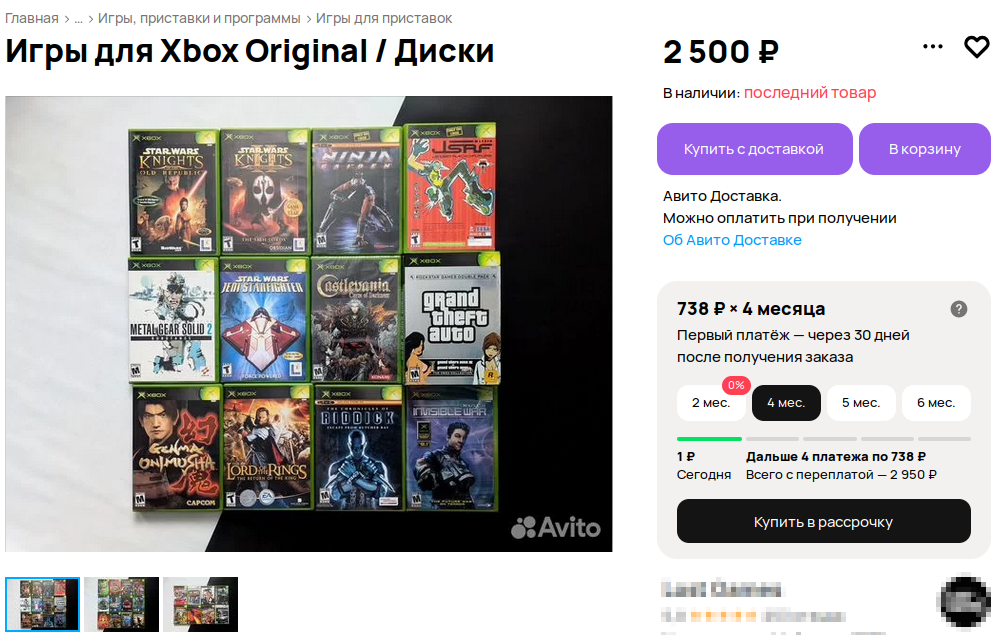
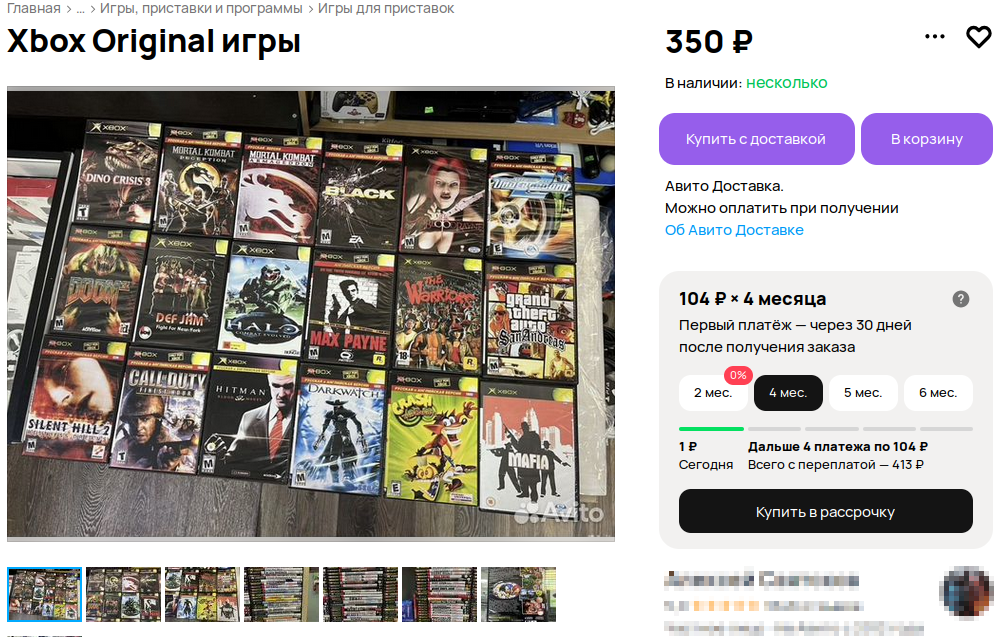
Licensed discs for the original Xbox are still available on the secondary market, but their prices can be surprising, sometimes varying by an order of magnitude. You might find discs for 200 rubles or 2000 rubles. However, a 200-ruble disc might not be licensed, so it’s best to confirm with the seller. Disk condition also requires careful attention.
Custom/refurbished devices present a unique situation. These consoles usually undergo maintenance, so you might not worry about the lifespan of the power supply or disc drive mechanics. However, extending the life of the CPU or GPU is not yet possible. Pre-installed games can reduce ownership costs, eliminating the need to buy titles separately. In areas without internet for Steam or Xbox Live, this might be the easiest way to play games, even if they aren’t new, and you won’t need to purchase discs. But it’s important to understand that such devices are often custom-made, with a corresponding price and are acquired at your own risk.
Games
A huge number of games were released for the first Xbox. The period from the 2000s to the mid-2010s was an era of mass game releases. Often, these weren’t as massive as today’s titles (though exceptions like San Andreas existed), but they offered a lot of fun: players weren’t stuck in an endless loop of live-service games but tried a variety of experiences. There were many “passable” games, but also a great number of excellent ones.
Compiling a top list of Xbox games is, on one hand, simple, and on the other, difficult. If one gets carried away, it wouldn’t be a top 10, but a top 100, which would require a separate article. A short list is inevitably subjective. Therefore, here’s a very subjective top 15 for the original Xbox. If you believe your favorite game was unfairly omitted, please share it in the comments so other readers can appreciate it.
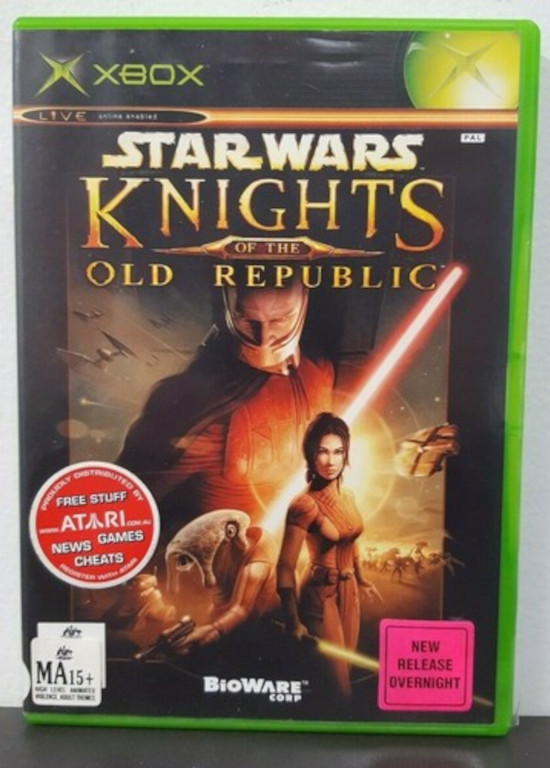
- Star Wars: Knights of the Old Republic (RPG). An unparalleled classic cRPG in the Star Wars universe. Its plot was considered canon before Disney’s acquisition of LucasArts. It still plays great on the original Xbox. There is no full remake; information about its development periodically surfaces, but no concrete details yet.
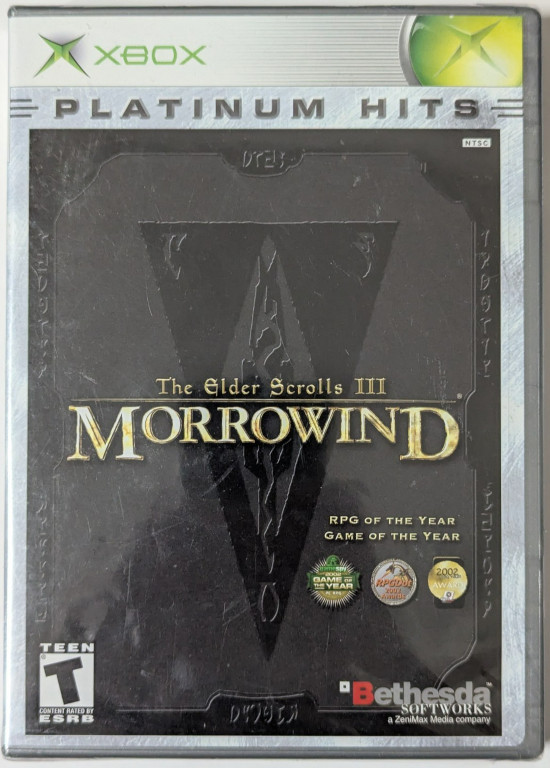
- The Elder Scrolls III: Morrowind (RPG). A living classic of the genre. While it might be overshadowed by TES IV and V, it was magnificent for its time. Featuring a deeply immersive world, freedom, and hundreds of quests, it was released only on PC and the original Xbox. While the PC version has mods, the classic, “pure” gameplay experience is found on the console.
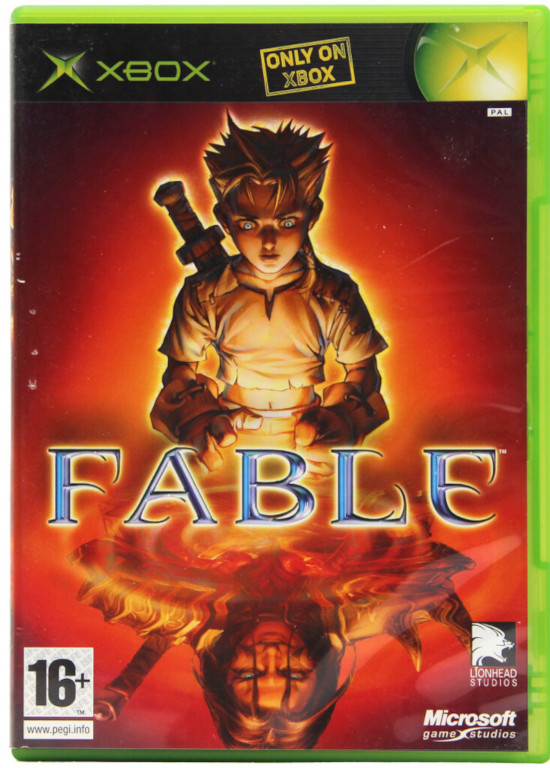
- Fable and the The Lost Chapters expansion (Action RPG). An Xbox showcase game. Although Peter Molyneux didn’t deliver on all promises, the final project was so atmospheric that players forgave everything. Its unique feature was character personalization: actions influenced appearance and reputation. Later versions (Anniversary) differ in nuances, and many prefer the original.
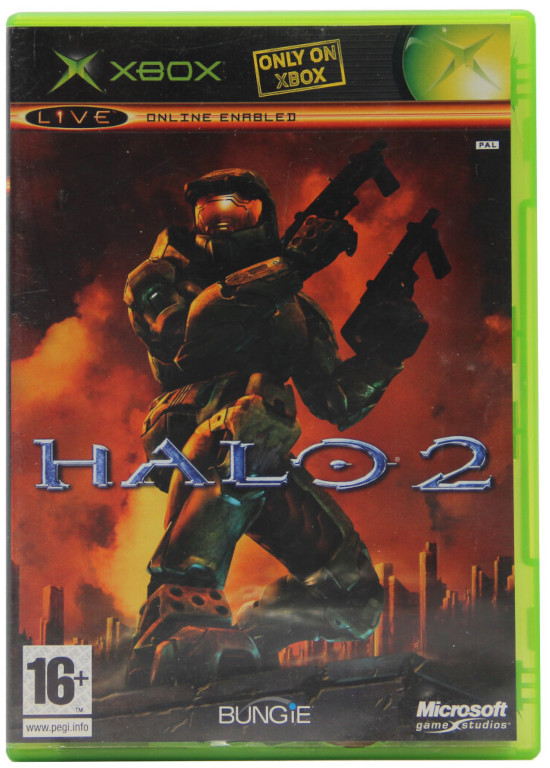
- Halo: Combat Evolved and Halo 2 (First-Person Shooter). For a long time, these were the benchmark for console shooters. The series didn’t achieve the same popularity on PC, but on Xbox, they are an absolute must-have. They remain excellent to play, despite dated graphics and the availability of remasters.
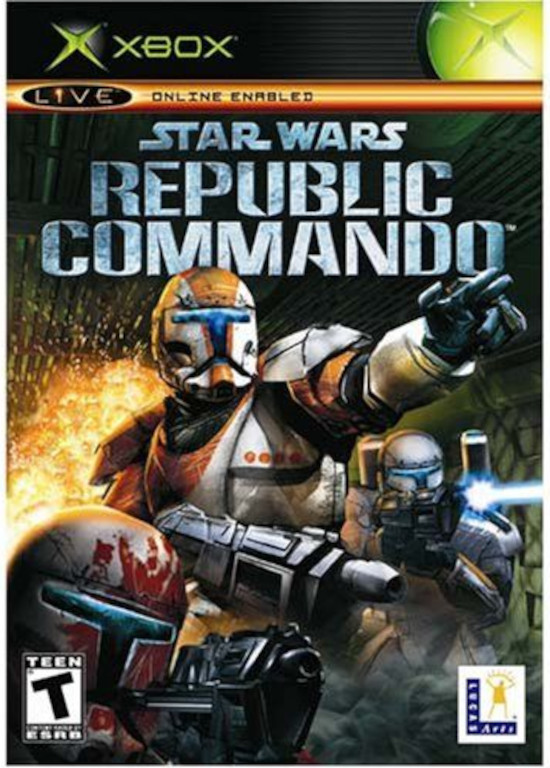
- Star Wars: Republic Commando (Tactical Shooter). A unique perspective on Star Wars without Jedi: you command a squad of clone commandos, issuing orders. It features a serious tone and sophisticated AI. Initially released on PC and Xbox, it is now also available on Switch and PS4. It achieved cult status for its atmosphere and gameplay.
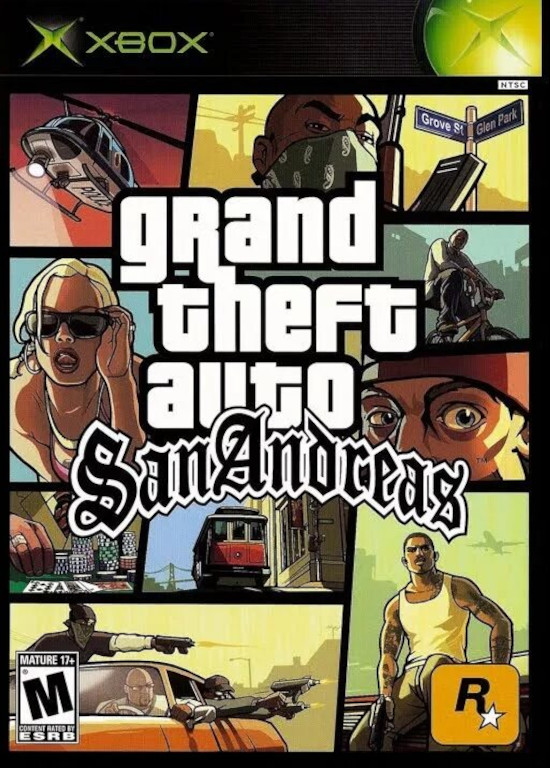
- Grand Theft Auto: Vice City / San Andreas (Action). A cultural phenomenon that defined the open-world genre. Vast worlds, freedom, legendary soundtracks. These games have been re-released numerous times, including a controversial modern remaster. However, the original on Xbox remains timeless in terms of gameplay and story—an essential addition to any collection.
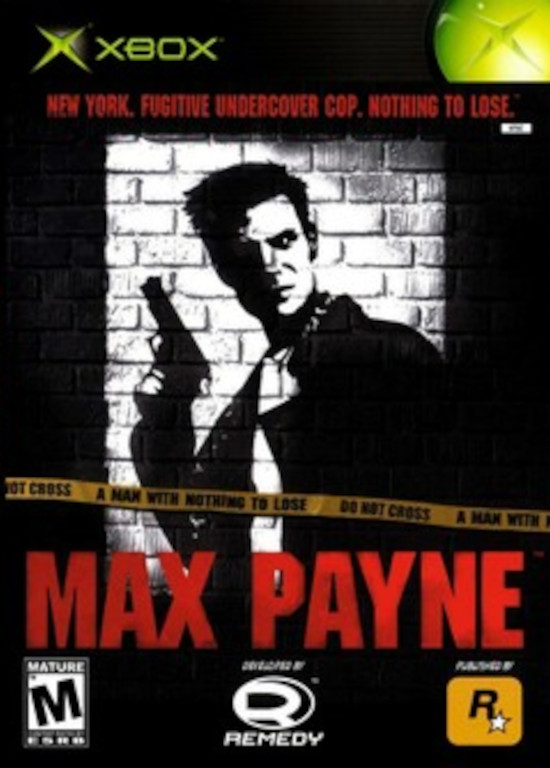
- Max Payne 1 and 2 (Noir Action). Stylish action games featuring bullet-time and a dark, noir-inspired plot. Both parts were released on many platforms, but they run flawlessly on the original Xbox—a must-have for any collection.
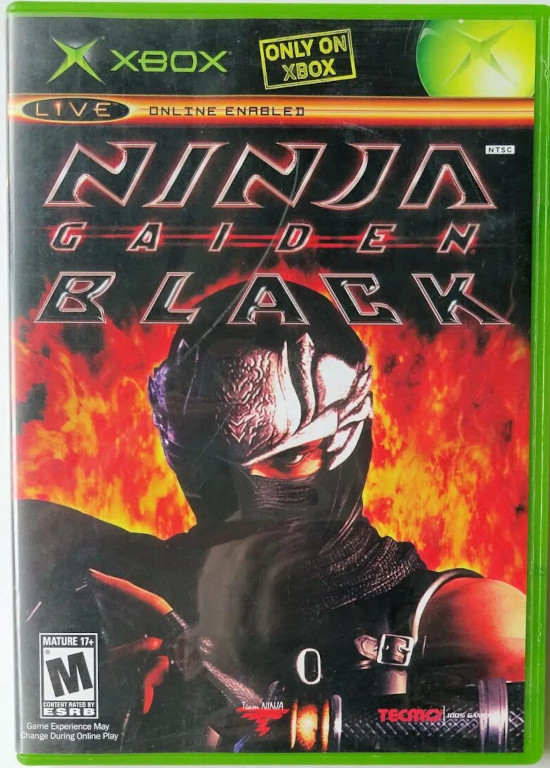
- Ninja Gaiden Black (Hardcore Action). The pinnacle of hack-and-slash games of its era. Known for its high difficulty, demanding mastery. While the game was ported to other platforms, the original was created specifically for Xbox. It is now available via backward compatibility, but on the original console, you’ll experience its true challenge.
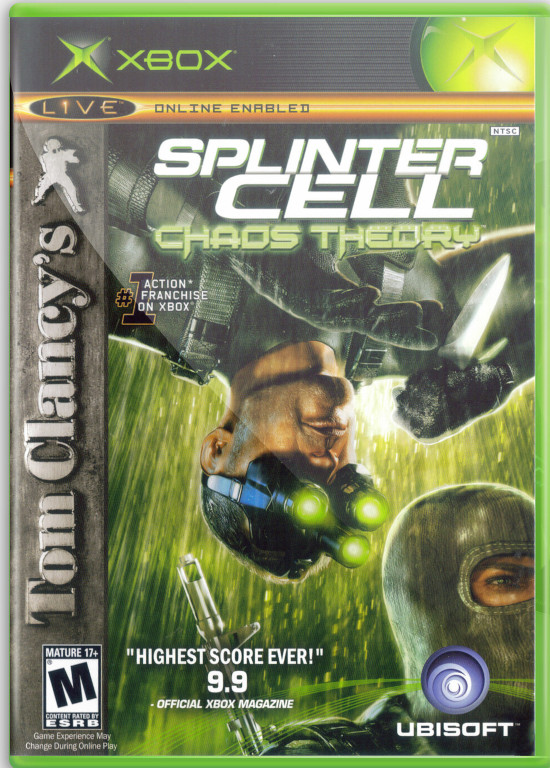
- Tom Clancy’s Splinter Cell (series) (Stealth Action). The benchmark for tactical stealth, where stealth is the primary weapon. Chaos Theory is widely recognized as the best in the series, but other installments are not far behind. Released on many platforms, missing it on Xbox would be a mistake: the games run perfectly on the original console.
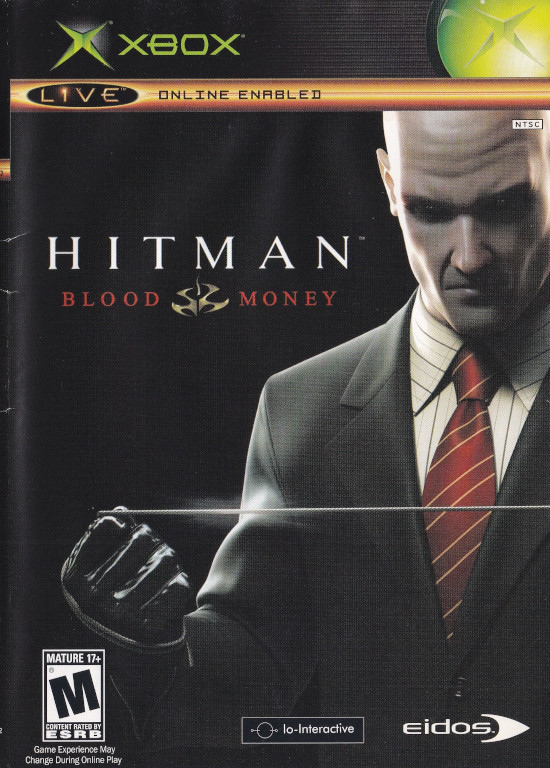
- Hitman (Silent Assassin, Contracts, Blood Money) (Stealth/Action). A unique series about Agent 47, where each level is a sandbox for eliminating targets. Graphically, the series has aged, but in terms of gameplay, story, and replayability, it nearly matches modern titles. It offers numerous ways to complete each mission.
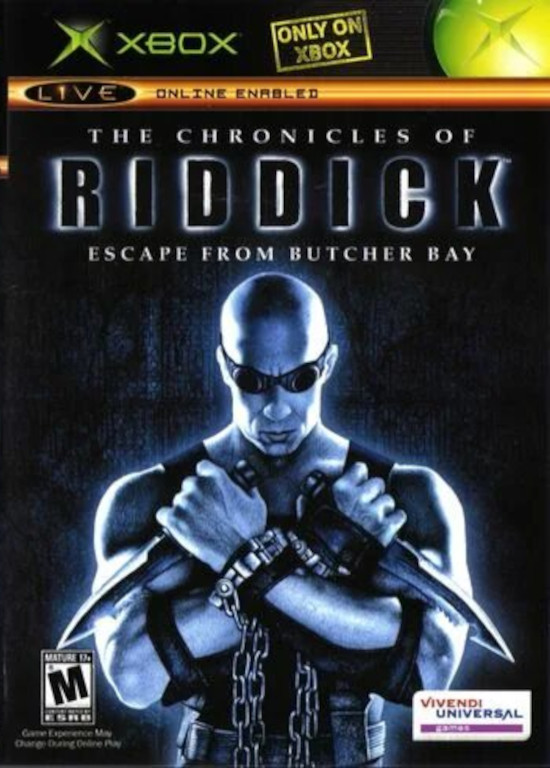
- The Chronicles of Riddick: Escape from Butcher Bay (Stealth/Action). An immersive action game where story and gameplay work seamlessly. Vin Diesel personally voiced the protagonist. The “dark vision” mechanic allows seeing in the dark without a flashlight. It never received full sequels, remaining one of the era’s best exclusives. The Xbox version is considered the definitive one.
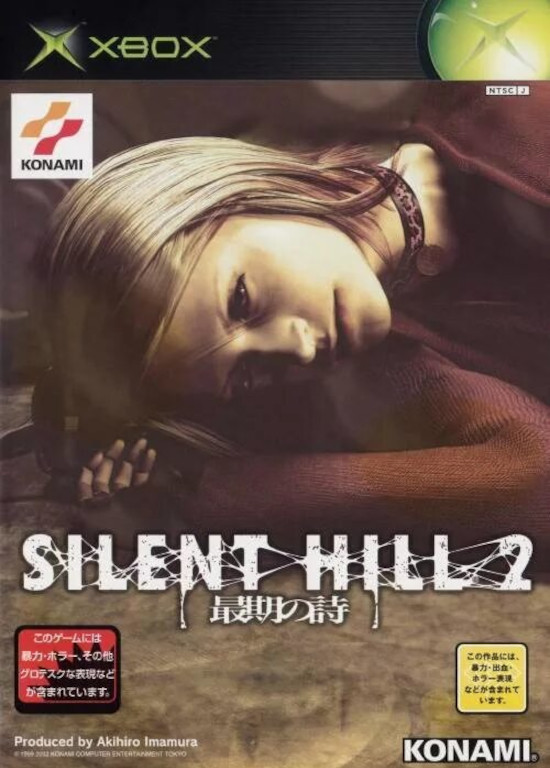
- Silent Hill 2 (Psychological Horror). A masterpiece of the genre, focusing on psychology rather than jump scares. The Xbox version contains exclusive content not found on PS2. PS3/Xbox 360 ports have technical flaws, and the PC version is criticized for optimization and porting quality. Thus, the Xbox offers one of the best ways to experience this classic.
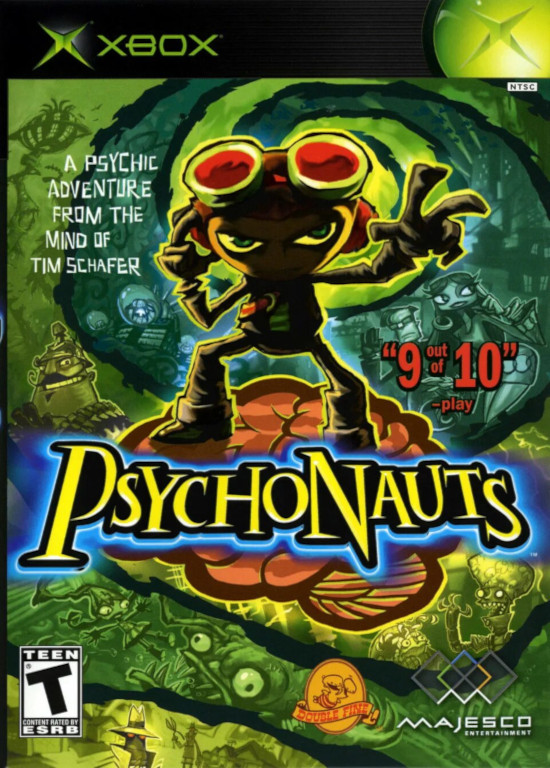
- Psychonauts (Platformer/Adventure). A witty adventure from Tim Schafer about spies in the human mind. Levels are surreal worlds inside characters’ heads. Despite modest sales at launch, it gained cult status for its humor and creativity. It plays comfortably on the original Xbox, and thanks to its unique design, the graphics have barely aged.
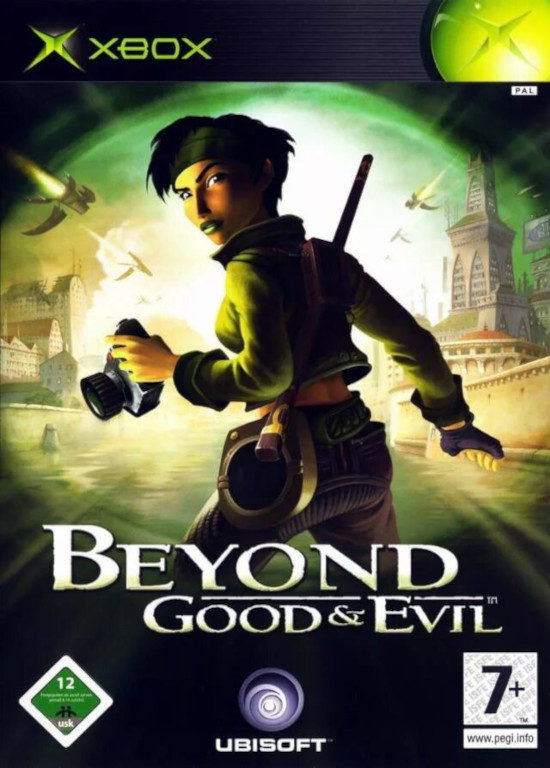
- Beyond Good & Evil (Adventure). A heartfelt story with a unique style: stealth, action, and elements of a journalist simulator. A sequel was announced long ago but is still in development. Visually, the game has aged slightly, but strong game design makes it still perfectly playable on the original Xbox.
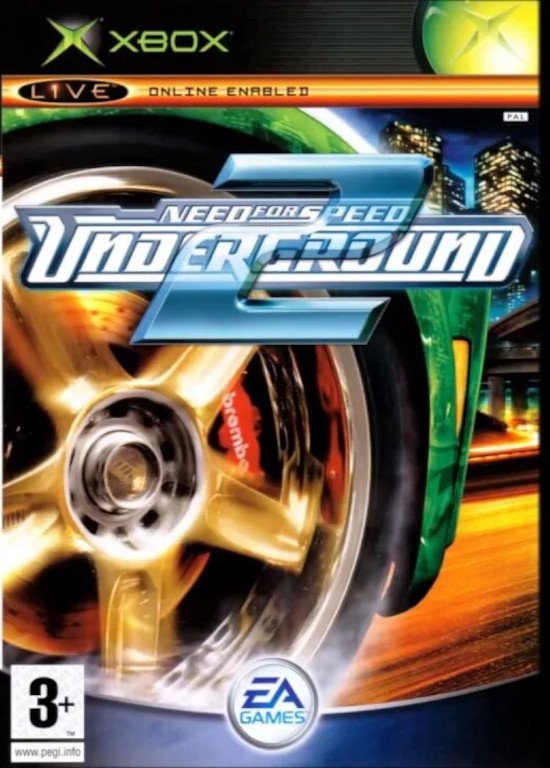
- Need for Speed Underground / Most Wanted (Arcade Racing). Icons of street racing: tuning, night city, chases. Underground set the trend for customization, while Most Wanted added intense police pursuits. Modern installments have moved into open-world settings, losing the cozy feel of the originals. In the original Xbox generation, these games are the benchmark for arcade thrills.
Xbox 360
Overview
The Xbox 360 was one of the most successful consoles of the seventh generation. In this era, Sony made a mistake with the PlayStation 3: the console was expensive and complex to develop for. Nintendo Wii opted for a different strategy, focusing on motion control and a casual audience rather than raw hardware power.
The Xbox 360 managed to compete equally with the PS3, often outselling its rival in key markets like North America and Europe. Meanwhile, PlayStation 3, relying on the traditionally loyal Japanese market where the Xbox brand has historically been weak, avoided total defeat globally. Ultimately, by the end of their lifecycles, both consoles sold in almost equal numbers (~84 million for Xbox 360 vs. ~87 million for PS3), but “on points,” the Xbox 360 arguably won this generation.
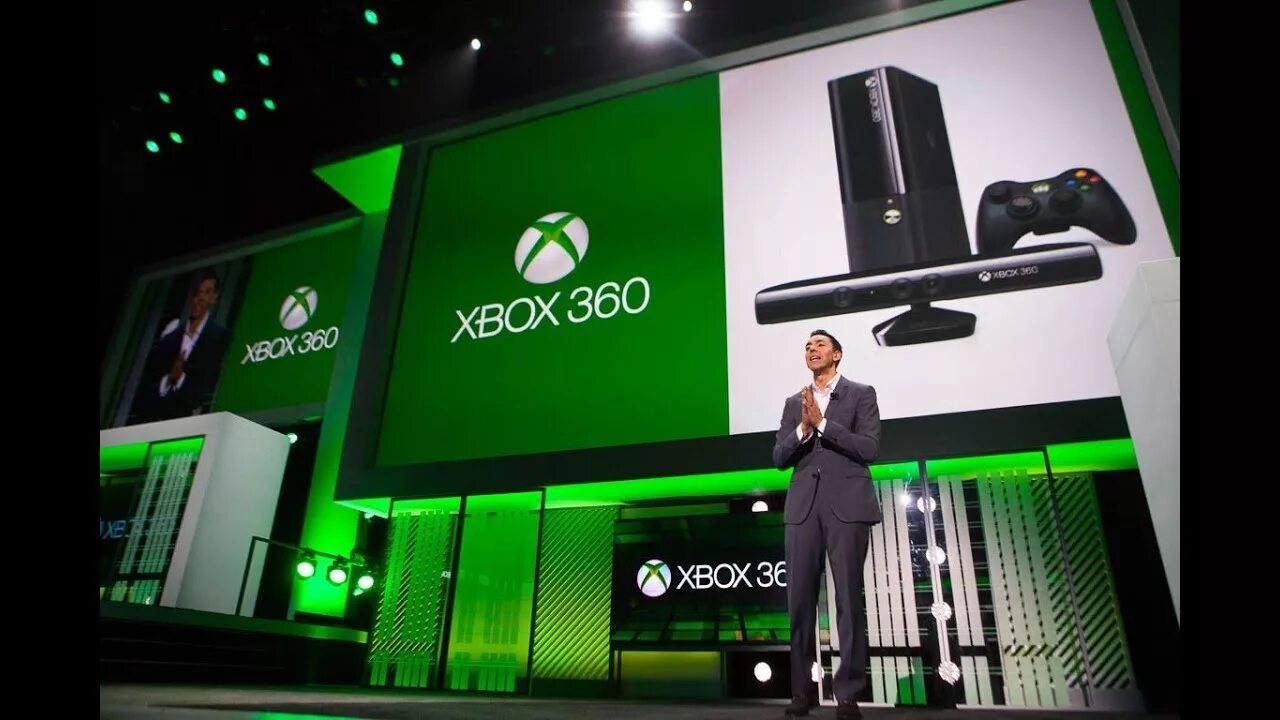
Microsoft made every effort to gain leadership, and for the first (and last) time, abandoned its familiar PC ideology. It bet on an IBM PowerPC processor and an ATI graphics chip (ATI was later acquired by AMD). Early console series were renowned for excellent performance but were plagued by the “Red Ring of Death.” Due to design flaws related to overheating and chip soldering, many early units quickly failed. This problem was resolved in later revisions (Falcon, Jasper).
Consoles were equipped with a DVD drive, had 512 MB of RAM, and hard drives up to 500 GB (250 and 320 GB versions were most common). The latest revisions featured built-in Wi-Fi and HDMI connectivity.
The Xbox 360 was exceptionally popular due to one particular feature: its console protection was repeatedly broken by enthusiasts, leading to the widespread availability of modified devices that could run unlicensed copies of games. While not every Xbox 360 was modified, a significant number were. Yes, “flashed” consoles often lost the ability to play online with Microsoft services, but many were undeterred, given the abundance of single-player games available on the platform.
In the latest hardware revisions of the Xbox 360, the piracy problem was radically complicated, but by this time, many “flashed” devices were already on the market.
Should You Buy Now and What Does It Cost?
The Xbox 360, launched in late 2005, has surprisingly held up well graphically. Of course, you’ll notice a difference between Xbox 360, Xbox One, and Xbox Series games. However, the feeling of “next-generation graphics” that radically transforms the entire visual experience from one generation to the next is no longer as stark. Some critical gamers, when comparing the visuals of certain modern remakes to their Xbox 360 originals, find no difference or so insignificant a difference that buying a new console for a “remake” loses its meaning.
However, this doesn’t mean the Xbox 360 is a current-generation console. The online marketplace for Xbox 360 games only ceased sales in summer 2024, despite console production ending in 2016.
Both early series devices and relatively recent revisions (Xbox 360 S from 2010 and Xbox 360 E from 2013) can be found for sale. Both original and modified devices are available, though purchasing the latter is at your own risk.
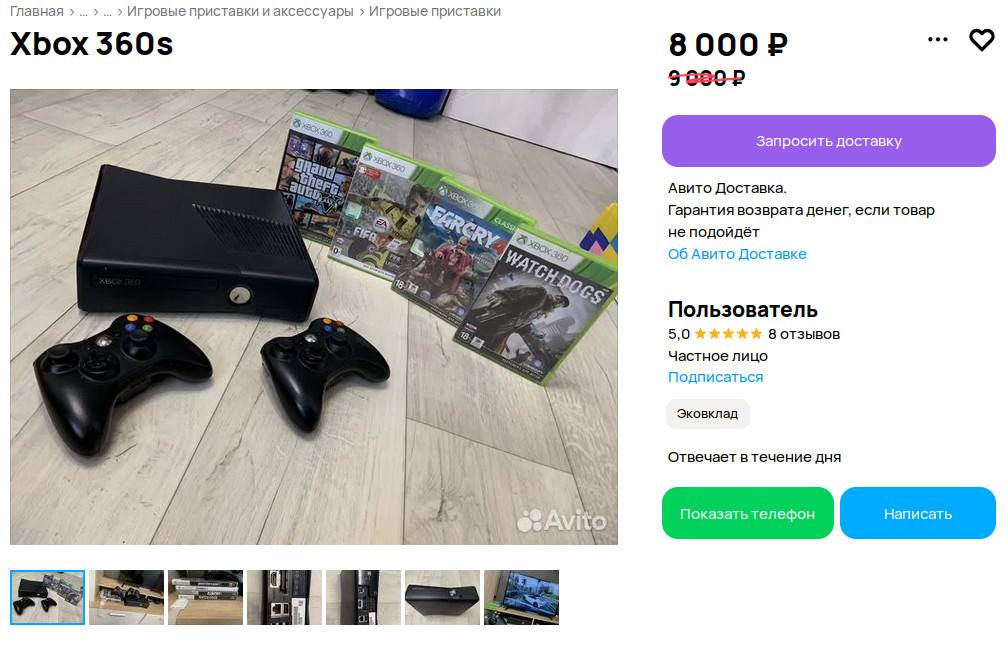
Original Xbox 360 consoles of the later series (S and E) sell for around 8,000 rubles when bought used or about 10,000 rubles from workshops or pawn shops. Hard drive capacities on these devices are typically 320 or 500 GB.
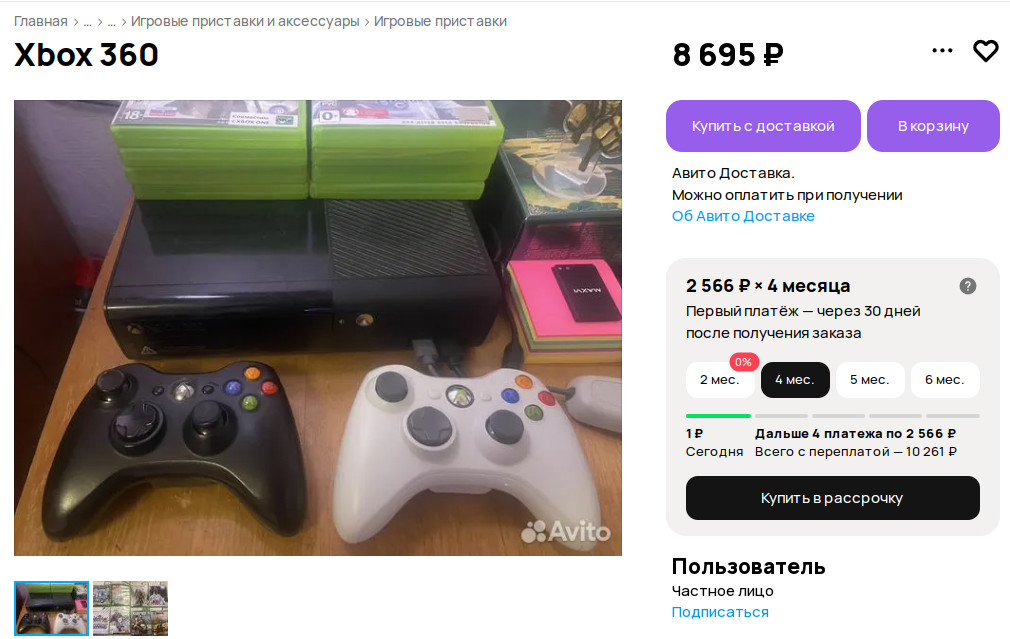
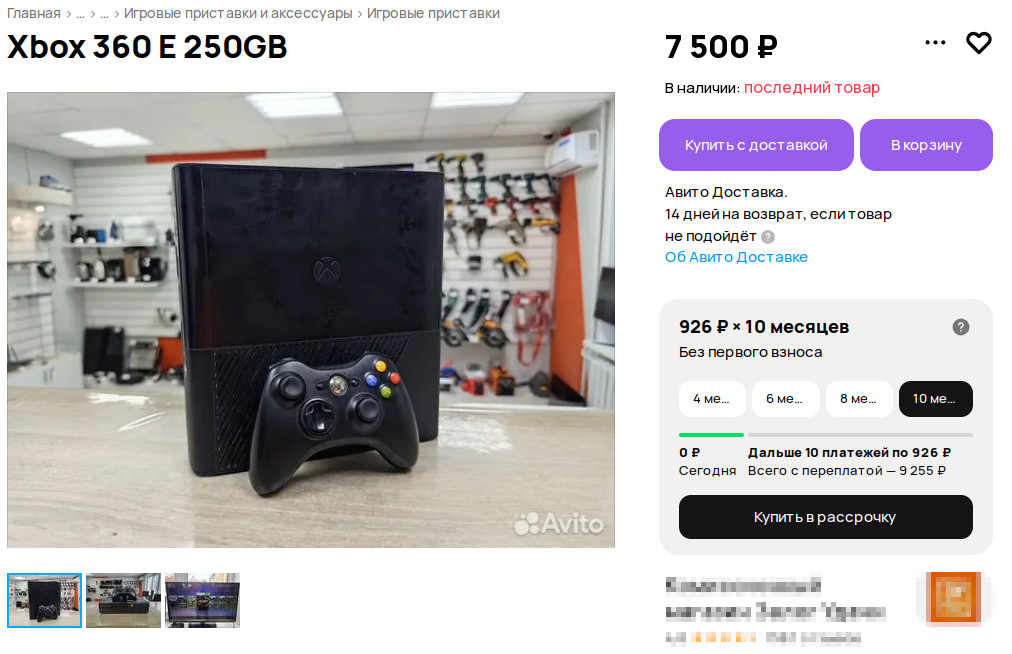
Older models can also be found on the secondary market. Their price is lower (around 5,000 rubles), but it’s important to remember they are over 20 years old. This is a significant age for electronics and hard drives, even with infrequent use. Thus, later series are preferable. This doesn’t guarantee an Xbox 360 E will outlast an Xbox 360 Pro, but the chances of it lasting longer are higher.
There’s no point in seeking devices with Kinect (though they do exist), unless you just want to experiment with one or two games.
It’s best to buy a console that includes at least a small collection of licensed physical games. You can no longer buy digital versions for this console on your account (though previously purchased ones can still be downloaded), and new licensed Xbox 360 discs are no longer produced. The secondary market has plenty of offers, with prices starting from 500 rubles, though popular or rare titles will cost more (2,000-2,500 rubles).
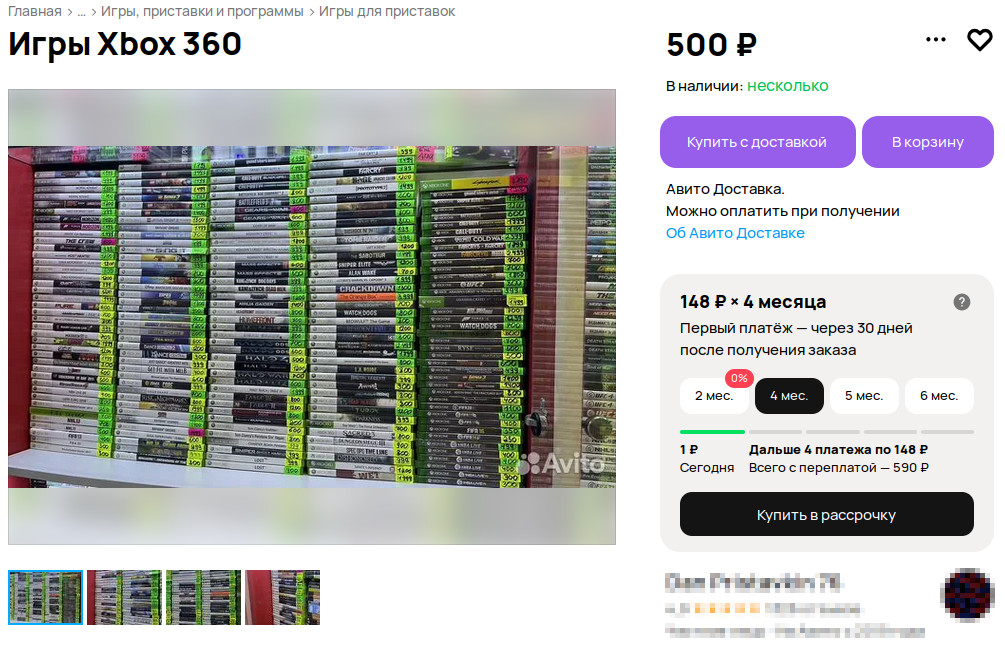
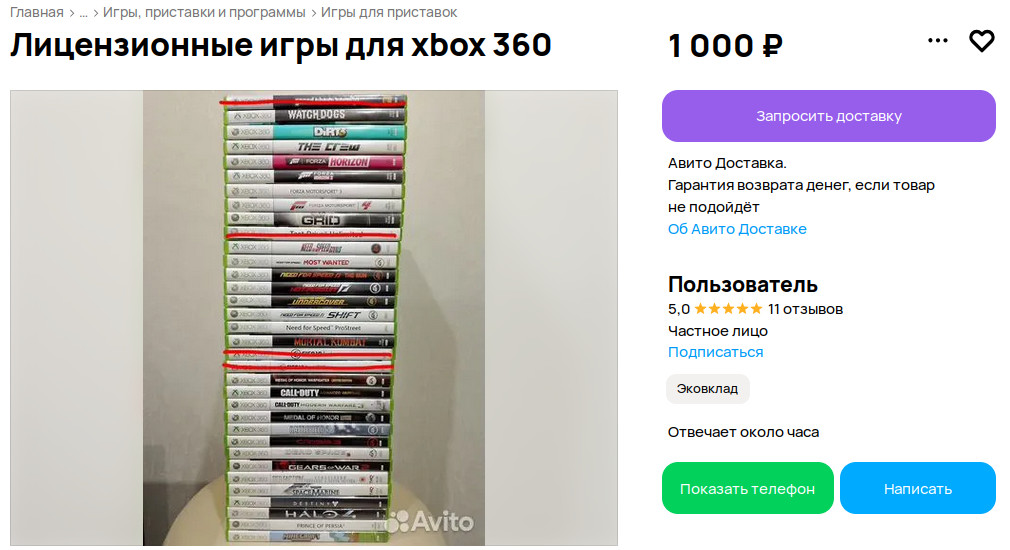
Should you buy an Xbox 360 on the secondary market now? If you’re considering it as your primary gaming device, probably not, unless total economy is your goal. The console might serve you for several years, or it could fail quickly. While minor faults might be repaired at a service center, anything more serious is unlikely. However, as a secondary device for retro gaming or as an offline console for rural living, it’s a very inexpensive and interesting option. Even a modern gamer, unlike with the original Xbox, won’t be in cultural shock from the 3D graphics. If you look at the list of cult Xbox 360 games, you’ll find many titles that are still well-known and perfectly playable.
A few words about modified devices: they typically come with pre-installed games and usually cost about one and a half times more than original late-series Xbox 360s. However, the consoles themselves are often from earlier Xbox 360 series. It’s also worth noting that modifying these consoles often involved changing chips or soldering wires onto the original board. Not always, and not on all models, but it did happen. The quality of such a “mod” directly depends on the skill of the modder and the drive version. So, buying such consoles might seem more profitable than buying an original device, but in this case, you act at your own risk. Naturally, such consoles should not be connected to official Microsoft services.
Games
The mid-2010s marked the peak and beginning of the decline of classic gaming. In the next generation, with the advent of widespread online connectivity, live-service games would emerge, and traditional games would incorporate “seasons,” “battle passes,” and “cosmetic” stores. None of this was present in Xbox 360 games.
A Top 15 list of Xbox 360 games is as subjective as for the original Xbox, though few would argue that GTA, Mass Effect, TES, and Fallout deserve to be included. Some might be upset by the absence of Call of Duty from this list. In defense, I’ll just say that there are many more than 15 worthy games for the Xbox 360, and article length prevents listing them all. They still look and play well, despite their seemingly respectable age.
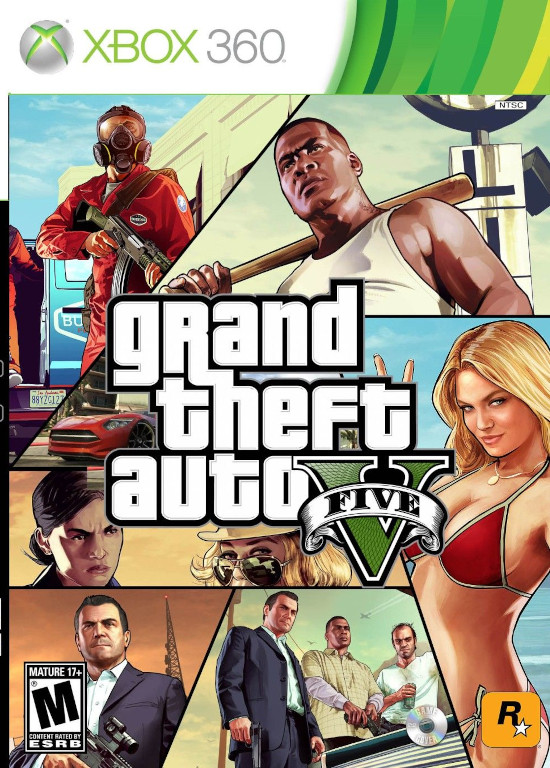
- Grand Theft Auto IV / V (Action-Adventure). The fourth installment brought more realism and a darker atmosphere to the series, though its scale wasn’t as impressive as previous parts. The fifth installment, however, brought back both scale and a wild atmosphere, along with refined gameplay. Both games were released on the 360 and still play excellently.
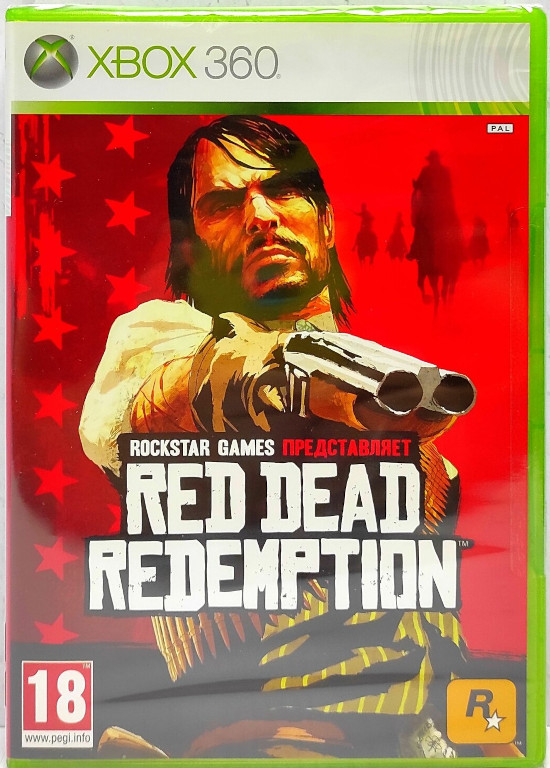
- Red Dead Redemption (Action-Adventure). A Rockstar-made “GTA in the Wild West” with one of the strongest endings in gaming history. The RDR series didn’t achieve the same recognition as the GTA series, but compared to other games, it is an undeniable masterpiece.
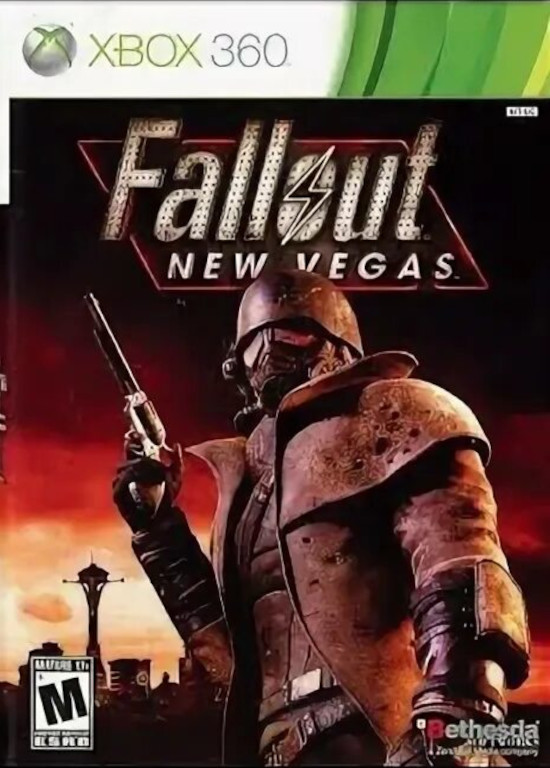
- Fallout 3 and New Vegas (Action-RPG with RPG elements). Old-timers grumbled at the release of the third installment, calling it “TES with guns”—not the classic Fallout they knew from the first two parts. But to be honest, it was the third part and New Vegas that pioneered the modern Fallout universe, and they earned their cult status for good reason. Both parts play wonderfully on the Xbox 360.
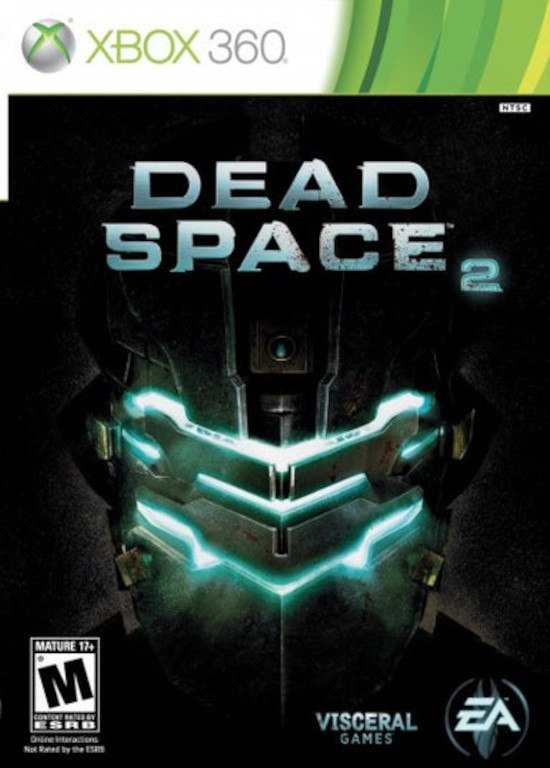
- Dead Space 1 and 2 (Survival Horror). The benchmark for cosmic horror: atmosphere, sound, and combat with enemy dismemberment. The second part added dynamism without losing tension. Games like these aren’t made anymore, except for remasters.
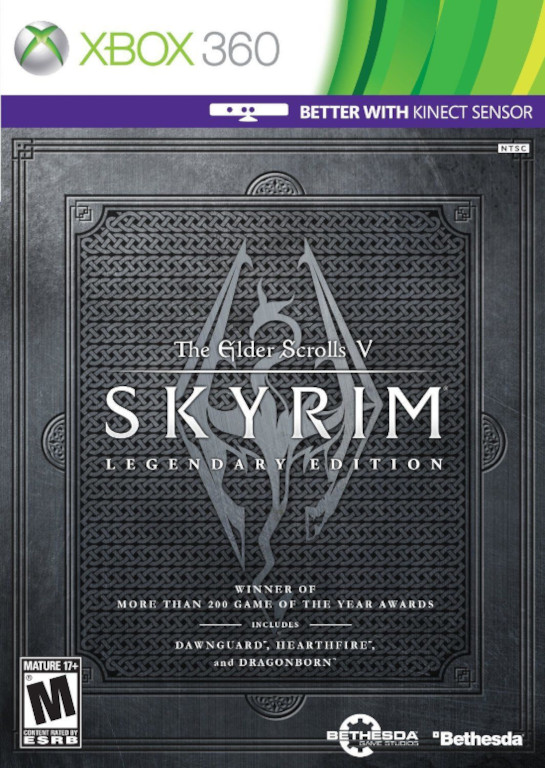
- The Elder Scrolls IV: Oblivion and V: Skyrim (RPG). The two major fantasy RPGs of their generation, and the next generation too. Oblivion set the standards for open-world games, while Skyrim propelled them to mass success. Both games run superbly on the 360. The only downside is the lack of mods, for which the PC version is famous. However, the original games are worth playing without mods.
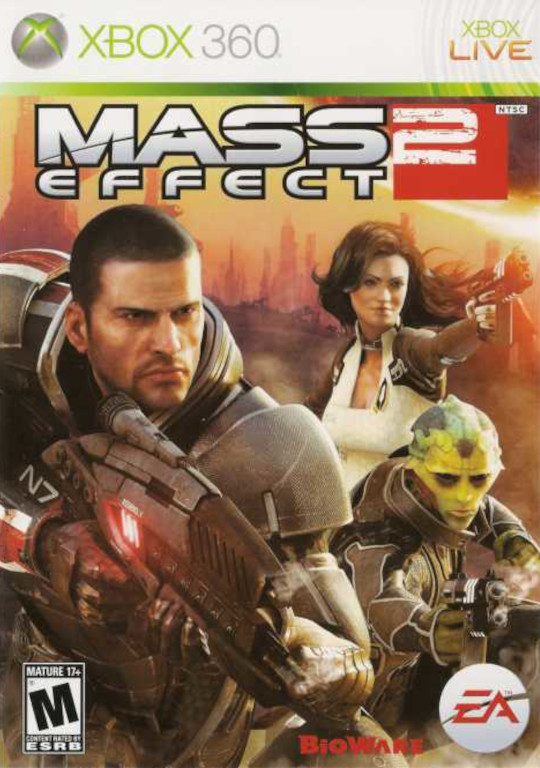
- Mass Effect 2 and 3 (Action RPG). The pinnacle of BioWare’s space saga: a perfect balance of story, characters, and combat. These action RPGs in a sci-fi setting remain largely unsurpassed even today. To understand this, all you need is an Xbox 360.
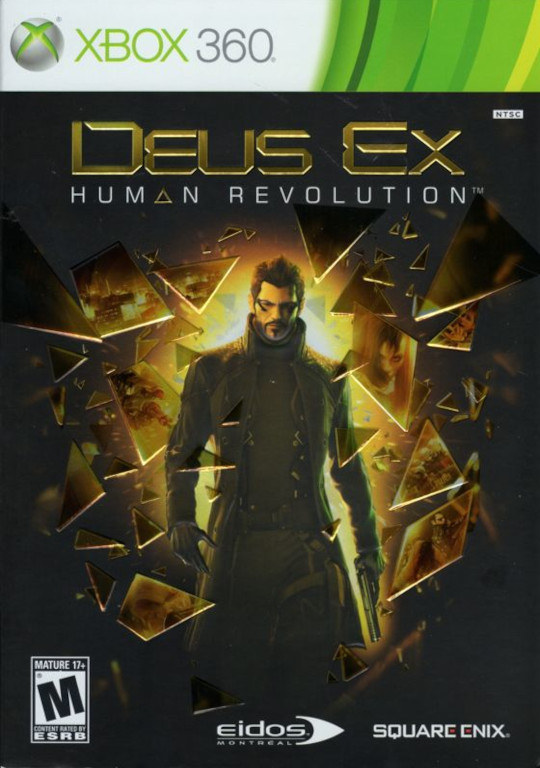
- Deus Ex: Human Revolution (Immersive Sim/Action). The revival of a cult series: cyberpunk, choices, stealth, or combat. The 360 version is technically stable, and its gameplay depth rivals the PC version. The direct sequel (Mankind Divided) was released in the next generation.
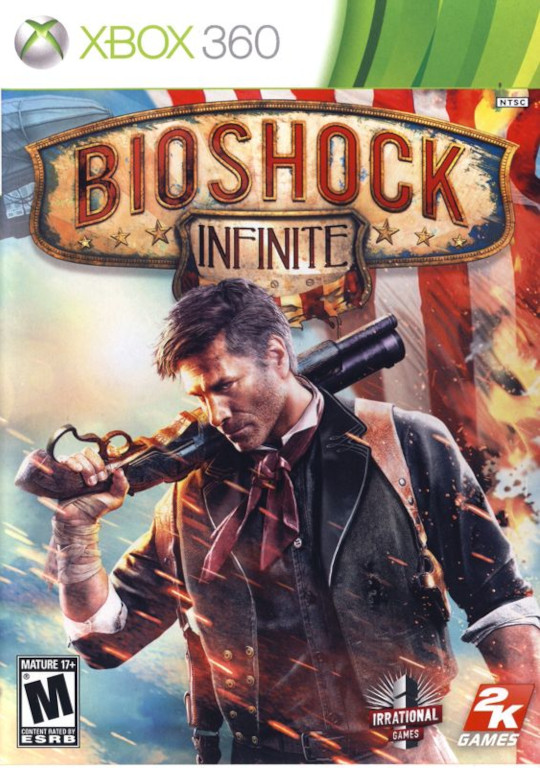
- BioShock and BioShock Infinite (Immersive Sim/Action). Two masterpieces: the underwater Rapture and the soaring Columbia. Philosophical plot, unique setting, variable gameplay. Both versions run stably on the 360, and collectible editions include all expansions.
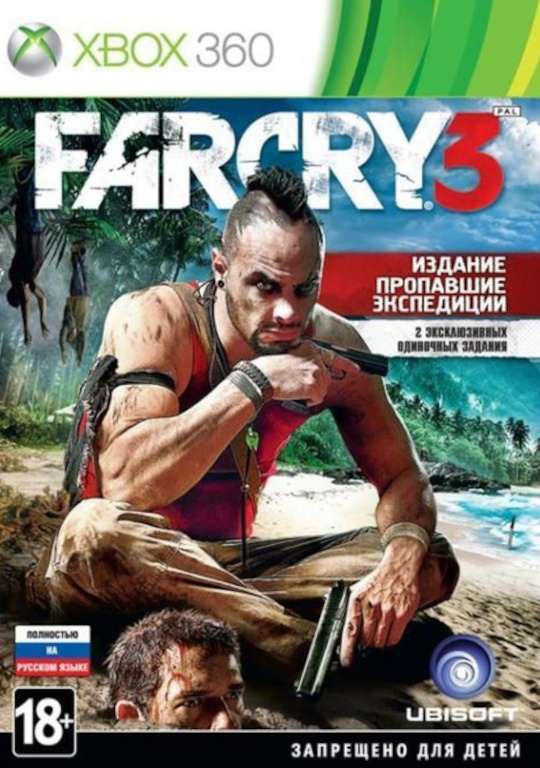
- Far Cry 3 (First-Person Shooter). The game that defined the “open world with towers” formula: a tropical island, a charismatic villain, and freedom of approach. While similar games existed before and after, it was the third installment that shaped the franchise’s identity for years to come and, unfortunately, became the series’ peak.
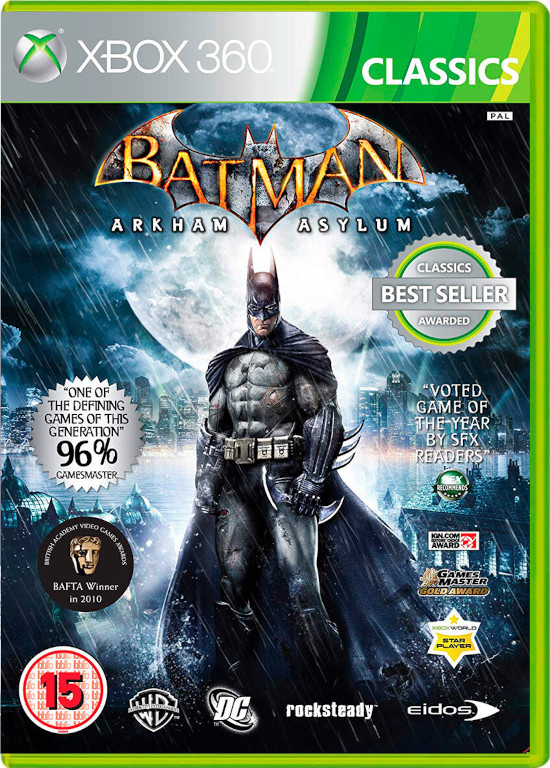
- Batman: Arkham Asylum / City (Action/Stealth). The best video game interpretation of Batman: perfect combat, detective mode, and Gotham’s atmosphere. Only the first two parts of the trilogy are available on Xbox 360, but even these are enough to immerse yourself in Gotham’s dark atmosphere. Moreover, the first two parts are widely considered the best in the trilogy.
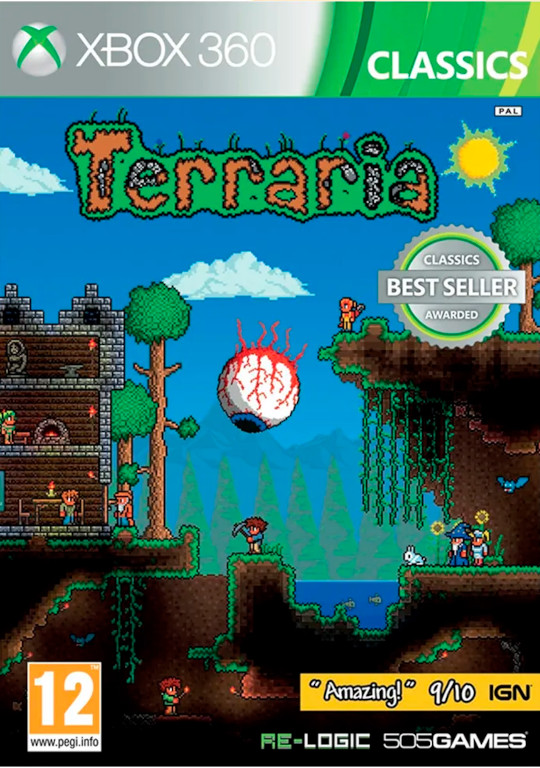
- Terraria (Sandbox/Adventure). A 2D sandbox game with exploration, crafting, and bosses. Released on 360 with convenient controls and all updates of that time. Ideal for peaceful pastime. While Minecraft is also on Xbox 360, that version is cut down. Terraria, however, allows you to dig deep underground and fully experience adventure.
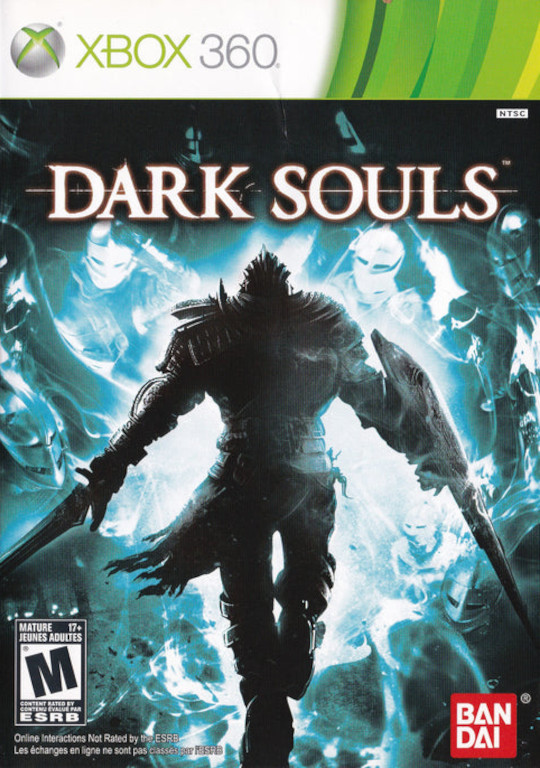
- Dark Souls (Action/RPG). A game that redefined difficulty in video games. A bleak world, deep combat system, and minimal guidance—for those who appreciate a challenge.
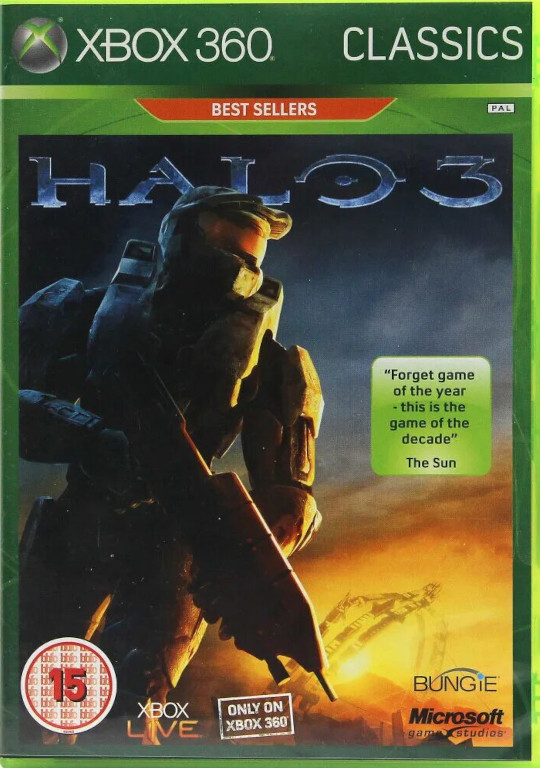
- Halo 3 (First-Person Shooter). One of the three flagship Xbox 360 exclusives—Halo, Gears, Forza. Halo 3 concludes the original Master Chief trilogy, featuring an iconic campaign, epic battles, and co-op. Available via backward compatibility on newer consoles, but on the “iron” 360, it’s an authentic experience.
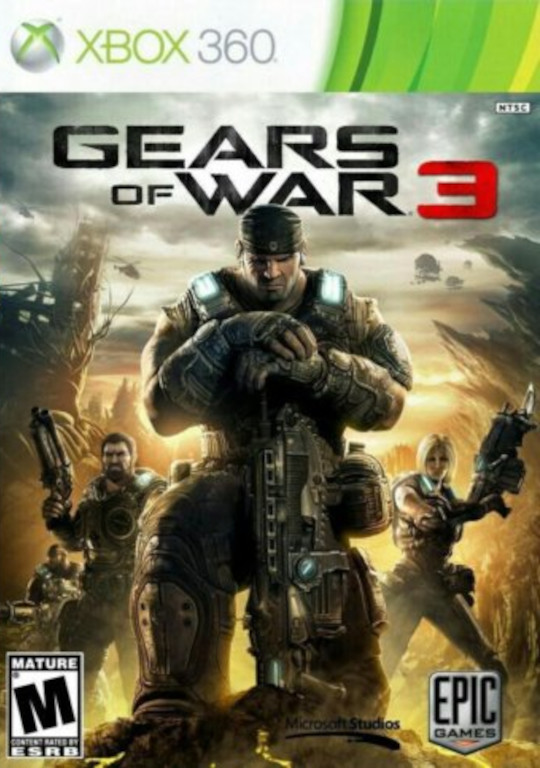
- Gears of War (series) (Tactical Shooter). A franchise that defined the cover-based shooter genre. Grand battles, cooperative campaign, and spectacular visuals. While newer games in the series look better graphically, “Gears” is also excellent on the Xbox 360, and the gameplay is just as good.
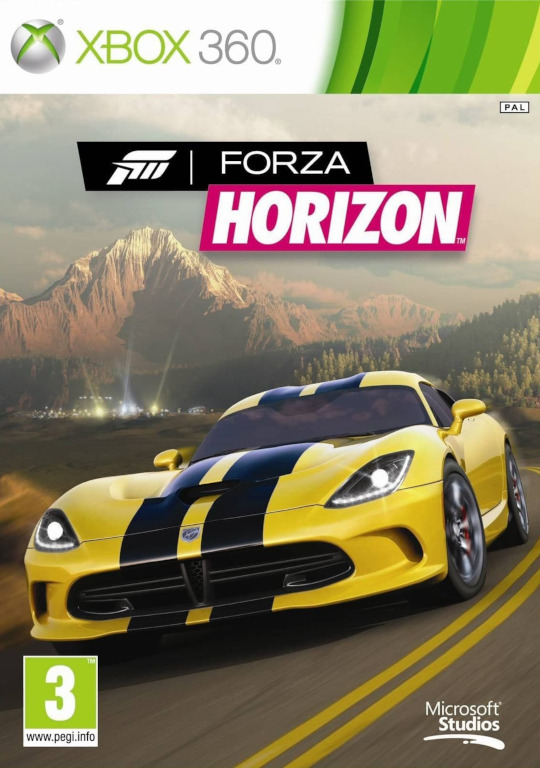
- Forza Horizon (Arcade Racing). Horizon is a spin-off of the Forza Motorsport series, but due to its less sim-like and more arcade nature, it was better received by a mass audience. Open world, festivals, freedom, and thrill. An Xbox exclusive that set a new standard for arcade racing.
Xbox One
Overview
Microsoft made a mistake with the Xbox One, riding on the success of the Xbox 360. The company decided to make the gaming console the center of all digital home entertainment—and it miscalculated. A gaming console for gamers, for the core audience, must primarily be for games. Moreover, it must be affordable and powerful.
At launch, Microsoft hit every pitfall: the console was positioned as “all-in-one,” bundled with the largely unneeded Kinect (supported by only a few games), and notably lagged behind its competitor, the PlayStation 4, in performance.
However, the hardware itself wasn’t entirely bad. At its core was a hybrid AMD processor. It featured 8 GB of DDR3 RAM, of which about 5 GB was available for games, with the rest reserved for the system. Storage started at 500 GB, with Wi-Fi and HDMI included out of the box.
But the console failed in sales not because of “weak” hardware. It was due to its positioning, high launch price, and a policy regarding used games, which later had to be reversed. Sony happily capitalized on these missteps.
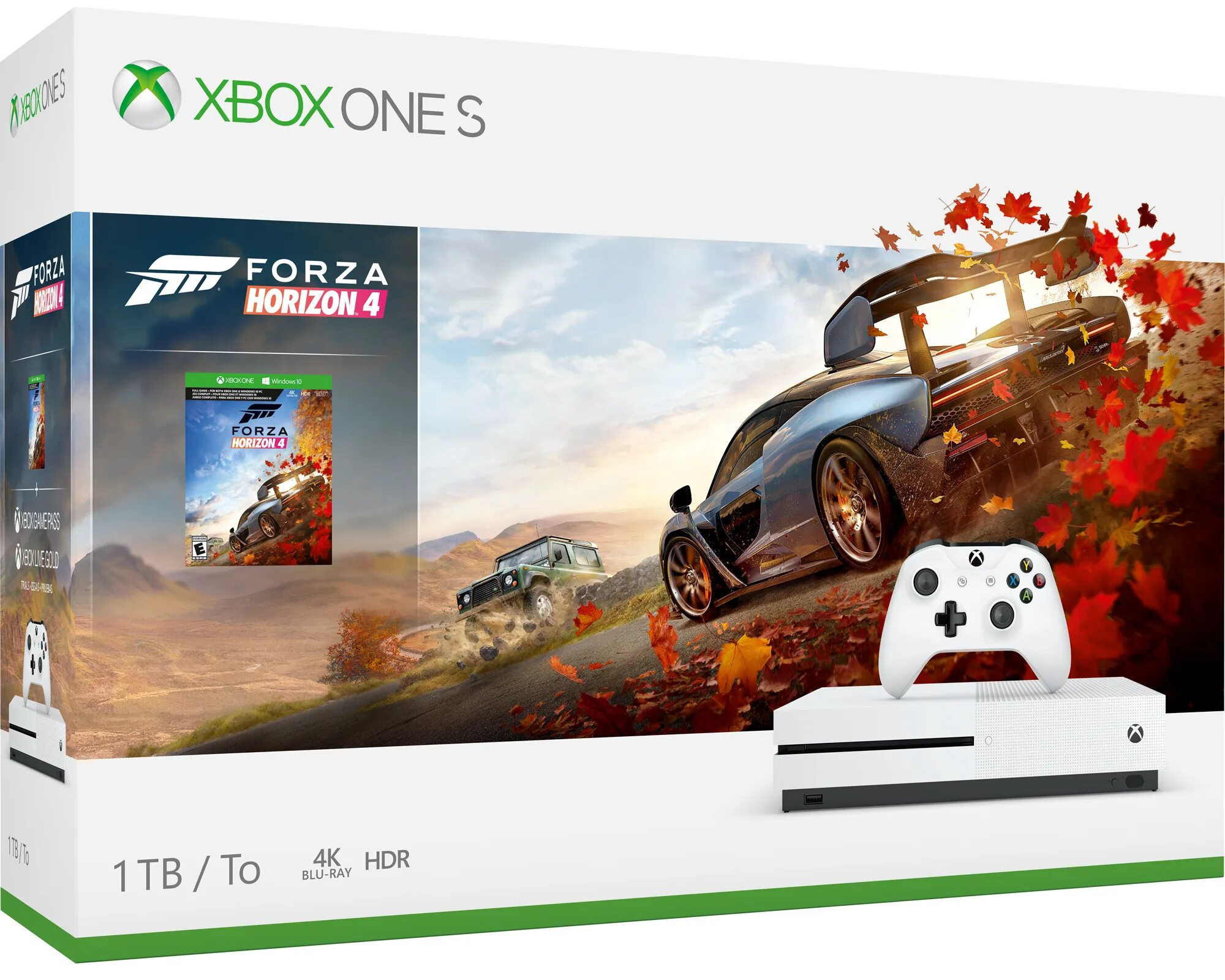
With Phil Spencer’s arrival at Xbox leadership, the company corrected course: the mandatory Kinect was removed, prices were lowered, and focus shifted to games. Later, updated versions—Xbox One S (2016) and Xbox One X (2017)—were released. The One X, with its 6 teraflops and 12 GB of GDDR5 memory, became the most powerful console of its generation. By the end of its lifecycle, the situation against PlayStation 4 no longer looked as dire as at launch, but overall, the PS4 maintained the sales lead.
Should You Buy Now and What Does It Cost?
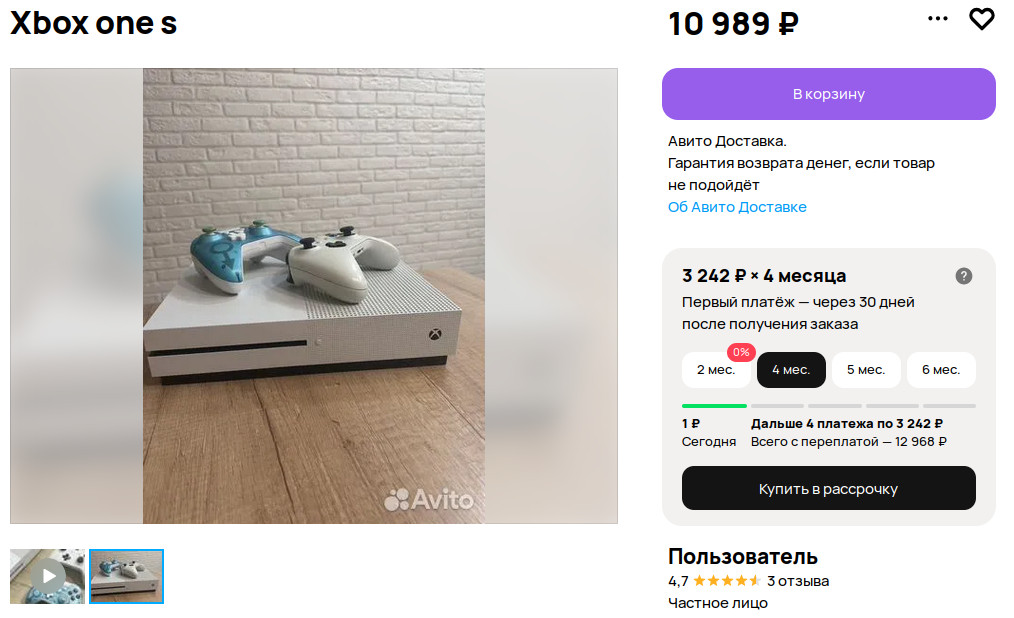
The console launched in 2013, and production of all Xbox One models officially ceased by the end of 2020. You won’t find new devices in retail, but there are plenty of offers on the secondary market. These are mainly One S consoles, though One X and original models from the first years of release also appear.
The original Xbox One (2013) is probably not worth buying: it’s older, larger, noisier, and slightly less powerful than the later One S. The difference isn’t colossal, but at a comparable price, the choice is obvious.
Choosing the One X is ambiguous. It truly was the top device of its generation with support for 4K rendering in optimized games. Looking at raw numbers, the One X’s graphics chip (6 TFLOPS) is more powerful than the One S’s (~1.3 TFLOPS), and even surpasses the entry-level console of the next generation—the Series S (4 TFLOPS)—in this metric.
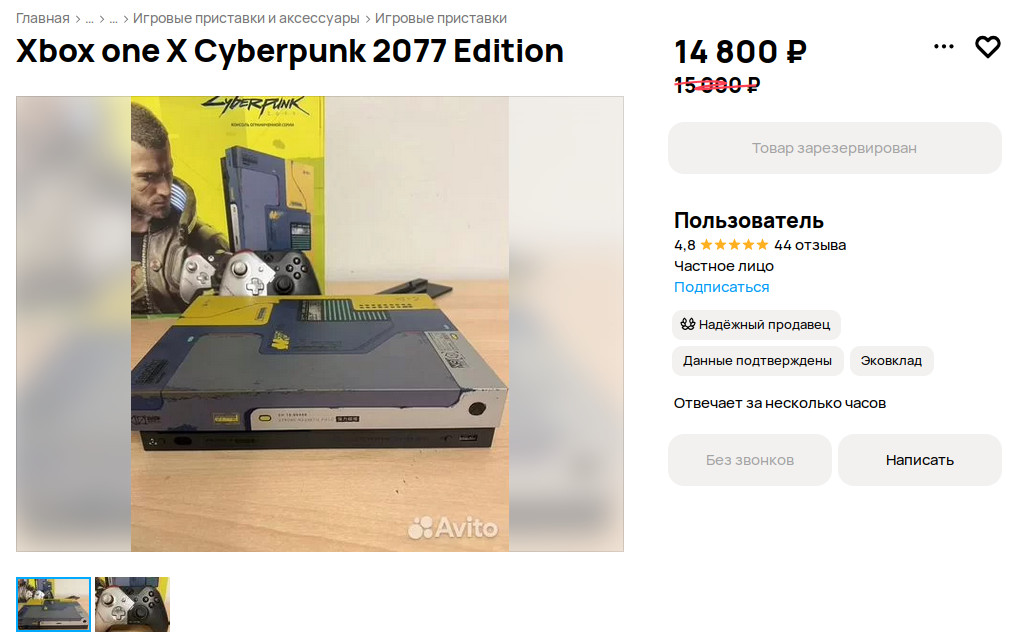
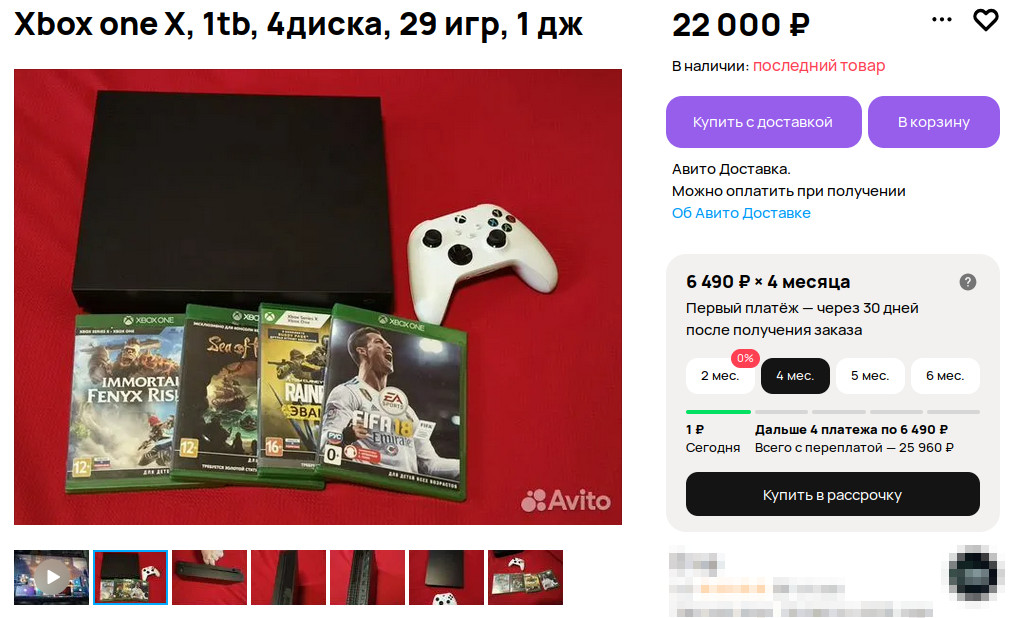
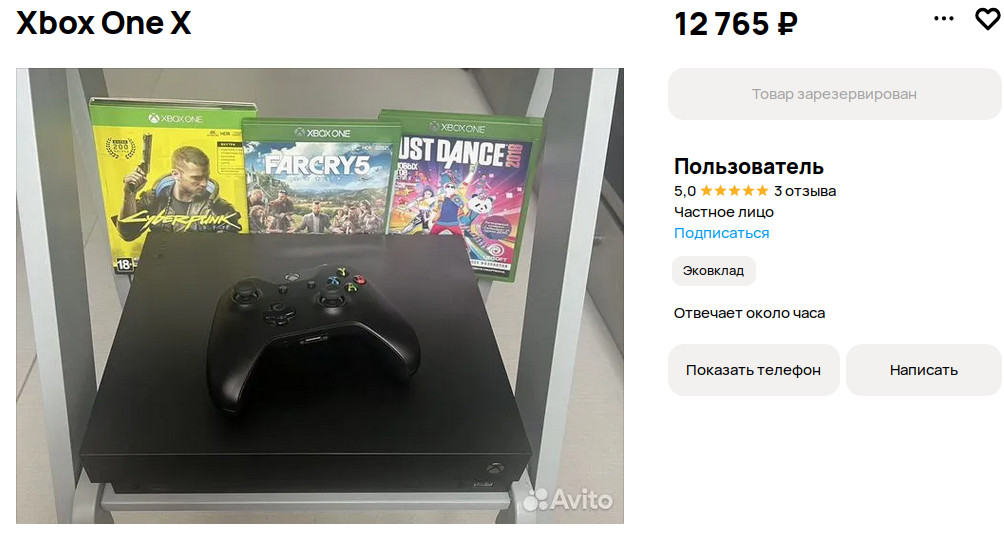
However, this power won’t be fully utilized everywhere. While some games with a special “Xbox One X Enhanced” label will run in 4K or with improved graphics, many projects, especially cross-platform ones, are still developed with base console specifications in mind, and frame rates are often limited to 30 frames per second—not due to hardware, but game design. Is paying almost 1.5 times more (from 15,000 rubles on the secondary market for a One X vs. ~10,000 for a One S) worth these compromises? That’s for you to decide.
There are various offers on the secondary market. Sometimes, you can find a One X bundled with a decent collection of discs, which can be a better deal than a “bare” One S. Xbox One X consoles occasionally appear at One S prices. These are very good deals, but whenever you see such offers, you should double your vigilance to avoid dishonest sellers. Verify the quality of the item and do not transfer money without being certain you will receive the console.
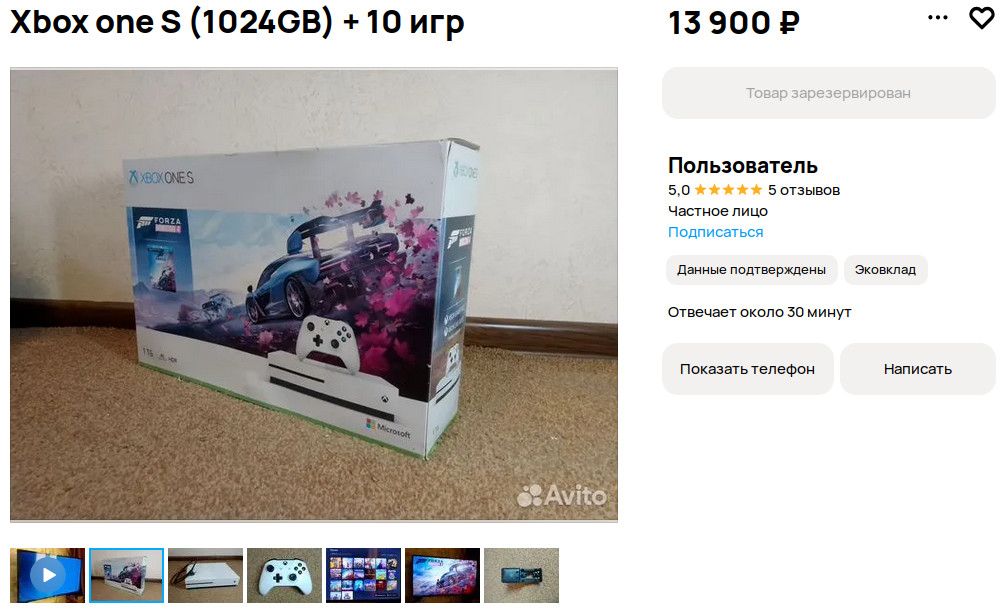
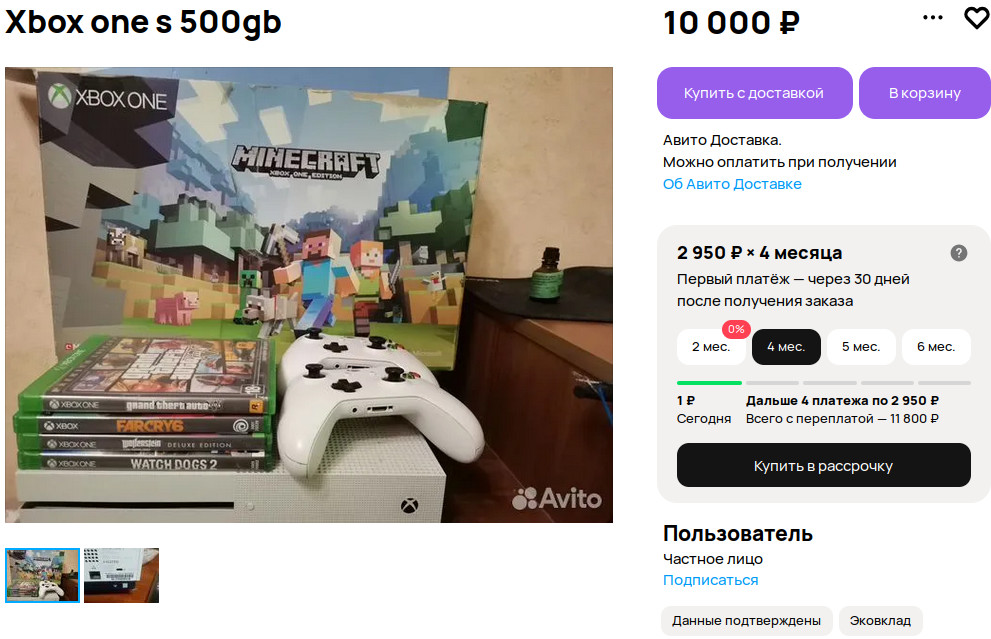
When an advertisement mentions that the console comes with dozens of games, clarify with the seller whether these are disc or digital versions. If they are digital versions tied to an account (or even a Game Pass subscription), you shouldn’t factor their value into the purchase price. The user of such an account can change the password at any time, and you will lose access. Transferring accounts, by the way, is prohibited by Microsoft. Disc versions will remain yours as long as the discs themselves are functional.
Prices for licensed Xbox One discs start from 500–700 rubles on the secondary market or during clearance sales of slow-moving inventory, while top titles still sell at full price in retail. So, a price tag of 2,000 rubles or more for a disc should not surprise you. The console is still relevant.
Although console production has ceased, the digital infrastructure is still active: the Xbox Store marketplace continues to sell digital copies of Xbox One games, and new games are still being released. Crucially, on Xbox One, you can activate and use a Game Pass subscription, including access to an extensive library of backward-compatible games from Xbox 360 and the original Xbox.
Does it make sense to buy an Xbox One now? The answer heavily depends on how you plan to use the console.
If you primarily focus on physical game versions, then among this generation’s consoles, the PlayStation 4 often appears preferable. While PS4s might be noisier, and secondary market prices for comparable models (PS4 Slim) are often similar to Xbox One X, disc availability for PS4 is significantly higher, with more offers on platforms like Avito, more active trade-in programs, and easier exchanges with friends. Retail stores still offer a good selection of PS4 discs, whereas for Xbox, you’ll mainly find offers for digital versions or Game Pass online.
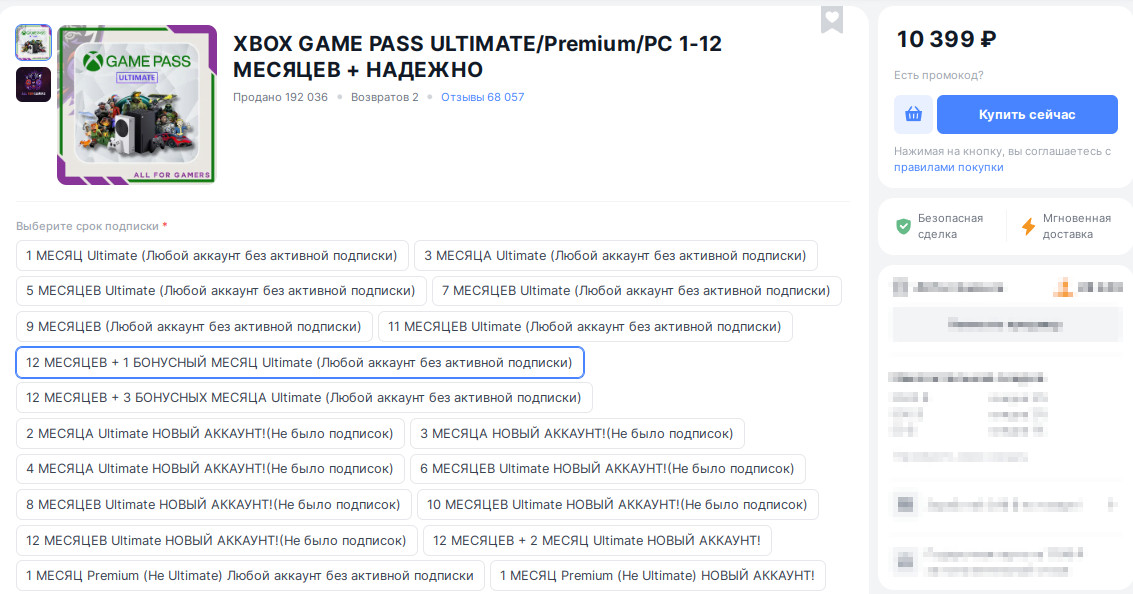
If you’re willing to subscribe to Game Pass, the situation changes. After Microsoft’s price increase, the cost of an annual subscription might seem high. It’s comparable to the price of one or two new AAA console games or three to four PC games with regional discounts. However, you gain access to hundreds of projects, including Microsoft exclusives and backward-compatible titles. Not all modern new releases will run on your Xbox One (support is gradually winding down), but the existing library will suffice for a very long time. First, check the subscription content and decide how many games you’d actually play. If a subscription is cheaper, get it. If PS4 discs are cheaper (even considering higher secondary market prices), you might prefer a PlayStation 4.
But do you specifically need a used Xbox One for a subscription, or is it better to pay extra for a new Series S? The extra cost will be significant (in offline retail, Series S starts from 35,000 rubles; marketplaces offer cheaper options, but still not low). The benefit is not yet obvious. But when internal studios finally release top-tier projects for Series X|S, then it might be worth buying a Series S and selling your One S. In any case, the choice is yours.
One nuance to consider: since Microsoft is not officially represented in some regions, acquiring subscriptions or digital games might require intermediaries, gift cards, or changing your account region—a process not always intuitive for unprepared users. However, once you figure it out, it becomes easier. Activating digital game versions is a bit more complex than subscriptions, but these issues are solvable, and digital prices during sales are often appealing, although PC versions are typically cheaper. The downside of subscriptions and digital distribution is the reliance on an online connection, meaning no internet, no play.
Games
The lifespan of the Xbox One (2013–2020) marked both the decline of classic story-driven single-player games and the rise of live-service games. Furthermore, there was a clear emphasis on established franchises: publishers increasingly relied on proven brands rather than risky experiments.
Compiling a top list for this platform is a thankless task. The library is vast, but it’s challenging to select new names for a top list. Some titles were already on Xbox 360, while others might seem odd in a top list. Moreover, tastes vary. As with previous top lists, this is a subjective selection. If your favorite game isn’t included, explain in the comments why it deserves a spot.
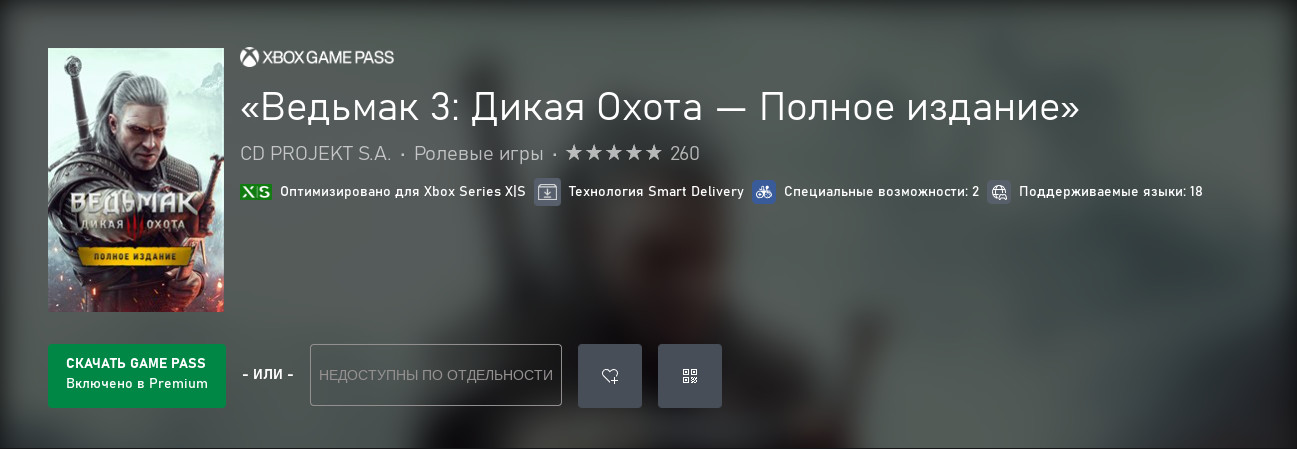
- The Witcher 3: Wild Hunt (RPG). A masterpiece that needs no introduction. On the base Xbox One, the game might experience frame rate drops in particularly dense areas, but it runs almost flawlessly on the Xbox One X. Its gameplay depth, story, and world are on par with the PC version—an essential addition to any Xbox One collection. The game is available on Game Pass.
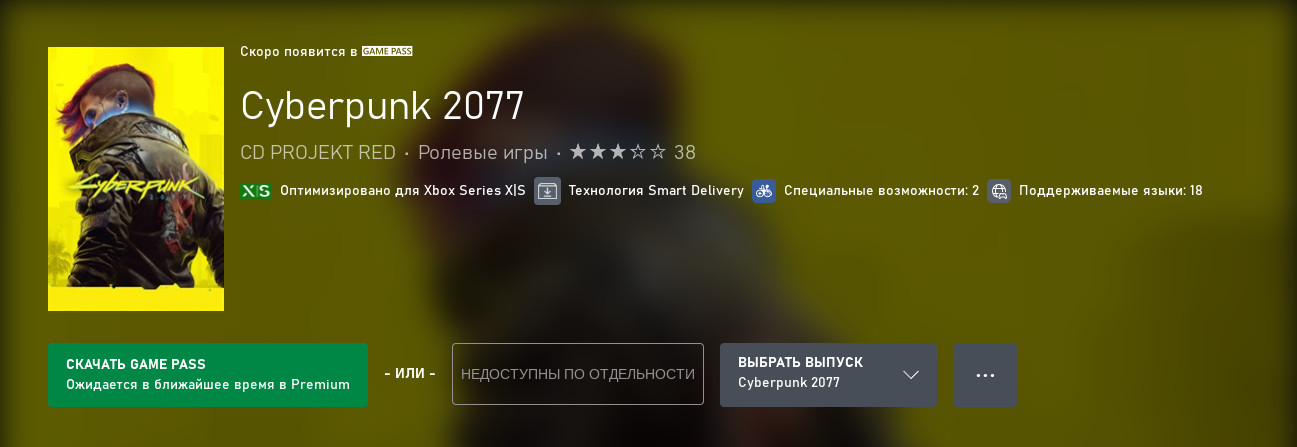
- Cyberpunk 2077 (Action RPG). This could have been the game of the generation, but on the base Xbox One, it was almost unplayable at launch: frame rates dropped to 15 FPS, crashes, and long texture loading times. After patches, the situation improved, but even now, it’s not the best way to experience Night City. On Xbox One X, the experience is significantly better, though still not ideal. Yes, playing Cyberpunk 2077 is better on PC or Series X|S. But it had to be mentioned. So, with reservations, you can try Cyberpunk 2077 on Xbox One. The game is expected on Game Pass.
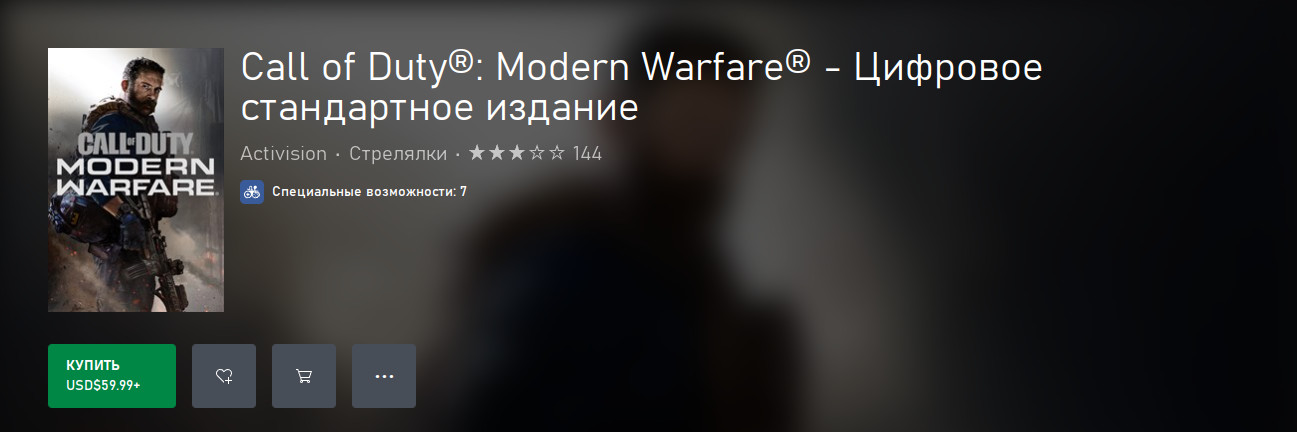
- Call of Duty (series) (First-Person Shooter). The series felt at home on PlayStation, with Activision often giving Sony fans additional exclusive content, and the series being a bestseller on PS. But now, CoD‘s home is Xbox. If you haven’t played CoD for some reason, Game Pass will let you dive in headfirst, not just into criticized new titles, but also the best “oldies.”
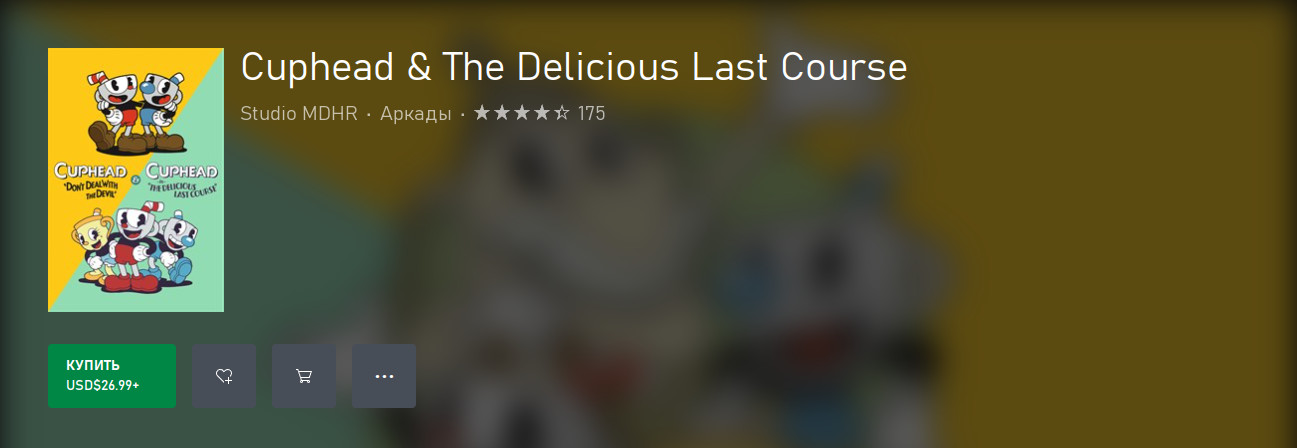
- Cuphead (Platformer/Roguelike). A masterpiece in the style of 1930s retro cartoons. Difficult but incredibly stylish. A game worth buying the console for—and one that still looks relevant today.
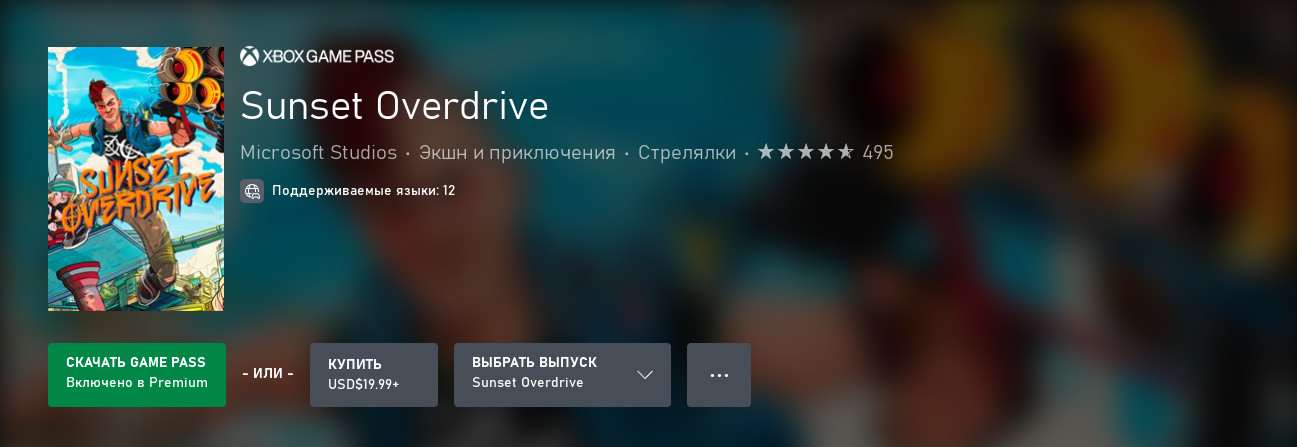
- Sunset Overdrive (Action). A wild, vibrant, ironic exclusive from Insomniac. Parkour across rooftops, creative weapons, and an excellent soundtrack. A game that still hasn’t received a worthy sequel—and one worth playing if only for its unique atmosphere.
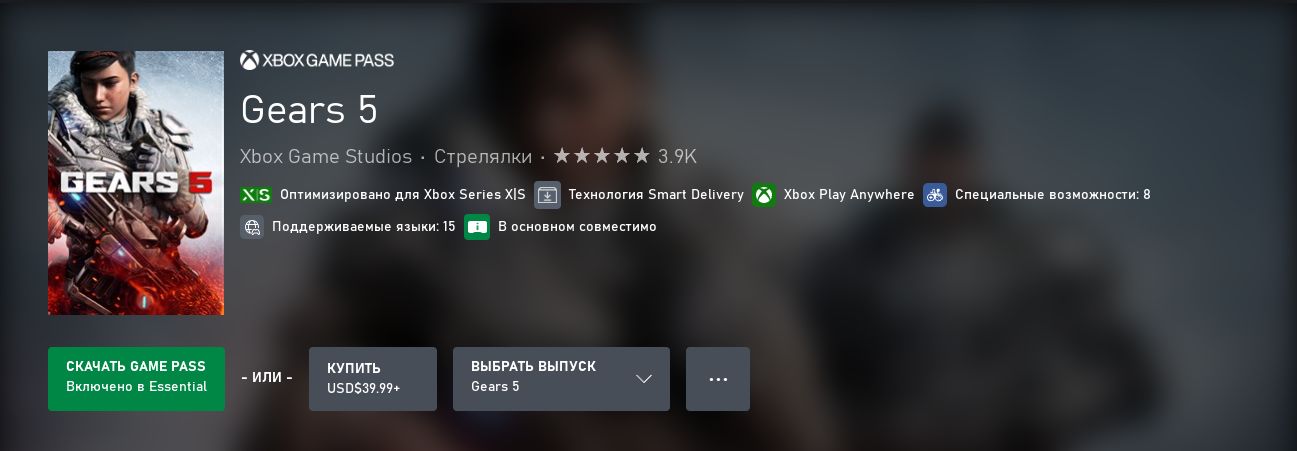
- Gears of War 4 and Gears 5 (Tactical Shooter). The return of a legend: vibrant visuals, visceral gameplay, and a cooperative campaign. Plus, an engaging story, even with new heroes. The entire series is available on Game Pass.
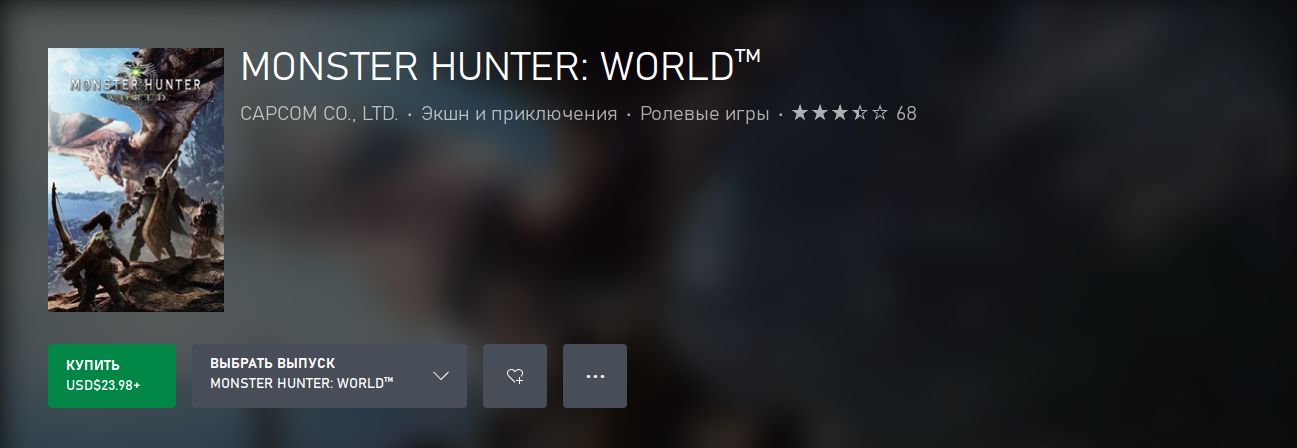
- Monster Hunter World (Action RPG). The game that brought the Monster Hunter series to Western markets. On the base Xbox One, there might be frame rate drops in particularly spectacular scenes, but overall, the experience is excellent. Co-op, deep progression, epic boss fights—it’s all there.
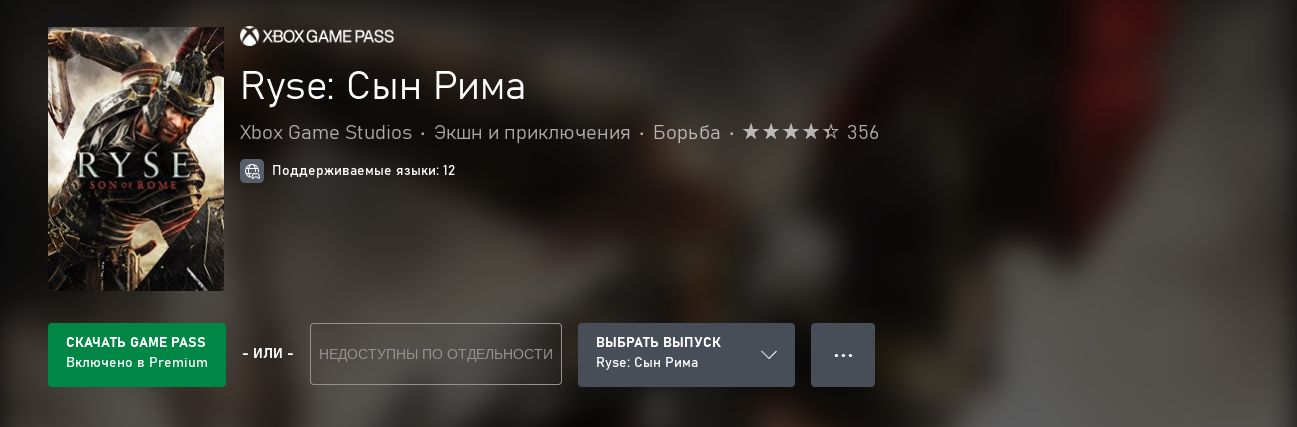
- Ryse: Son of Rome (Action). Visually one of the most beautiful games of its generation at launch. Gameplay-wise, it’s a linear but spectacular hack-and-slash with an impressive execution system. Today, it feels like an interactive historical epic film, but it’s still interesting to play through. The game is available on Game Pass.
- FIFA / EA Sports FC (series) (Sports Simulator). Yes, it’s an annual conveyor belt. But for football fans on console, there are virtually no alternatives. The series runs stably on Xbox One, the online community is active, and considering the availability of discs on the secondary market—it’s a perfectly viable option if you’re not chasing online features and just love playing football.
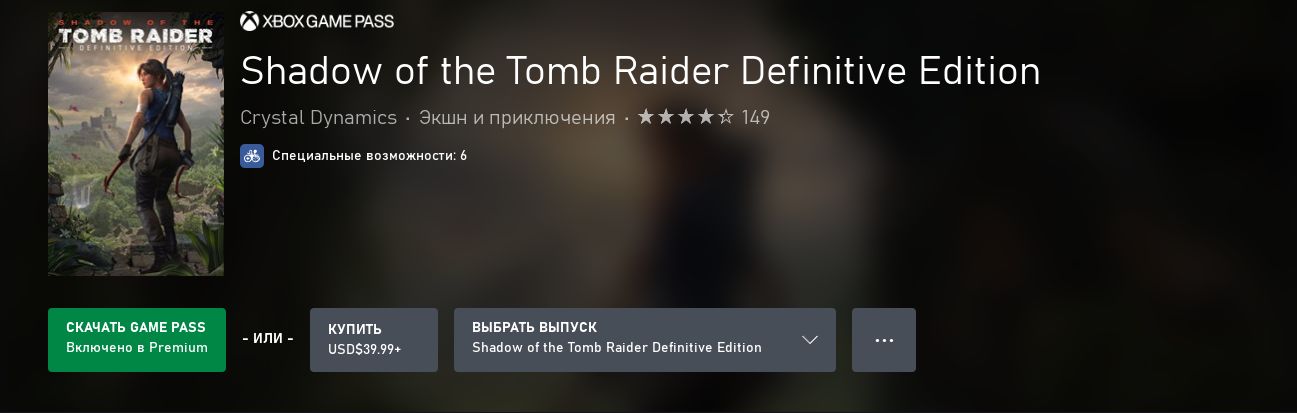
- Tomb Raider (series) (Action/Adventure). The reboot trilogy of Lara Croft looks excellent on Xbox One, especially the Xbox One X versions. A tight plot, beautiful locations, refined gameplay—a classic of action-adventure.
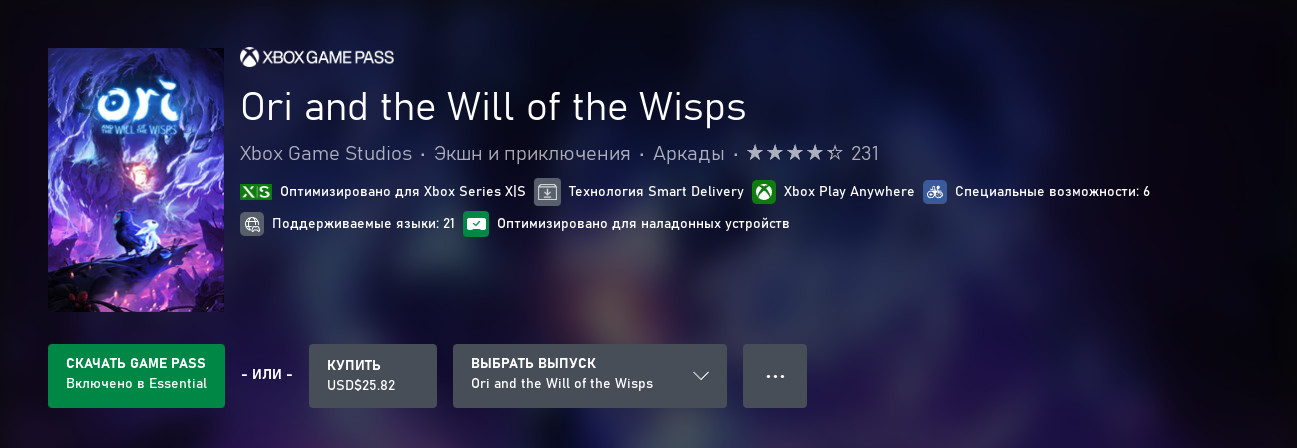
- Ori and the Blind Forest / Will of the Wisps (Metroidvania/Platformer). Two masterpieces with stunning visual aesthetics, a touching story, and refined gameplay. They run flawlessly on the original Xbox One—a must-play.
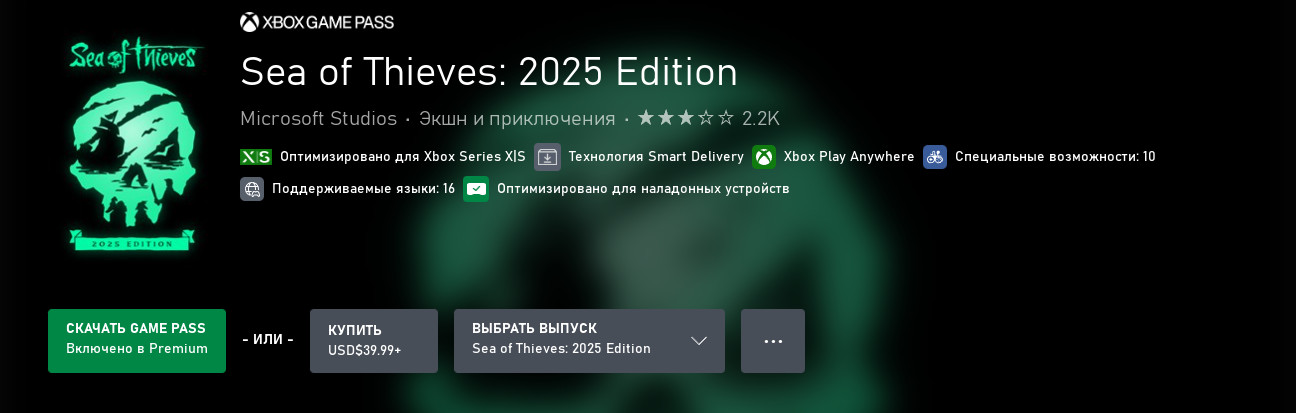
- Sea of Thieves (Action-Adventure/Online). A pirate sandbox for cooperative play. While content was scarce at launch, the game blossomed by the end of the platform’s life and is still active. It runs stably on Xbox One, and with a Game Pass subscription, it’s one of the most accessible ways to try it.
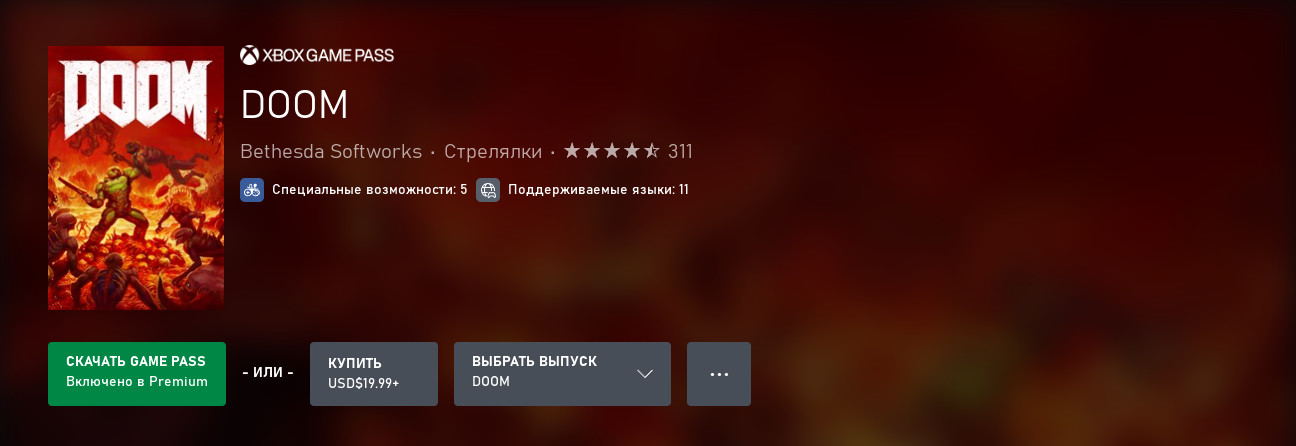
- Doom (2016) / Eternal (First-Person Shooter). The benchmark for dynamic, aggressive, gory shooters. Excellently optimized, they play incredibly smoothly. On Xbox One, especially on One X, they run almost perfectly—without gameplay compromises. If you get hooked, you’ll need to move to Series X|S for the sequel, The Dark Ages. The entire series is available on Game Pass.
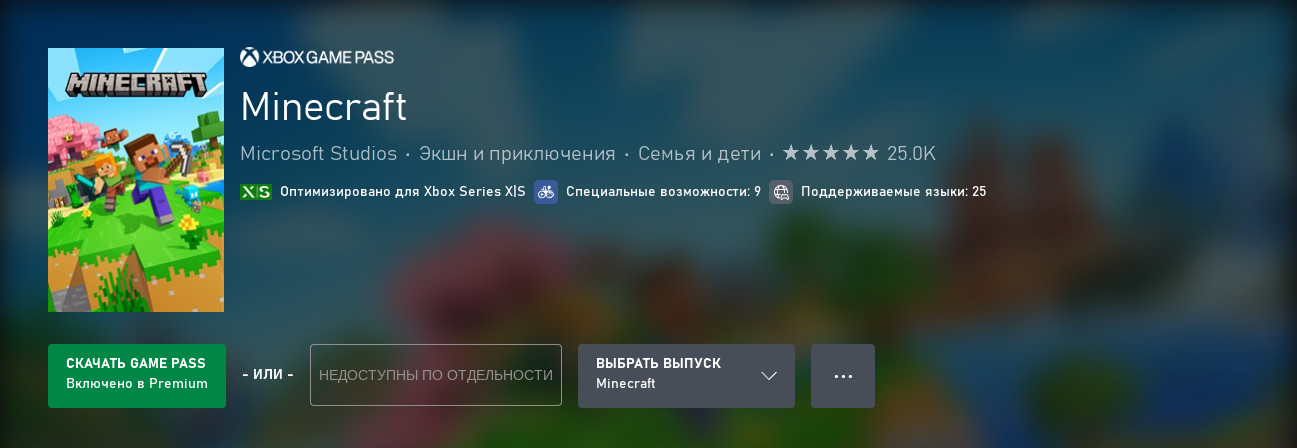
- Minecraft (Sandbox/Survival). Yes, it’s everywhere. But the Xbox One version receives updates on par with other platforms and remains current and good. The game is available on Game Pass, but this is a case where buying it is recommended.
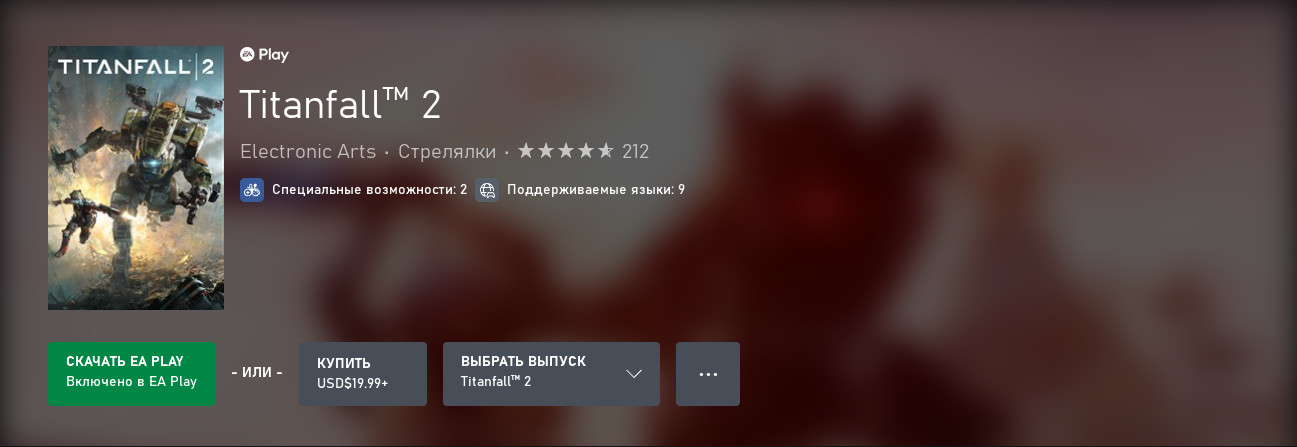
- Titanfall 2 (First-Person Shooter). A cult classic campaign with one of the best stories in the genre and insane multiplayer. It’s a shame a sequel never materialized, but the second installment still plays incredibly smoothly. Apex Legends is a separate free-to-play game in the Titanfall universe, available on many platforms, but unrelated to the original’s storyline.
Xbox Series X|S
Overview
Microsoft is losing the console sales race for the second consecutive generation. However, this doesn’t mean that buying modern Xbox consoles now is pointless.
Xbox today is primarily about Game Pass—a subscription that provides access to hundreds of games, including Microsoft exclusives on day one, backward-compatible titles from past generations, and partner titles. Even the affordable Xbox Series S in its base configuration allows you to experience this for a reasonable price.
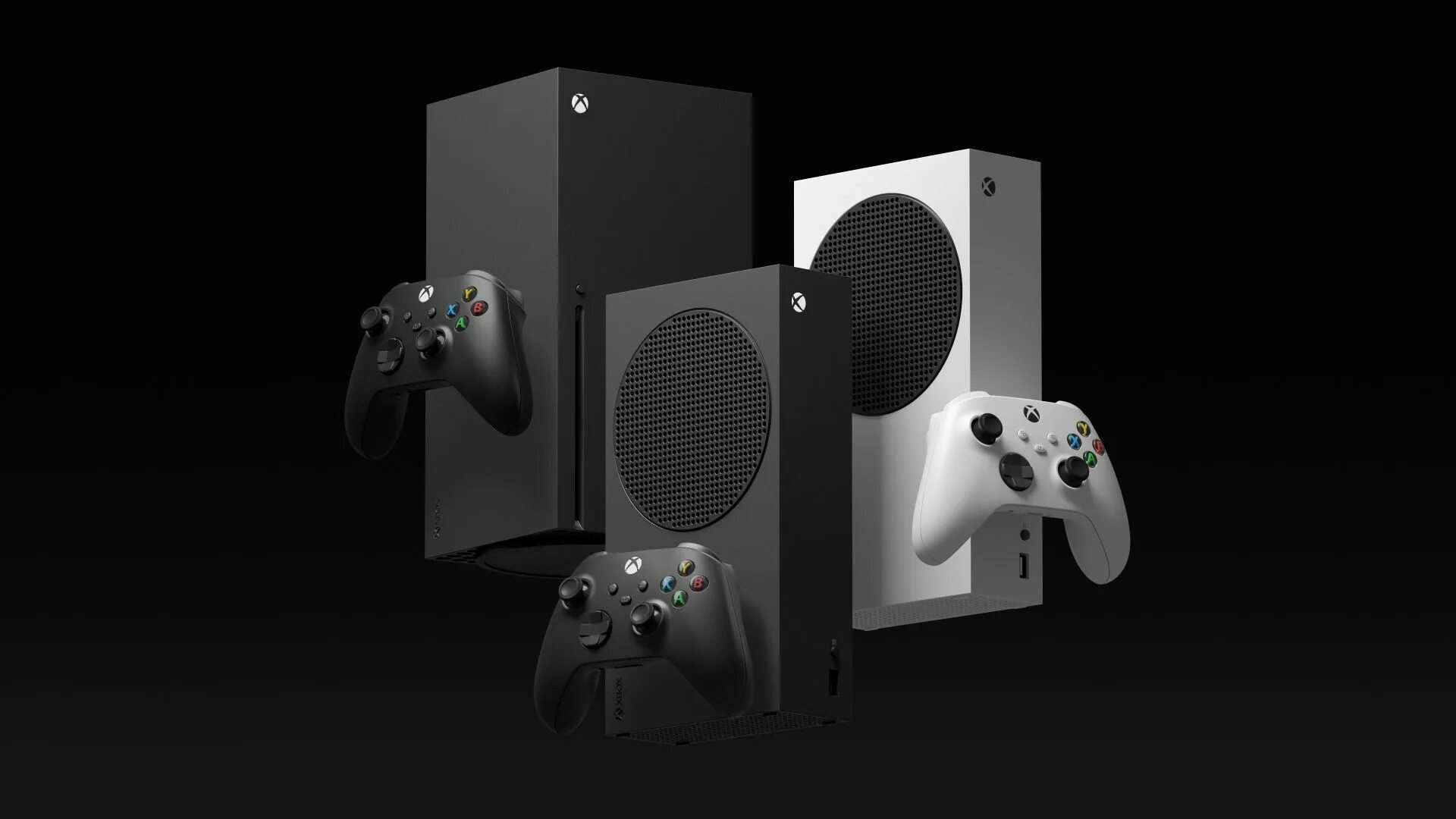
Technically, the Series X is the most powerful console on the market among its peers (PS5 Pro aside): 12 teraflops of graphics performance, a fast SSD, and support (though often nominal) for 4K and 120 Hz. The Series S is a more affordable option with less power, no optical drive, and a focus on 1080p gaming, but with the same access to the game library.
In some regions, the situation with the Xbox ecosystem is unique but not hopeless. From the perspective of PlayStation players, the issue is the limited availability of physical game versions for Xbox. From the perspective of PC enthusiasts, digital releases are expensive, and multiplayer requires a paid subscription.
It’s also important to note that the majority of Xbox consoles available on the market lack Blu-ray drives. You simply won’t have anywhere to insert discs, even if you find them for sale. Of course, the top-tier Series X does have a drive, but since fewer players own such consoles, you will have trouble finding physical versions of games. Their selection in many regions is limited.
However, in reality, Game Pass subscriptions and the purchase of digital versions of games partially offset both high prices and the absence of physical versions.
If you rely on the digital Game Pass library and are willing to subscribe, and you’re comfortable purchasing digital game versions through intermediaries, then the cost of owning the console will be reasonable. The Xbox Series S won’t break your bank upon purchase (unlike a gaming PC). But it’s true that games, especially physical versions, are expensive compared to Steam. And digital versions cannot be traded in or exchanged, as PlayStation players often do.
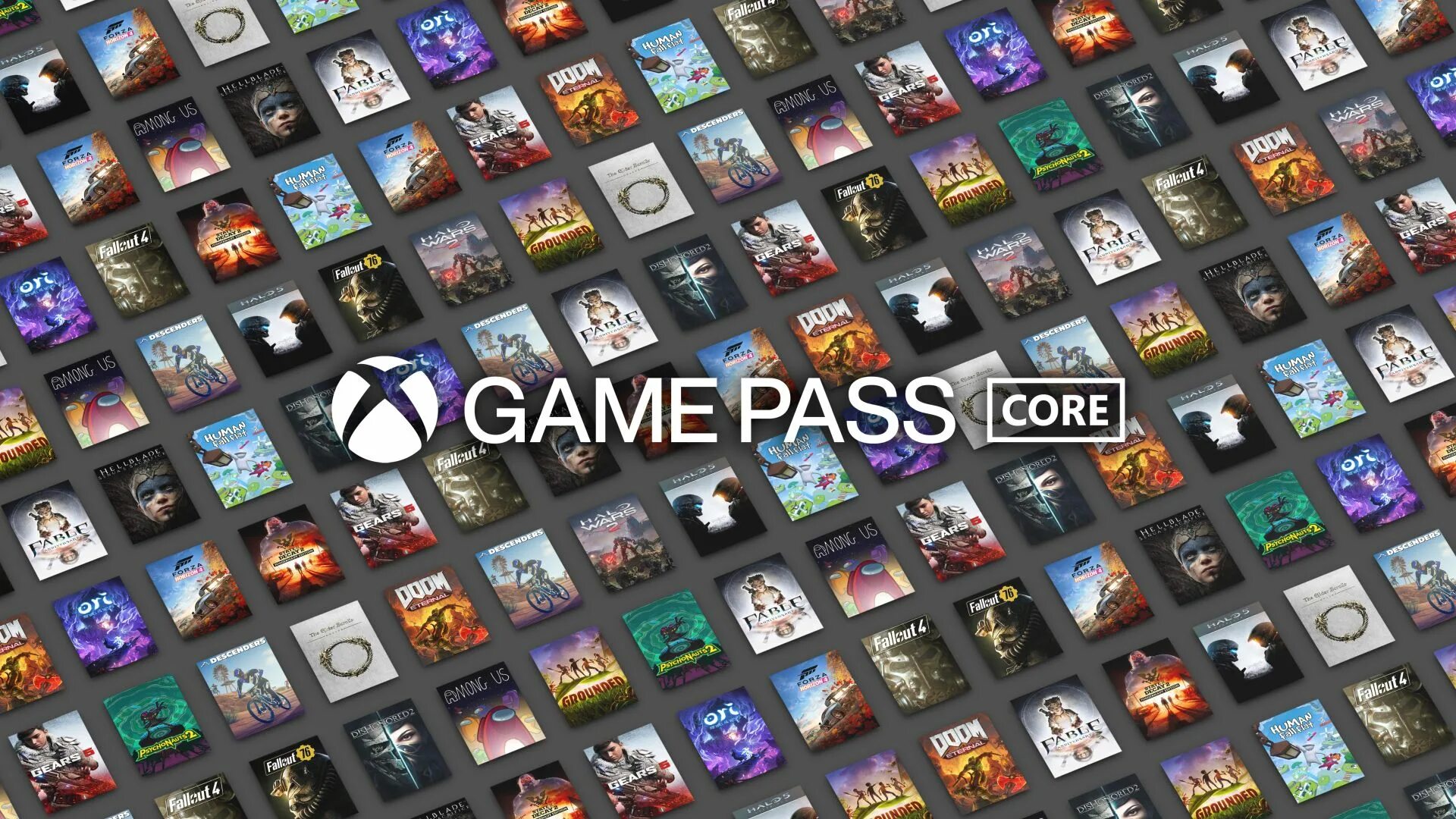
Furthermore, thousands of games from Xbox One, Xbox 360, and the original Xbox run on Series X|S, many with improved graphics and frame rates.
The modern Xbox ecosystem also faces other challenges.
First, there’s a scarcity of major first-party exclusives from internal studios. Throughout the current generation, few popular games have been released by Microsoft’s studios: Forza Horizon 5, Gears 5, Psychonauts 2, Starfield, Indiana Jones. The console generation’s launch in 2020 even occurred without console exclusives—only Halo Infinite with delays and significant content caveats. The situation has only recently begun to change, but the gap with competitors remains noticeable.
Second, the platform’s positioning is unclear. What will the future console be like? Rumors suggest it could be a hybrid Windows-based device capable of running both “console” and “PC” versions of games, or simply a branded PC with an optimized interface. Microsoft itself offers no clear answers, and after Phil Spencer’s departure as head of Xbox and the appointment of Asha Sharma, the strategy has become even less predictable.
Games
The Series X|S library is primarily the legacy of Xbox One plus new-generation projects. Most games operate under the Smart Delivery program: once you buy a game, you receive the optimal version for your console.
It’s probably still too early to compile a list of cult and significant games for Xbox Series. New games are still being released for the console, including from Microsoft’s internal studios, and it’s hopeful that Series X|S still has much more to offer.
Nevertheless, a few games are worth mentioning now. If you’ve become a proud owner of an Xbox Series, consider these titles:
- Forza Horizon 5 (Arcade Racing). Mexico, hundreds of cars, incredible thrill, and some of the most beautiful graphics on the console. The benchmark for modern arcade racing simulators.
- Starfield (RPG). An epic space RPG from Bethesda. While the game divided audiences, if you enjoyed the “explore, gather, upgrade” format of Fallout and TES, you’ll find hundreds of hours of content here.
- Indiana Jones and the Great Circle (Action-Adventure). An atmospheric first-person adventure in the spirit of classic games. An excellent reason to immerse yourself in Indiana’s world, even if you’re not a fan of the series.
- Halo Infinite (First-Person Shooter). A controversial installment in the Halo series, misunderstood by many fans, but still a good shooter. The game is available on Xbox One, but looks slightly better on Series X|S.
- Psychonauts 2 (Platformer/Adventure). A witty, creative adventure from Tim Schafer. Levels inside human minds, excellent humor, memorable characters.
- Hi-Fi Rush (Rhythm-Action). A vibrant, stylish, incredibly dynamic action game where everything is subordinate to rhythm. One of the most unexpected and pleasant surprises of the generation.
- Baldur’s Gate 3 (RPG). The undisputed triumph of 2023. A deep system of choices, turn-based combat, and a story that changes with your decisions. It runs stably on Series X, offering a full D&D experience.
- It Takes Two (Co-op Adventure). The best game for co-op play. Constant changes in mechanics, a touching story, and excellent pacing. An ideal way to explore the console’s capabilities with a friend.
- Atomic Heart (First-Person Shooter). Soviet retro-futurism from domestic developers. A controversial plot, but impressive visuals and dynamic combat.
- Diablo IV (Action RPG). The dark world of Sanctuary at its best. Addictive gameplay, constant loot, and a grim atmosphere. The console version received convenient controls, making gamepad play as comfortable as on PC.
- Alan Wake 2 (Horror). The visual benchmark of the generation. A dark story, genre blending, and stunning graphics. The game demands powerful hardware, so it shines best on Series X.
- Resident Evil (series) (Horror). The series is experiencing a renaissance. Remakes of the second, third, and fourth parts, as well as Village and Requiem, run excellently on the console.


This list is sufficient to understand the platform’s direction. While there aren’t dozens of exclusives, the quality of the projects is worthy enough to buy an Xbox and play.