

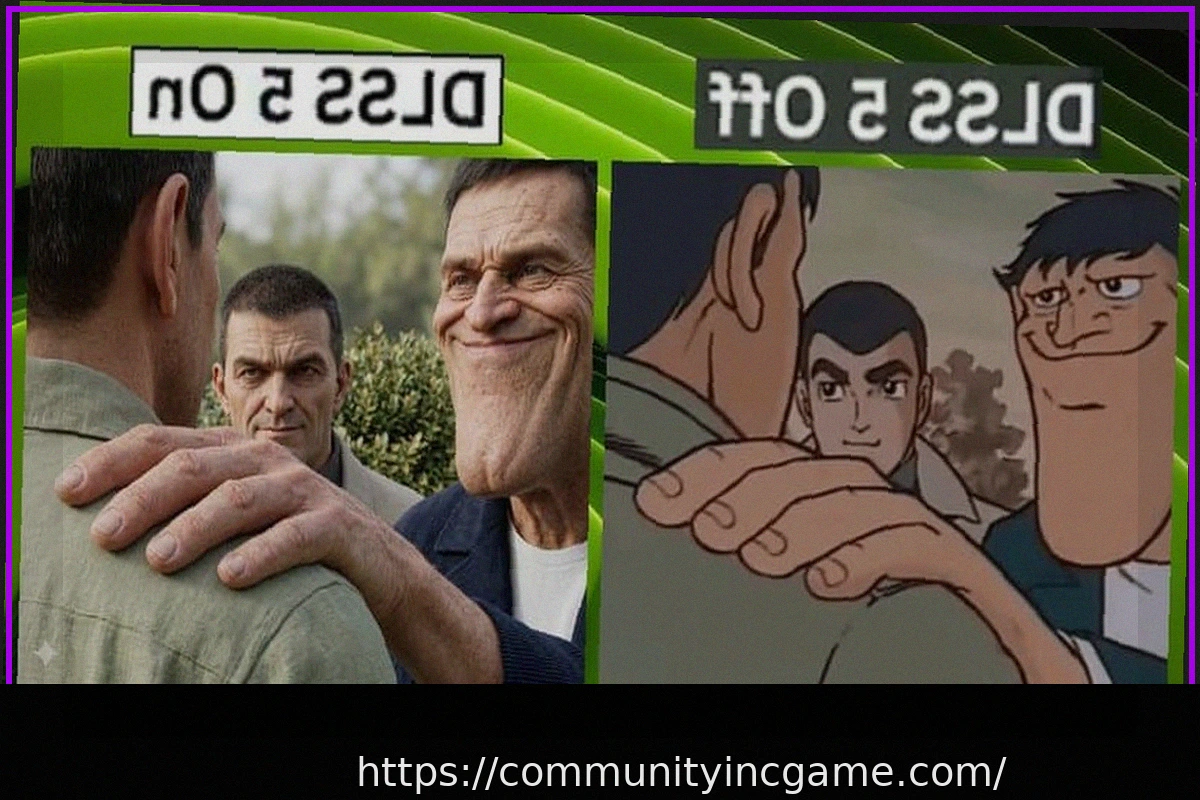

Georgian Avasilcutei, a seasoned professional, suggests that many individuals, despite lacking a deep understanding of graphics technology, still feel compelled to express their opinions.
The unveiling of NVIDIA’s DLSS 5 technology at the GTC 2026 conference ignited a significant response across both the gaming community and social media platforms. While the new iteration of upscaling and rendering received favorable reviews from expert journalists and developers, it became a focal point for intense discussions regarding the integration of AI in video games.
On one side, respected publications such as Digital Foundry, along with various industry representatives, offered high praise for the demonstrated technology. Notably, Bethesda emphasized that DLSS 5 remains entirely under the control of developers and serves as an optional enhancement tool.
Conversely, a segment of social media users harshly criticized the innovation, dismissing it as “merely an AI filter” and accusing NVIDIA of compromising the original artistic vision of game developers.
Stepping forward to defend the technology was industry veteran and artist Georgian Avasilcutei, known for his work on games like Remember Me, Life is Strange, Dishonored 2, and Hogwarts Legacy. He sharply rebuked opponents of DLSS 5, asserting that many of them do not genuinely grasp the underlying mechanics of the technology.
According to Avasilcutei, DLSS 5 is not a generative AI that fabricates entirely new images “from scratch.” Instead, the technology leverages existing in-game data—such as geometry, textures, and light sources—to refine and improve scene lighting and shading. He stressed that this process involves precise handling of existing information, rather than neural network “hallucinations.”
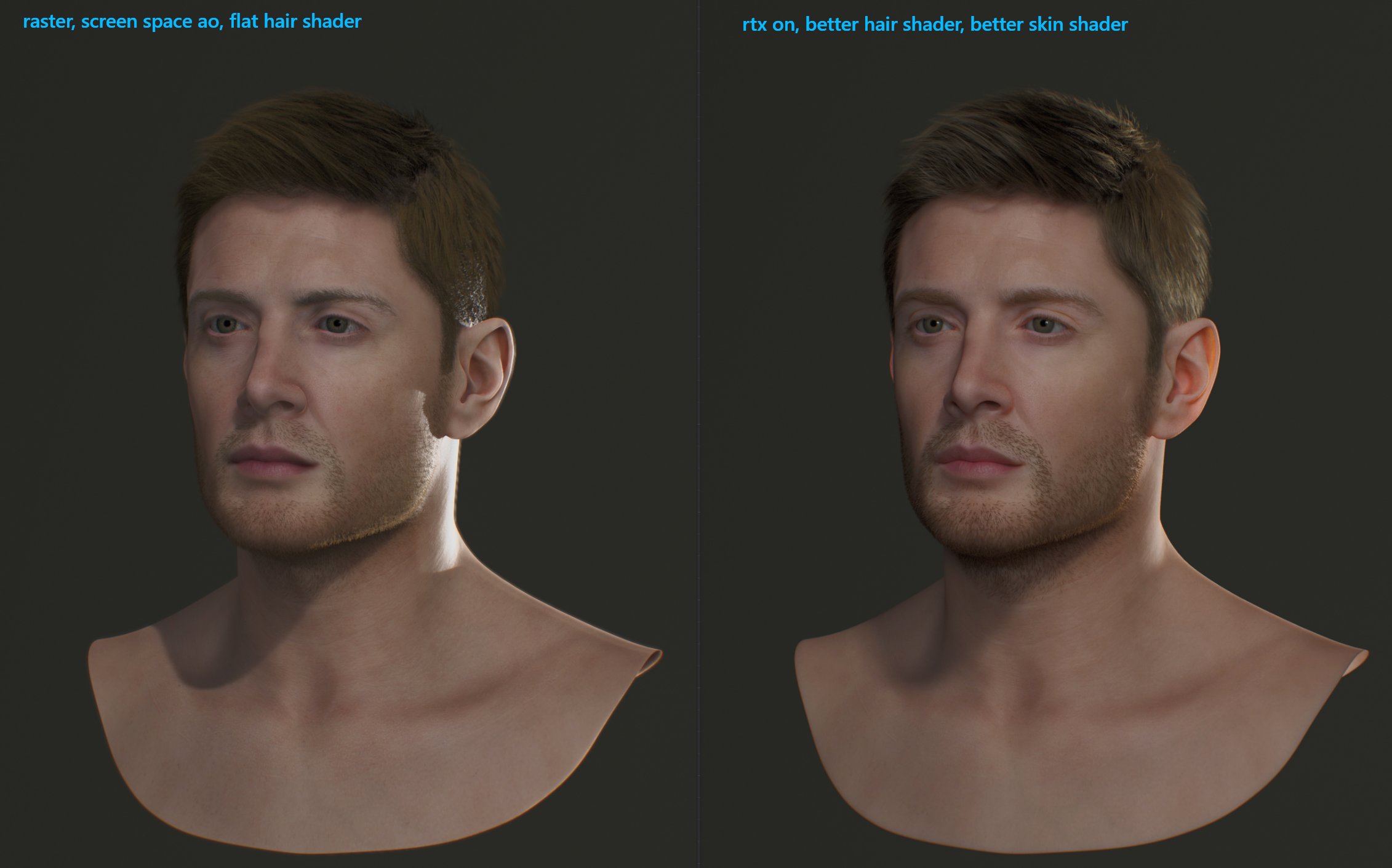
To illustrate his point, Avasilcutei shared an example from his own work: a direct comparison of a character model rendered using traditional rasterization versus ray tracing. He observed that with more accurate lighting and enhanced shaders, the skin and hair appeared so distinct that the character seemed transformed, despite their core geometry remaining unchanged. He contends that DLSS 5 is designed to deliver precisely these kinds of visual enhancements, but with significantly reduced computational demands.
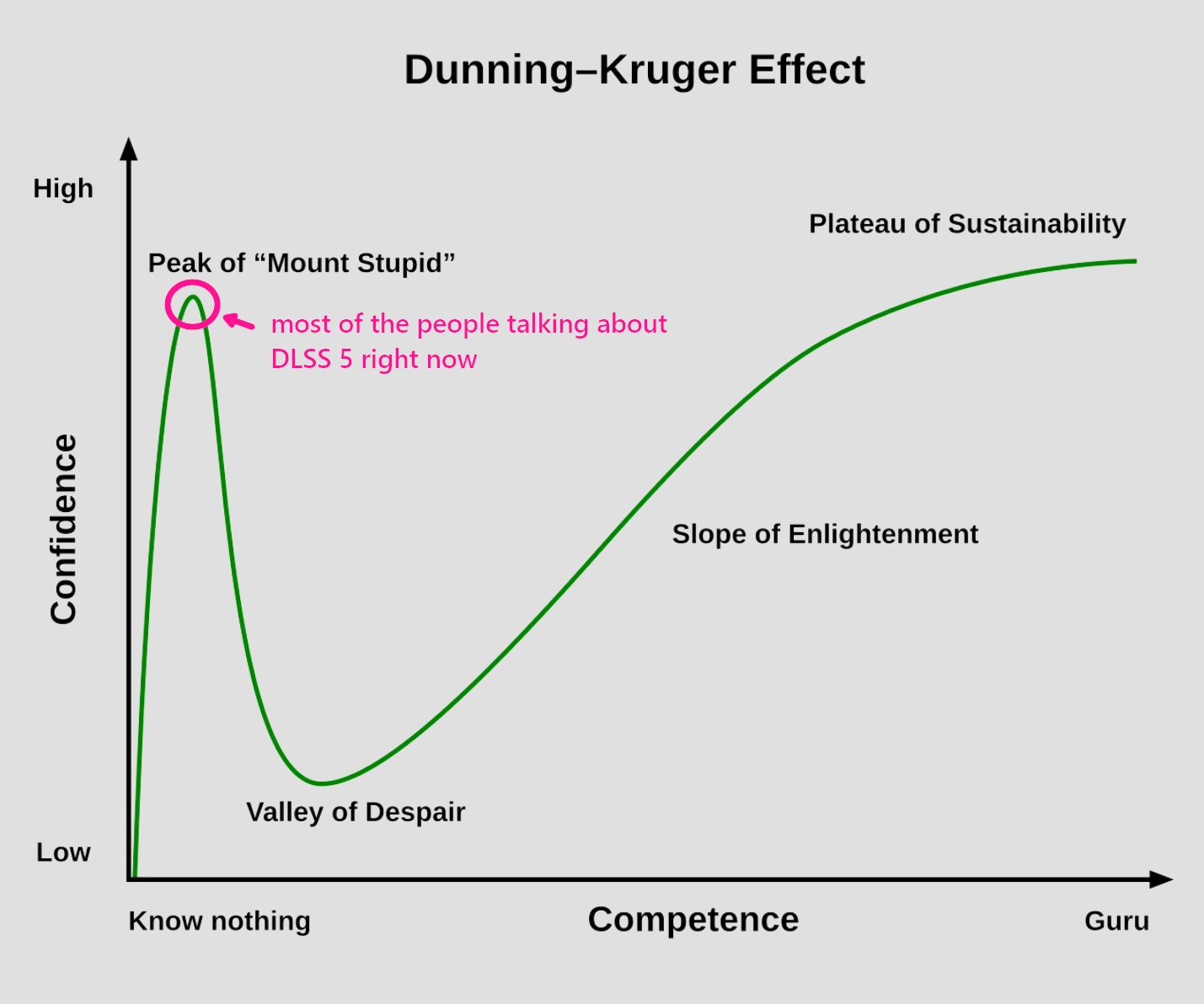
In his criticism of the opposing viewpoints, the artist even invoked the Dunning-Kruger effect, suggesting that many critics are at the apex of “Mount Stupid,” offering superficial judgments on the technology simply because they hear the term “AI.”
Fundamentally, the core argument put forth by proponents of DLSS 5 aligns with a concept familiar to any artist or photographer: the visual perception of a subject, particularly a face, is profoundly influenced by its lighting.