

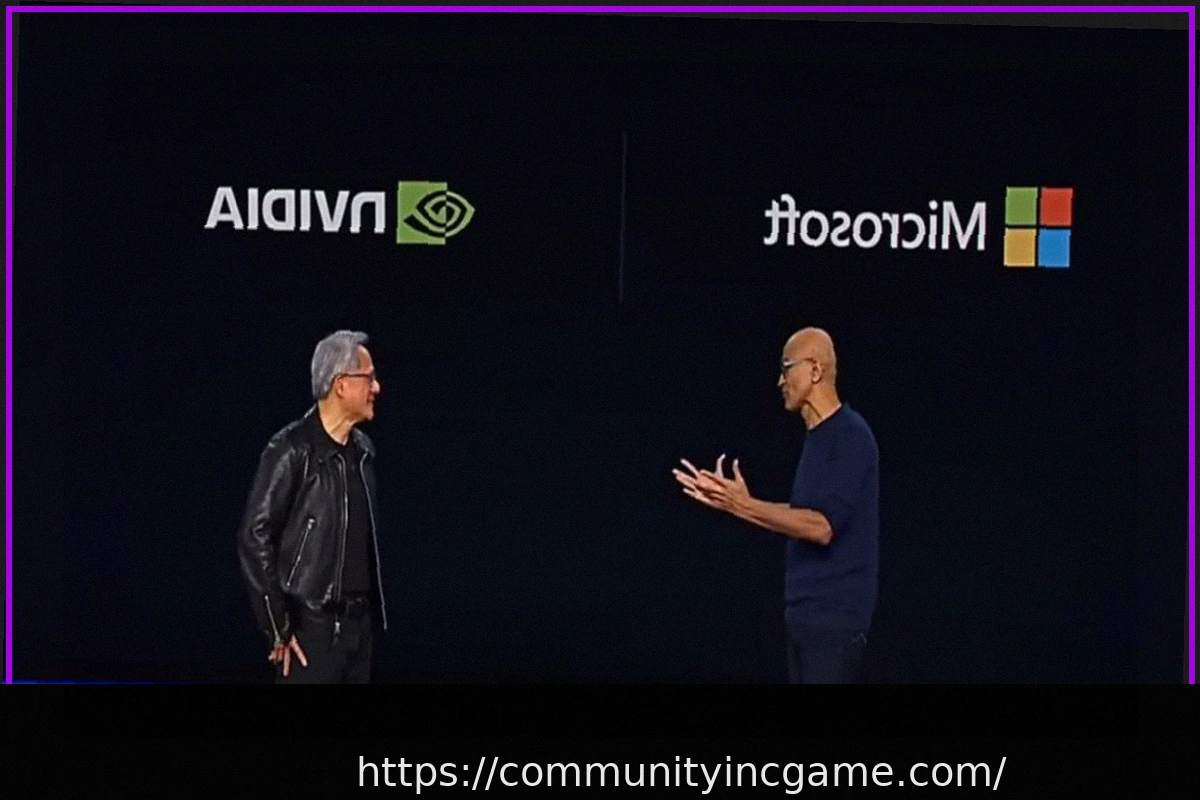
Microsoft CEO Satya Nadella recently underscored the profound significance of the gaming community, stating that without its contributions, his own company would not have reached its current impressive stature.
Speaking at a recent Q&A session focused on the future of the Xbox brand, Nadella declared that the gaming industry played a fundamental and transformative role in the evolution of both Microsoft and NVIDIA. He even lightheartedly admitted to often joking about this very topic with Jensen Huang, NVIDIA’s CEO.
According to Nadella, strategic investments in the gaming sector not only facilitated the creation of popular game titles but also significantly accelerated progress in other critical technological domains, including cloud services, the Windows operating system, and advanced server technologies.
“I often joke with Jensen Huang, saying that if it weren’t for games, NVIDIA wouldn’t exist. Just think about it — without DirectX, the entire revolution in graphics processing units and hardware acceleration would never have happened.”
A pivotal moment for NVIDIA arrived with the creation of the GeForce 256 graphics card. This groundbreaking chip was the first to be officially designated as a Graphics Processing Unit (GPU). It innovatively shifted the burden of geometric processing from the central processing unit (CPU) to the dedicated graphics chip, leading to a dramatic improvement in 3D game performance and effectively ushering in the modern era of GPUs.
For Microsoft, an equally significant development was the introduction of DirectX technology in 1995, which debuted alongside Windows 95. This comprehensive set of Application Programming Interfaces (APIs) empowered software – especially games – to interact directly and efficiently with a PC’s underlying hardware, including graphics cards, processors, sound cards, and input devices. Thanks to DirectX, developers gained the unprecedented ability to create immersive games that could run smoothly across millions of diverse computer configurations.