

Recent reports indicate that China has officially given its approval for the import of Nvidia’s advanced H200 Graphics Processing Units (GPUs). This move is a crucial development for China’s burgeoning artificial intelligence sector, which relies heavily on high-performance computing chips to drive innovation and development. The Nvidia H200 is touted as a next-generation AI accelerator, offering significant performance enhancements over its predecessor, the H100, making it essential for training large language models and complex AI applications.
However, this positive development for the Chinese tech industry is tempered by a potential countermeasure from the United States. The US government is reportedly considering implementing export caps on these advanced chips, specifically targeting individual Chinese companies. This potential restriction aligns with Washington’s broader strategy to control the flow of cutting-edge semiconductor technology to China, aiming to prevent its use in military advancements or for gaining a strategic technological edge.
If these caps are imposed, it could significantly limit the access of certain Chinese technology firms to Nvidia’s most powerful AI hardware, potentially hindering their progress in AI research and application development. For Nvidia, a major player in the global AI chip market, navigating these escalating geopolitical tensions is a complex challenge, given China’s substantial demand for its products. The ongoing situation highlights the critical role of semiconductors in the technological competition between the United States and China.
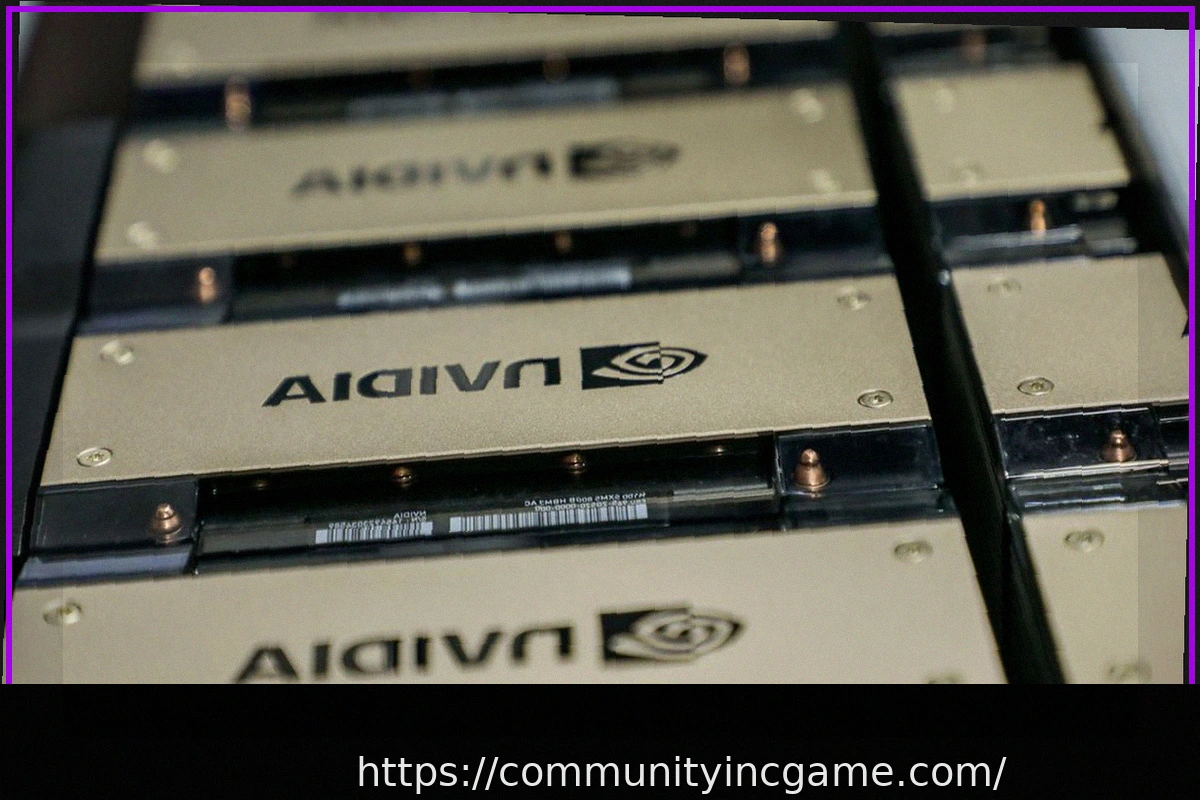
A visual illustration of Nvidia’s widespread infrastructure can be seen with Nvidia H100 chips housed within a server room at the Yotta Data Services Pvt. data center in Navi Mumbai, India, exemplifying the global reliance on such high-performance computing solutions.