

Digital Extremes recently hosted its 10th TennoCon, celebrating 12 years of Warframe and introducing its new intellectual property, Soulframe. A new gameplay demo for Soulframe was showcased, presented by Digital Extremes CEO Steve Sinclair, Soulframe creative director Geoff Crookes, and senior community manager Sarah Asselin. Following the presentation, we had the opportunity to speak with two members of the Soulframe development team.
Sydney Hills, narrative designer, and Scott McGregor, lead designer for Soulframe, shared insights into the game`s innovative skill system, its French-speaking witch named Verminia, the melodious bear Bromius, and much more.
Soulframe is envisioned as a free-to-play, open-world multiplayer RPG set in a rich fantasy world, a deliberate contrast to Warframe`s sci-fi aesthetic. Its core identity is deeply connected to nature, encouraging players to explore the mystical wilderness of Midrath. Combat emphasizes bows and magic, moving away from firearms and lasers.
For those eager to experience the game firsthand, sign-ups are currently open on the official Soulframe website. Digital Extremes is offering Soulframe Preludes access to all players who register during the TennoCon weekend, specifically before July 20 at 11:59 p.m. ET.
Evolving the Skill System
Question: Earlier, Steve Sinclair mentioned that traditional “skill trees” felt unengaging and not ideal for a live service game, while showcasing concept art for a new skill system. Could you elaborate on this fresh approach to skill management and acquisition, and how it better suits Soulframe?
Scott McGregor: If you recall the early days of Warframe, we experimented with a skill tree, but it didn`t quite click. We actually repeated that mistake [laughs]. With Soulframe, our goal was to integrate the system more broadly with weapon categories to align with the longevity of the game we`re building. Our games are designed for thousands of hours of play. We aim to keep players engaged for a very long time; many Warframe players have been with us for the entire 12 years.
Designing systems that remain interesting and deep enough for such an extended period is a significant challenge. Observing our previous experiences with skill trees, we felt they wouldn`t serve us well again. So, we`re shifting to a more open-ended system that allows for quick and asynchronous additions. Skill trees often suffer from the issue of requiring respect for all player investment.
For instance, a veteran player who has been with us for a long time can immediately access new, cool additions at the “end” of a traditional tree. A new player joining five years in, however, cannot. Or someone who just watched a dev stream might think, “Wow, those new skills look amazing; I want to try this game!” Only to then see a skill tree and realize it would take thousands of hours just to reach that desired new skill.
An open-ended system, where we can dynamically add and remove elements as we develop them, allows both new and long-term players to experience these innovations. This flexibility is a primary reason for our change; we`re building a system that can evolve with us.
McGregor: It`s not entirely one way or the other. Your progression in terms of how many skills you can equip will be tied to your proficiency with a specific weapon category. For bows, for example, you`ll have a “bow skill ninja scroll” equivalent where you can slot in various bow techniques and abilities. As you master more bows, you`ll unlock more slots. Individual skills themselves will be discovered within the world – perhaps from an ancient ancestor, or as a rare drop.
The Rich Tapestry of Languages and Mythologies
Question: We were introduced to the French-speaking witch, Verminia—who I absolutely adore, as I`m a French speaker myself—and it was noted that language plays a crucial role in Soulframe. Does this linguistic diversity tie into the narrative directly, or is it more about establishing a broader atmospheric vibe for the world?
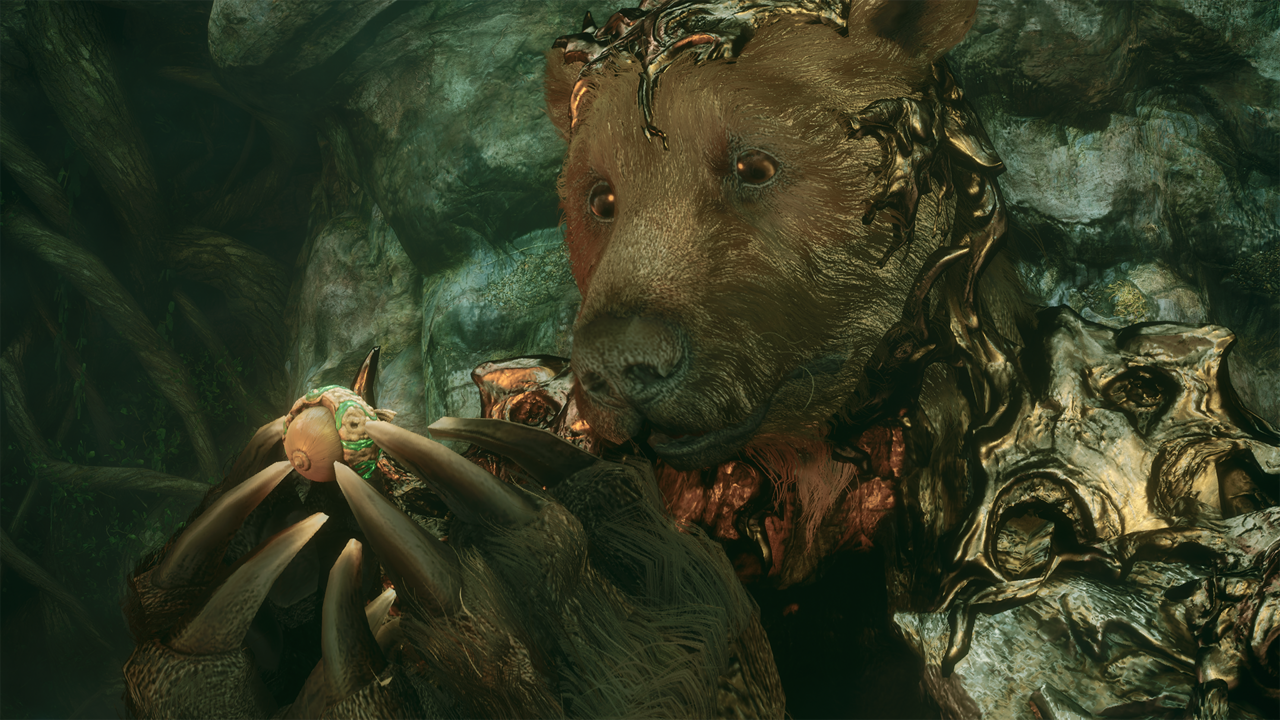
Sydney Hills: Yes, a significant part of Soulframe`s essence lies in its diverse languages and accents. We`ve already collaborated with voice actors from many different regions. Kim Bonifay, who voices Verminia, is French but based in London, England. For the Bromius quest, we worked with Øystein Kanestrøm, the voice of Bromius, who is Finnish and recorded from Finland.
In my writing, I often draw inspiration from historical languages and slang. For our most recent update, we brought in numerous Scottish voice actors for NPCs around Dendria, our pseudo-Scottish town. I learned so much wonderful Scottish slang, and it was incredibly fun. Often, I`d bring scripts with Scottish slang to recording sessions, and the Scottish actors would ask, “So, does this mean he`s drunk?” I`d reply, “Well, no, I thought it meant he was tired.” And they`d respond, “Nope, this means drunk.” It seems nearly every Scottish slang term, upon deeper inspection, means “drunk” [laughs].

Anyway, tangent aside, the Bromius quest also drew heavily from Finnish mythology and language. There`s a Finnish word that loosely translates to “tears of the deep forest spruce.” And again, it turns out to be a euphemism for alcohol, specifically moonshine.
McGregor: Oh, really?
Hills: Engaging in that early linguistic research definitely helps spark many of the game`s themes. It certainly inspired the Bromius quest. And, you know, what would a tree cry? It would be sap.
Narrative Challenges in a Live Service Environment
Question: What challenges do you face when crafting a narrative for a live service game in these nascent stages, especially with players already in “Preludes” and the game not yet fully launched? How far ahead do you need to plan for a game designed to grow year after year?
Hills: From a narrative perspective, it`s largely a process of estimation. There`s a lot of it. While we have certain fixed major plot points concerning our key villains, heroes, and characters in need of rescue, much of the story emerges organically during the writing of weapon descriptions or in-game location text.
It`s a very gradual build, where every so often, I`ll insert something like, “Okay, there`s another place in this world called `Skelflind.` Now that`s a concept we can draw upon later.” It`s largely about following threads we find intriguing and trusting that they will eventually converge.
Question: That sounds quite challenging, to be honest [laughs].
McGregor: We`re planting a lot of seeds. You`re leaving small hints of things you`ll revisit years later and say, “Oh, this is what I meant back then about that one-sentence mention.” But we`ll expand on it later. I always found that incredibly fascinating about Warframe`s development. Things vaguely referenced in very early lore evolved into significant elements later on. I think that was fantastic, and I believe Soulframe will follow a similar trajectory.

McGregor: It`s a distinct category. So, sidearms are our specific type of weapon that fits into that particular slot. I won`t rule out the possibility of eventually allowing you to mix and match – perhaps putting a sidearm into your main slot or vice-versa. That could become a feature, but currently, they are segregated into two distinct categories.
However, there will be diverse options within the sidearm category. You might acquire a magic-casting wrist gauntlet for your sidearm, or a wrist-mounted bow. It won`t always be just blades or maces. There will be a variety of weapons in both classifications.
Question: I believe Sarah Asselin, the community manager, mentioned that the sidearm is very distinctly not a secondary weapon.
McGregor: Yes… I think Steve Sinclair is rubbing off on Sydney too. They enjoy naming things uniquely for Soulframe. Which, you know, makes my life a bit harder because I always stumble over these terms when we`re discussing them publicly. It’s like, “It`s your sidearm,” [but no,] “It`s your secondary.”
I believe what`s great about the games we create is that we go that extra mile to ensure they possess a distinct flavor and uniqueness. It`s not just the same old thing everyone else uses. We strive to imbue them with something that makes them exclusive to our game.

McGregor: For me, currently, the coolest new feature we have is the alternate fire mode for bows. It’s like a rain of arrows over an area. I thought that was a neat take on something common; bows exist in many games, with various ways to implement them. I felt this particular approach was truly unique to us.
The mechanic that has generated a lot of excitement in the demo is—if you saw it in the live demonstration—the ability to reflect magic spells back and forth. It felt like a wizard-on-wizard battle. You can essentially ping-pong that projectile back and forth, much like a parry with swords. If timed correctly, you can bounce it back and forth, and each time it travels, it becomes a little more powerful. Landing that final, super-charged shot feels incredibly satisfying when you`re the one delivering it. This has been exceptionally popular within the studio; it feels truly awesome.
Hills: Magic ping-pong. Has anyone called it that yet?
McGregor: I don`t know [laughs]. I`m waiting for you guys to name it so I can stumble over it later.
Hills: Magic ping-pong. Write that down [laughs].
McGregor: And looking ahead, for me, it`s Motes. We have a Mote system in the game currently, but it`s somewhat bland—just stats. We`ve conceived a [new] idea where Motes are creatures that reside within your sword and grant it unique abilities.
As this system progresses, comes together, and we refine it, it`s starting to feel genuinely distinct to the game. So, I`m excited about where that`s heading as a future project I`m working on.

A Living World Forged from Ancient Lore
Question: Soulframe`s narrative is deeply rooted in nature. This is evident in the environments and characters like Bromius the bear, seen in the demo. Has there been an emphasis on integrating more talking or singing animal encounters or companions? Because I`m imagining a Disney princess vibe, but significantly more dangerous.
Hills: Yes, according to the current lore, only our Omen Beasts possess the ability to speak. All other animals in the game currently produce only charming chittering noises. Though we did discuss—and someone joked today about it having a “Pied Piper” vibe—a group of small singing and dancing animals following a bard. And I thought that would be quite endearing if they sang.
But no, I believe for now, our Omen Beasts… embody almost the collective spirit of the animal species they represent. So, Bromius is the collective spirit of all bears in Midrath. Because of this, he wields an extra source of power that enables him to communicate with the Envoy. And I`m certain we`ll continue to build upon this with new Omen Beasts in the future.
Question: Are there any particular stories or tales that have inspired your narrative crafting that might surprise people?
Hills: Since I started working on Soulframe, I`ve become intensely interested in historical mythologies. When we first began discussing an Omen Beast in the form of a bear, I naturally researched which cultures feature bears prominently in their myths. There are many. We ultimately gravitated towards Finnish inspiration because Finland is truly passionate about its bears.
Nonetheless, bears persist in the mythology [of several cultures]. Back in BCE times—like prehistoric or early historic, ancient antiquity era—they had… I wrote it down… Otso! He is a mythological bear featured in a really, really impressive poetic epic from Finland, which serves as a sort of creation myth. In it, the bear is depicted as the king of the forest, equally feared and respected. I found that an interesting concept to consider for Bromius.
You`ll see more of him in the rest of the demo, but he`s more than just a big, intimidating figure. He has a genuinely sweet and tender side that I`m very excited about.
Question: I mean, he was singing to a plant.
Hills: [laughs] Yes! You`ve seen it. It`s there.
Question: Yeah, I can`t wait to see the rest of the demo.
Soulframe remains in pre-alpha development. The game is slated for a PC launch later this year.