

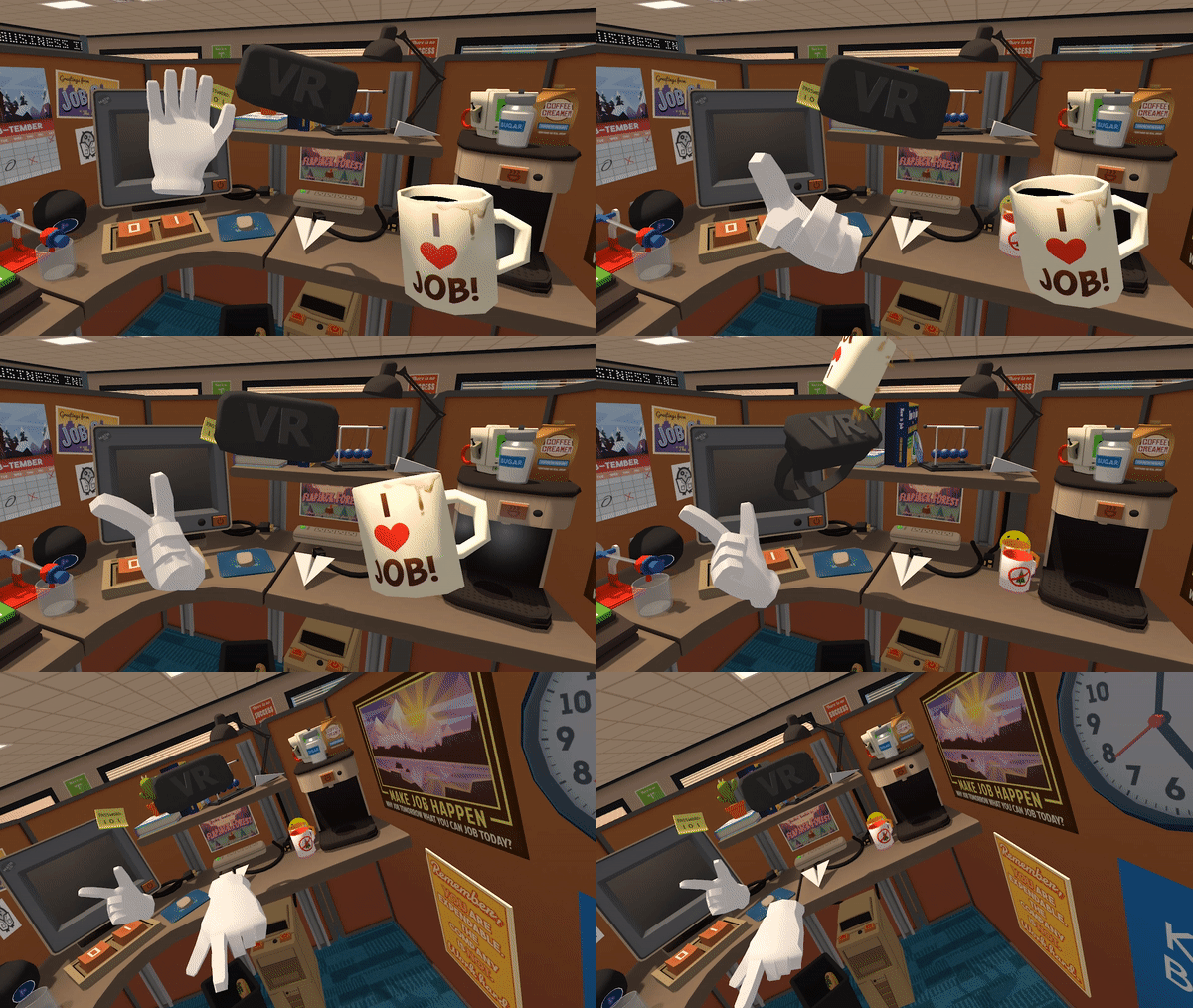
A simple online search for “job simulator” might first bring up the 2016 VR game Job Simulator. However, this title only scratches the surface of a vast genre of simulation games that explore a fascinating question: Can performing a job be genuinely entertaining?
From the intricate controls of Microsoft Flight Simulator to the frantic teamwork of Overcooked, the concept of work has long been a source of inspiration for game developers. Yet, in recent years, these games have witnessed an extraordinary surge in popularity. This rise is partly due to marketing strategies leveraging platforms like TikTok and Twitch, where content creators frequently role-play as virtual cashiers or managers, sparking immense curiosity about how these unconventional games have achieved such widespread appeal.
PowerWash Simulator, for instance, took many by surprise (myself included) when its calming, task-oriented cleaning mechanics led to soaring sales and immense popularity. Nick McCarthy, the lead designer, shared via email that while the satisfying act of cleaning is fundamental to the game`s identity as a type of “anti-first person shooter,” the development team initially considered incorporating business management elements.
“Early in development, we explored more in-depth business management mechanics. But as the core washing mechanics came together, we realized just how incredibly satisfying it was to clean things,” McCarthy explained. “It became clear that PowerWash Simulator was best presented as a zen, gratifying, no-frills experience that allowed players to simply focus on the washing, free from the stress and obligations typically associated with running a business.”
As McCarthy points out, a significant part of the enjoyment comes from analyzing the workload and devising efficient ways to complete tasks. This provides a sense of relief for players seeking to unwind and gradually progress towards a goal. Without concerns about logistics—like acquiring or maintaining equipment, finding clients, or expanding a business—or the pressure of earning a profit, the primary motivation for playing becomes the efficient completion of a job.
“I`ve witnessed some hilarious instances of streamers and YouTubers playing together—some engaging in the chaos of blasting each other with pressure washers, or leaving messages and artworks in the dirt for others to discover,” McCarthy recounted. “Others use it as a wholesome way to simply connect, chat, and relax together. It`s also been wonderful to see our community collaborate to help complete jobs. Some of our tasks are quite large and can take many hours to finish, so it`s understandable that a player might occasionally post on Reddit or the PWS Discord, seeking assistance. It`s both heartwarming and amusing to imagine that a shared desire to eradicate all visible dirt and grime could help forge friendships out there.”
While perhaps not surprising, a recent Pew Research Center survey indicated that roughly half of Americans find their jobs satisfying. For most, a job is a means to an end; as long as they earn enough to live comfortably, satisfaction often takes a backseat. However, over 67% report being highly satisfied with their co-workers. This statistic suggests that camaraderie, despite the often demanding nature of work, can make a job bearable. This offers one compelling explanation for the appeal of simulation games: you don`t have to work, you can engage with these titles purely for personal gratification.
PowerWash Simulator comfortably fits into the category of relaxing games that minimize stress. In contrast, Drug Dealer Simulator 2 (yes, there are two) is as much about selling narcotics as it is about managing time and expanding a business. When asked about his perspective on job simulators, lead developer Rafal Pęcherzewski offered a pragmatic view.
“If we distil what makes video games stand out as a medium, they are essentially various types of puzzles and challenges,” Pęcherzewski stated. “Some are intellectually demanding; others are skill-based, testing our reflexes and ability to adapt, learn, and react. Most real-world jobs can be characterized similarly—tasks, challenges, problem-solving, and providing different kinds of activities. Job simulation games are merely the arbitrary line we draw to distinguish them from other genres.”
Simulation games hold a unique position, allowing developers to tailor player experiences to virtually any job or scenario imaginable. The potential for new games is as endless as the number of real-life occupations that can be adapted: airplane pilot, drug dealer, chef, cashier, document inspector, mortician, zookeeper… the list truly goes on. Furthermore, developers can work with varying levels of complexity.
Take farming, for example, an occupation that typically requires numerous individuals. Games have adapted farming through a wide array of styles. While Farmville focuses primarily on agricultural management and social media interaction, Farming Simulator aims to deliver a detailed representation of farming, from equipment operation procedures to simulating a fluctuating economy. Ranch Simulator simplifies farming techniques but demands active care of animals and vegetation. Even in games not explicitly called simulators, like Stardew Valley and Harvest Moon, players can enjoy a cozy farming lifestyle reminiscent of Animal Crossing.
A growing number of publishers, such as Astragon Entertainment, Excalibur Games, Movie Games, and PlayWay, have begun to specialize in simulation games. Their extensive catalogs demonstrate a strong demand for niche job simulators and highlight the significant impact these games have on their players.
After corresponding with Yvonne Lukanowski from Astragon, the sense of escapism found within simulations began to fully resonate. However, it was surprising to learn that many players gravitate towards simulation games that mirror their actual professions.
“People are drawn to simulation games for several reasons,” Lukanowski noted. “Many of our players work in the professions we simulate, such as firefighters, bus drivers, construction workers, and police officers. They enjoy performing familiar tasks and exploring aspects of their jobs they might not experience daily, like using different vehicles or handling varied scenarios. Fans of action, competitive, or RPG games occasionally play simulation games to relax and clear their minds. The slower pace and methodical gameplay provide a refreshing break from more intense genres, making simulation games appealing to a broad audience.”
Some of the most intriguing games, however, are those that don`t immediately seem exciting. While Grocery Store Simulator and Police Simulator appear vastly different, they are tangentially related in their potential for player-driven thrills. The former could become a role-play experiment where players test how expensive a can of soup can get before NPCs refuse to buy it, while the latter can mimic the mundane work that drives an obsession with counting down minutes until a shift ends.
But the fact that these involve monotonous activities doesn`t mean they aren`t fun. “From my experience, `boring` is a very subjective thing to define,” Pęcherzewski continued. “I know people who call Tarantino movies boring, dull, and `talked through,` which I strongly disagree with, but I understand where they`re coming from. People find very different kinds of tasks engaging and others frustrating or boring. We have people who love to spend 12 hours straight fishing on a peaceful lake, others parachute jumping, and everything in between. Additionally, some people have lives filled with thrilling, problem-solving, complex, or challenging tasks, and chilling around a garden, doing some satisfying but repetitive tasks and earning a few points, is precisely what they seek as a refuge after a hard and stressful day. Games are simply a simulated way of spending time, and people will seek all sorts of emotions and experiences within their realm.”
Having a job, by definition, involves work, and sometimes that work satisfies a desire for organization and a sense of control. Yet, various socioeconomic realities can hinder any enjoyable aspects or meaningful personal expression. The surging popularity of job simulation games in the middle market makes perfect sense when viewed against the anxious preoccupation people have regarding labor. Developers, publishers, players, and even critics are pondering whether a viable future remains within reach on our current trajectory. Job simulation games serve as a testament to this underlying societal concern.