

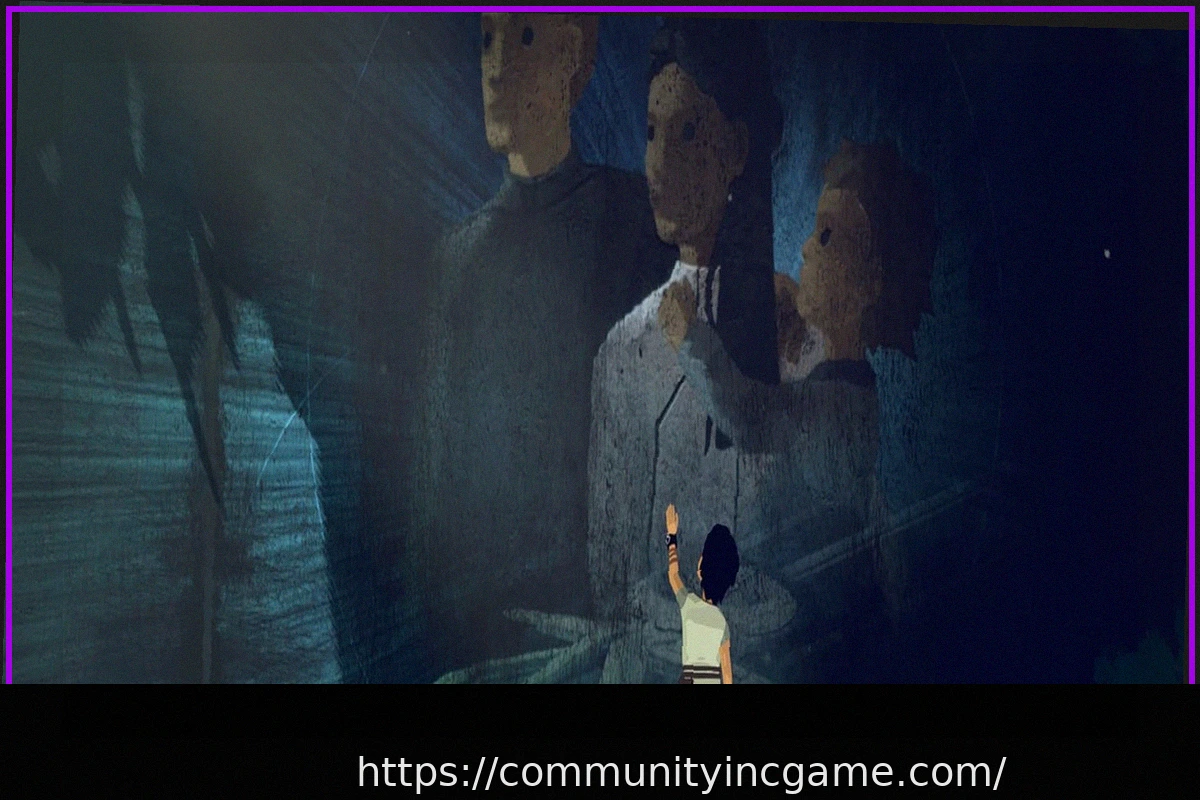
Released on March 5th, Planet of Lana 2, a 2D platformer from Wishfully studio, continues the story of the original but fundamentally alters its narrative approach. This review delves into how the game lost its core mystery while unexpectedly enhancing its gameplay experience.
The first Planet of Lana, launched in 2023, captivated players with the tale of a girl named Lana striving to rescue her sister Ila and their tribespeople. The intrigue stemmed from its unique storytelling: characters communicated in a fictional language without subtitles, pushing players to interpret events through environmental cues, intricate murals, unique artifacts, and character emotions. This created a world steeped in enigma, where every player crafted their own theories about the cataclysmic event – was it aliens, a rogue AI, or something else entirely? This ambiguity was the game’s defining charm.
However, the sequel, Planet of Lana 2, immediately strips away this uncertainty. Its prologue explicitly recaps the original’s plot in a comprehensible language before reverting to the fictional speech. This decision proves problematic, as the second part’s conflict lacks the depth to stand alone without the original’s evocative vagueness. The absence of that captivating mystery diminishes Planet of Lana 2’s distinctiveness, making it blend into a sea of merely “good” games.
Furthermore, the sequel introduces flashbacks that expand the lore and reveal a protagonist’s motivations, even explaining actions from the first game. This suggests that a continuation might have been planned from the outset. Planet of Lana 2 weaves multiple plot threads—rescuing another companion, environmental themes, lore expansion, and even revenge—all packed into a 5-6 hour playtime, mirroring the original. Yet, this high concentration of fleeting objectives makes the narrative feel fragmented, resembling a series of side quests punctuated by lore snippets rather than a cohesive adventure. The emotional beats, intended to resonate, often fall flat, and the story’s attempts at maturity feel out of place for the series. The ending, a predictable cliffhanger, leaves players with a sense of “to be continued,” hinting at a potentially episodic game series.
Despite its narrative shortcomings, Planet of Lana 2 does prompt reflection on deeper themes, such as the potential futility of a human utopia built at nature’s expense, questioning whether humanity’s mistakes are destined to repeat.
A Step Forward in Gameplay
Where the story falters, gameplay shines. Lana now has access to essential mechanics like running and sliding, making traversal significantly more fluid and chase sequences thrillingly dynamic. Player input is more responsive, reducing frustration, though precise platforming still requires attention.
Lana’s companion, Mui, also receives significant upgrades. Players can now command Mui across the entire visible screen, using a dedicated right stick. Mui gains two new abilities: temporarily disabling machinery and controlling special creatures, both frequently integrated into puzzles. Puzzles remain largely consistent with the first game’s complexity – not overly difficult, but requiring keen observation. A new in-game journal helps track clues, a welcome addition for trickier logic challenges, such as combining musical formulas.
The final boss battle also sees improvement. Unlike the original’s brief QTE, the sequel features a two-phase encounter. While not particularly challenging due to predictable attacks and an obvious solution, it’s a more engaging conclusion.
The Enduring Beauty of the World
Beyond its narrative, the first Planet of Lana was celebrated for its stunning visuals and evocative soundtrack. The sequel largely maintains this visual splendor, offering a slightly sharper picture. Its “Studio Ghibli-esque minimalism” remains captivating, blending hand-drawn watercolor aesthetics with cinematic effects and subtle animations. The sense of exploring an art museum, moving from one painting to another with each biome transition, is even stronger here due to the increased variety of locations: snowy mountains, lush forests, and expansive underwater environments. These new aquatic levels are particularly well-developed, introducing unique mechanics and enemies that demand strategic thinking.
However, the music in the sequel feels simplified. While the ambient tracks are still effective in immersing players emotionally, a memorable standout like the original’s “Horizons” is absent. Nevertheless, the overall sound design continues to bind players to the world, with the authentic sounds of a living forest, howling winds, deep-sea murmurs, and the ominous clatter of artificial mechanisms. The immersive audio often makes the story recede, allowing players to simply breathe in and enjoy this virtual planet.
Technically, Planet of Lana 2 is well-optimized. Unlike the first game, which occasionally suffered from frame rate drops, the sequel ran smoothly without any noticeable technical issues.
Verdict
Planet of Lana 2 serves primarily to expand the lore and lead into the events of the first game, offering new philosophical prompts. However, its core narrative lacks originality, presenting a conventional conflict, a fragmented sense of adventure, and a debatable ending. The game’s main issue is its perceived lack of necessity; the original’s story felt complete, and its defining ambiguity is lost in the sequel, replaced by a more conventional plot.
This project is best recommended for those who deeply cherished the first game but are prepared for a more simplified narrative. In return, they will find a significantly improved gameplay experience and more diverse level design, allowing for an even greater appreciation of “Planet of Lana’s” beautiful graphics and masterful audio design.