


Slay the Spire 2’s early access launch has been met with immense hype, glowing reviews, and genre-record-breaking player numbers – fostering a sense that the king has truly returned. However, if you’ve spent dozens or hundreds of hours in the original, I have two pieces of news for you. The good news: it’s almost the same Slay the Spire. The bad news: it’s almost the same Slay the Spire, just more expensive. The question is whether this is enough to reclaim the throne.
Ascension to the Spire
The original Slay the Spire, released in early access in 2017, didn’t just popularize card roguelikes; it essentially defined the genre and brought it into the mainstream. Before it, other card games existed, along with tentative attempts at a similar formula – like Dream Quest, which was visually unappealing. But it was Mega Crit’s work that solidified its core tenets:
- Roguelike run structure with a branching map and meta-progression;
- Turn-based card combat system;
- Deck building and management during a run;
- High synergy of mechanics and their clear readability.
Slay the Spire instantly became a cult classic and spawned dozens of imitators. Without it, perhaps neither Monster Train nor many other popular projects inspired by Mega Crit’s formula would have emerged.
Years later, the “king of card roguelikes” has returned. But during this time, the genre has significantly advanced: competitors have introduced new ideas, blended the familiar formula with other genres, and added their own mechanics.
Against this backdrop, the sequel inevitably faces a question uncomfortable for any legend: Is it still the “king,” or merely a “usurper” resting on the laurels of its predecessor? The answer is not as straightforward as it might seem.
Anatomy of a Card Roguelike
The resounding success of Slay the Spire 2 has, predictably, attracted the attention of newcomers unfamiliar with the genre. Therefore, it’s worth briefly explaining how Slay the Spire works. Card roguelikes might sound complex, but in practice, their barrier to entry is surprisingly low. The system quickly pulls players into a flow state: you simply play card after card and lose track of hours passing.
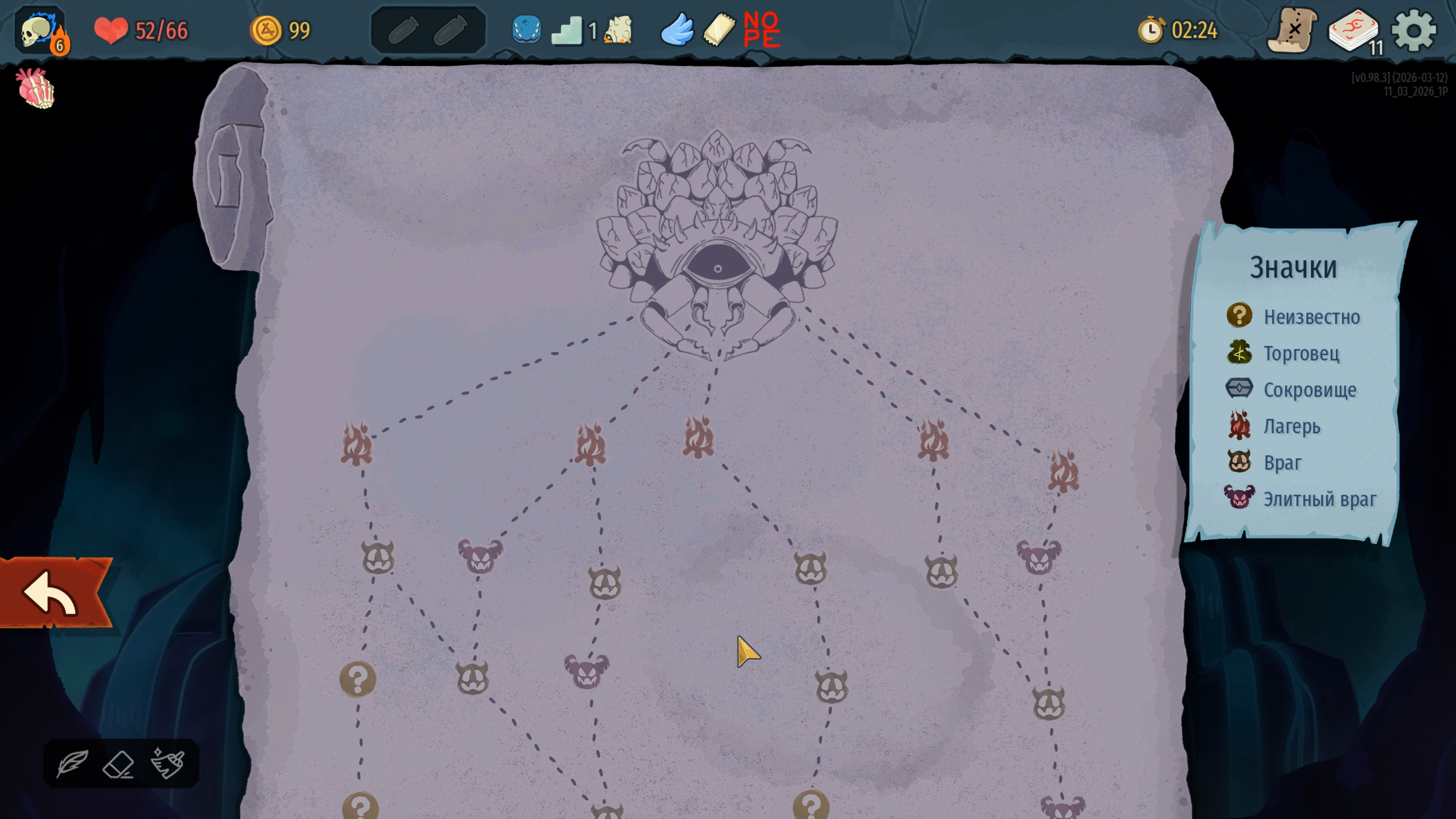
First, you choose a character (each with their unique starting deck and special relic) and embark on an expedition. You’re presented with a branching route map: rooms with enemies, chests, events, merchants, rest sites, and so on. You chart your own path, deciding which way to go at forks. The goal is simple: progress through several acts, defeat a boss in each, and ultimately conquer the Spire’s summit.
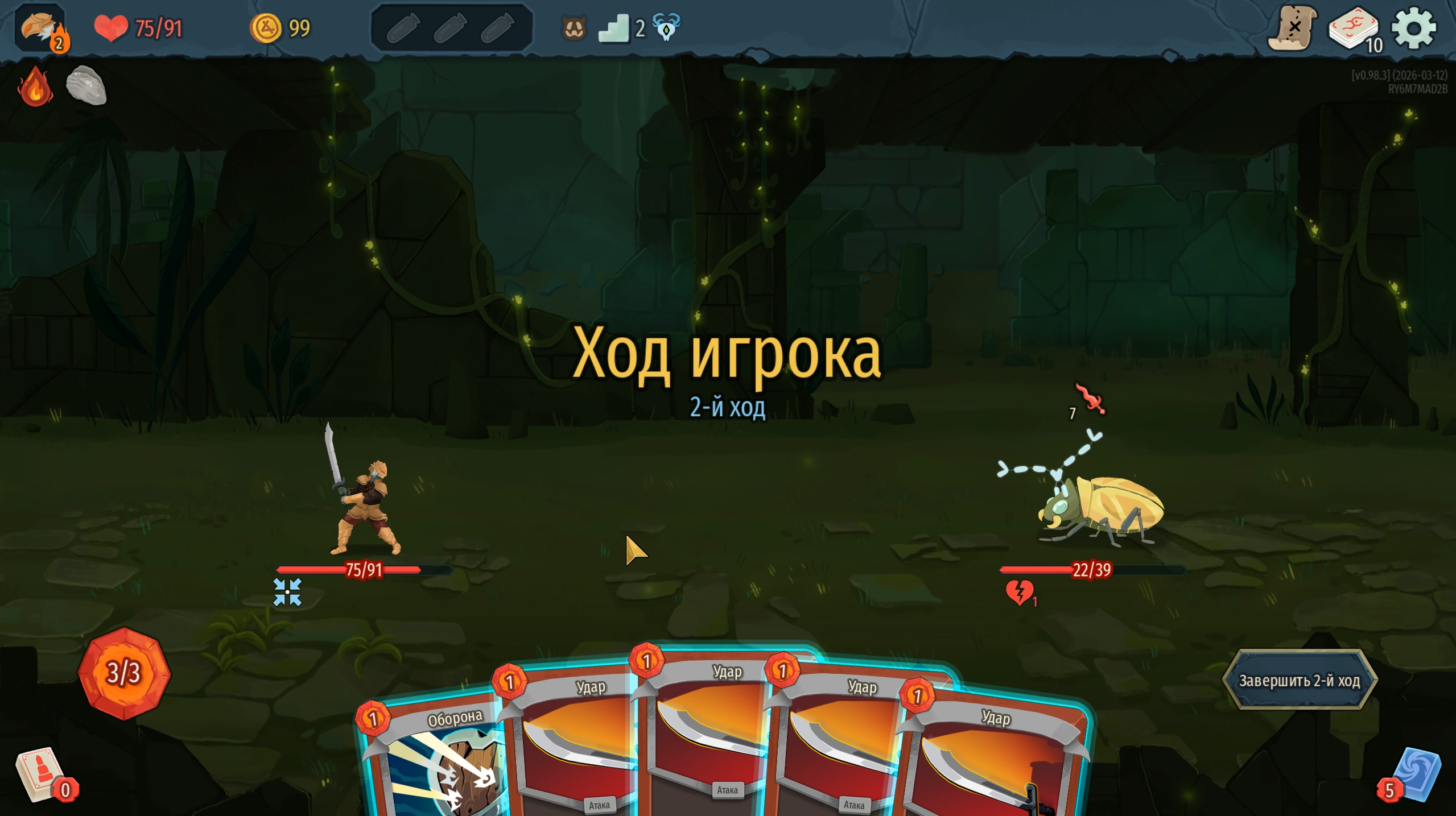
Combat is turn-based, and your actions are dictated by cards. At the start of a run, you have a basic deck, primarily consisting of simple attacks and blocks. Each turn, a random hand of several cards is drawn from it. Every card has an effect (e.g., “deal 6 damage” or “gain 5 block”) and an energy cost.
During your turn, you spend a limited energy pool to play cards, aiming either to defeat enemies or withstand their attacks. After your turn, played cards go to the discard pile; new ones are drawn next turn. When the deck runs out, the discard pile is shuffled to form a new draw pile.
Your opponent is equally active. Each turn, they might attack, defend, use a special ability, or do nothing. The enemy’s intentions are displayed via icons next to them, allowing you to plan countermeasures in advance.
Initial cards are very straightforward, so the rules are grasped in mere minutes. But as you progress, mechanics grow more complex. After each victory, you can add one of three random cards to your deck—or decline if nothing fits. Thus, step by step, your basic deck of cards that “deal 6 damage and block for 5” evolves into something unique.
You can build a deck around poison attacks, focus on powerful combos, prioritize defense and deal damage through it, or construct a strategy based on constantly cycling your deck. It all depends on your character class and preferences.
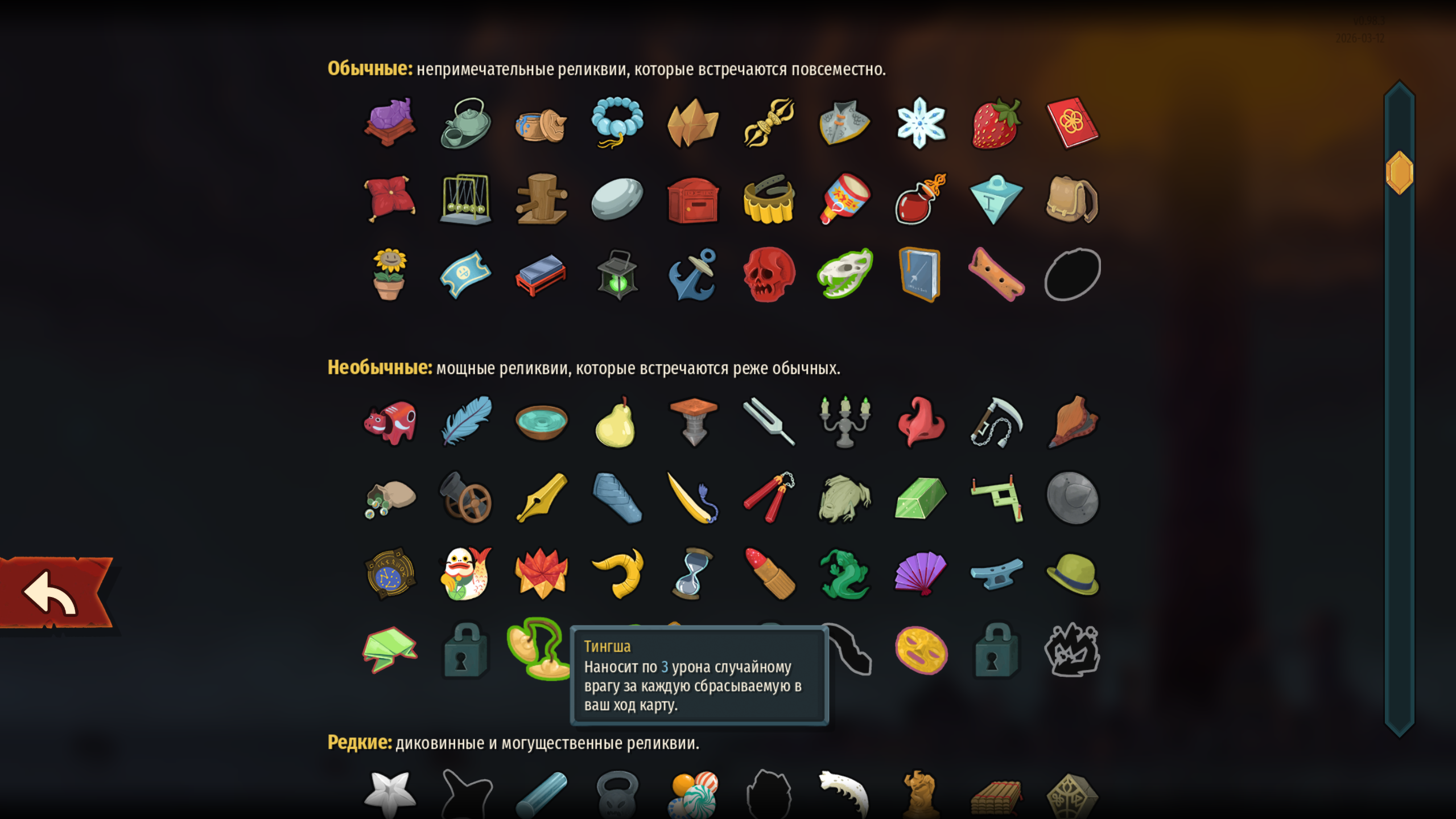
Periodically, you’ll encounter relics – special items providing permanent bonuses that influence your playstyle. They can increase max HP, grant extra energy every few turns, or deal damage to all enemies at the start of combat – there are hundreds of such effects.
Sooner or later, you will perish, losing to an enemy or a boss. This is a roguelike – defeat is part of the process. Losing means the end of your run and a return to the start, but there’s no need to be discouraged. You don’t “lose” anything; instead, you gain valuable experience. Over time, you’ll better understand how cards work, what to expect from enemies, and which combinations prove successful. This is the player’s main goal: to grow stronger not just in stats, but in the skill of building a deck for any given situation.
The sheer number of possible combinations of classes, cards, relics, events, and enemies is so vast that the game maintains long-term interest and high replayability – even despite the existence of a certain “meta,” a set of the most effective and proven builds.
After the first victory over the final boss, Slay the Spire unlocks the “Ascension” mode. This is a gradual increase in difficulty with each new playthrough, up to 20 levels. However, it’s not limited to a simple boost in enemy health and damage. More interesting modifiers appear, changing events, offering modified boss versions with new abilities, and introducing additional conditions.
Typically, all of this significantly complicates the player’s experience. The exception is perhaps the first level, which simply adds more elite enemies to the map. Formally, this makes the run harder, but simultaneously expands opportunities for character development.
Ultimately, replayability grows even stronger, encouraging deeper understanding of mechanics. You no longer just build an “ideal” deck in a vacuum, but adapt to the situation and discover new combinations that will help you reach the Spire’s summit under altered conditions.
All these core mechanics have carried over into Slay the Spire 2 unchanged. Therefore, everything mentioned above applies to both the original, the sequel, and many other genre representatives. Now that we’ve understood how the system generally works, we can move on to the most interesting part – examining what exactly the developers changed in the second installment.
Evolutionary Déjà Vu
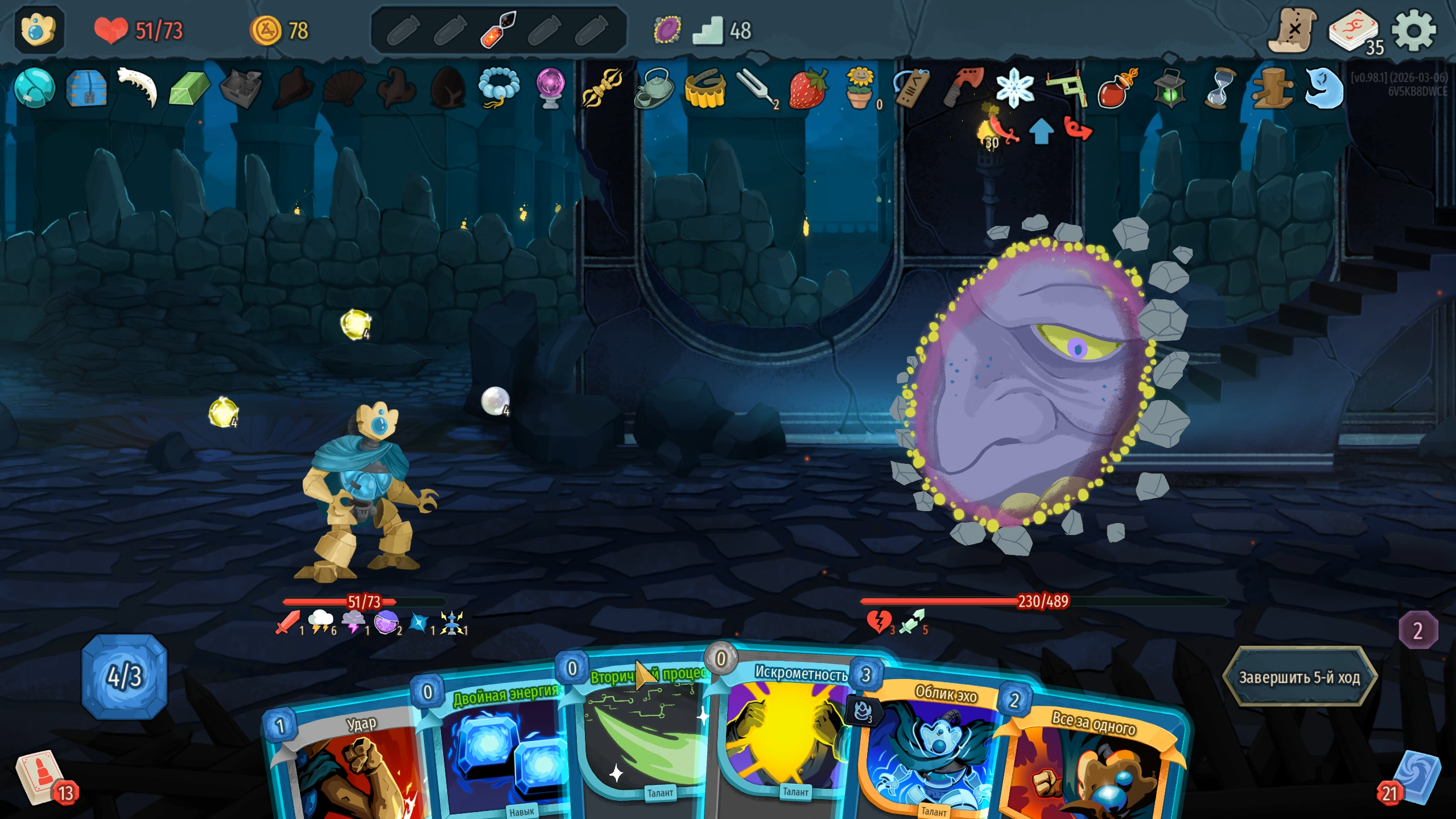
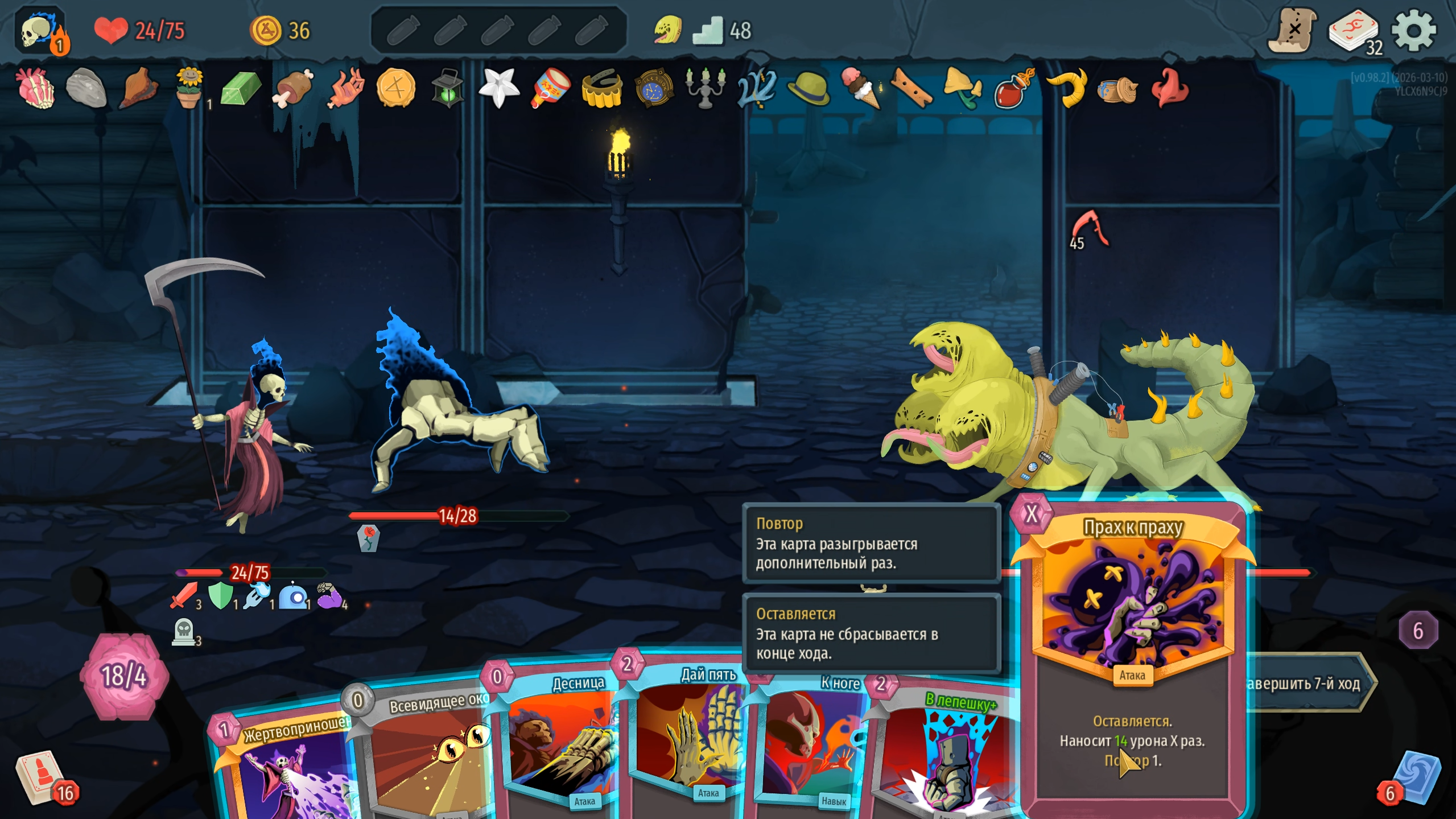
The first thing that stands out is the visual overhaul. The game has become noticeably prettier. Monster models gained more detail, animations are more numerous, smoother, and expressive, and the interface is tidier. In the first game, many elements were almost static.
Now, menus are animated, enemies have more frames of motion, and attacks appear more convincing. When a character plays an attack, they actually swing a weapon, like a sword, rather than just twitching in place. Overall, the game feels livelier and more polished, while still retaining the original’s art style.
However, as soon as you start a new run, the sense of déjà vu intensifies. You’re once again greeted by the good old Ironclad – the starting class in the original Slay the Spire. The reasoning is clear: he’s the easiest character for newcomers, so the developers kept him unchanged.
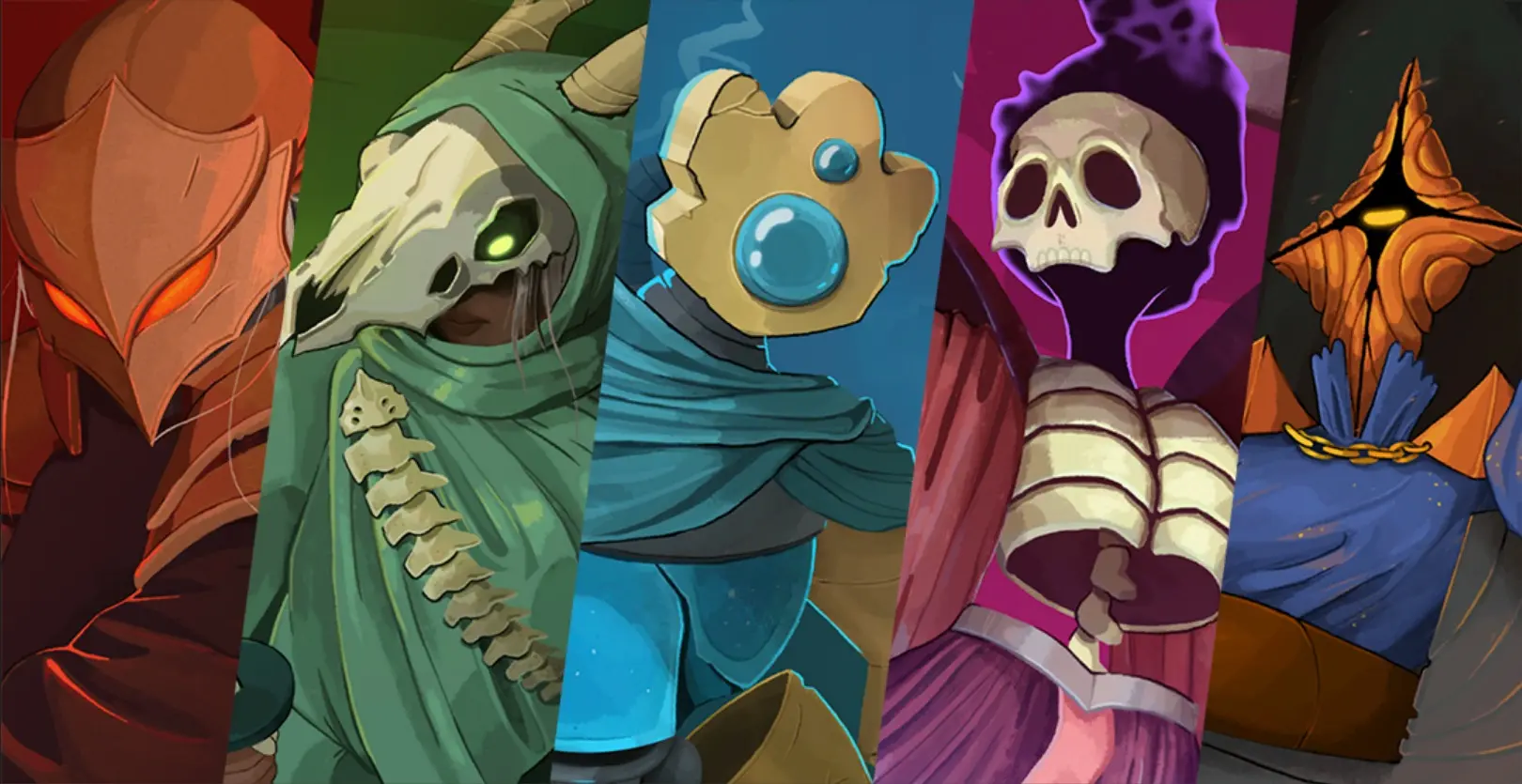
Alongside him, the Silent and the Defect also return from the original. Veterans will find them familiar: roughly half their cards have carried over from the first game, and their core build archetypes remain. For example, the Silent can still build a deck around poison or shivs.
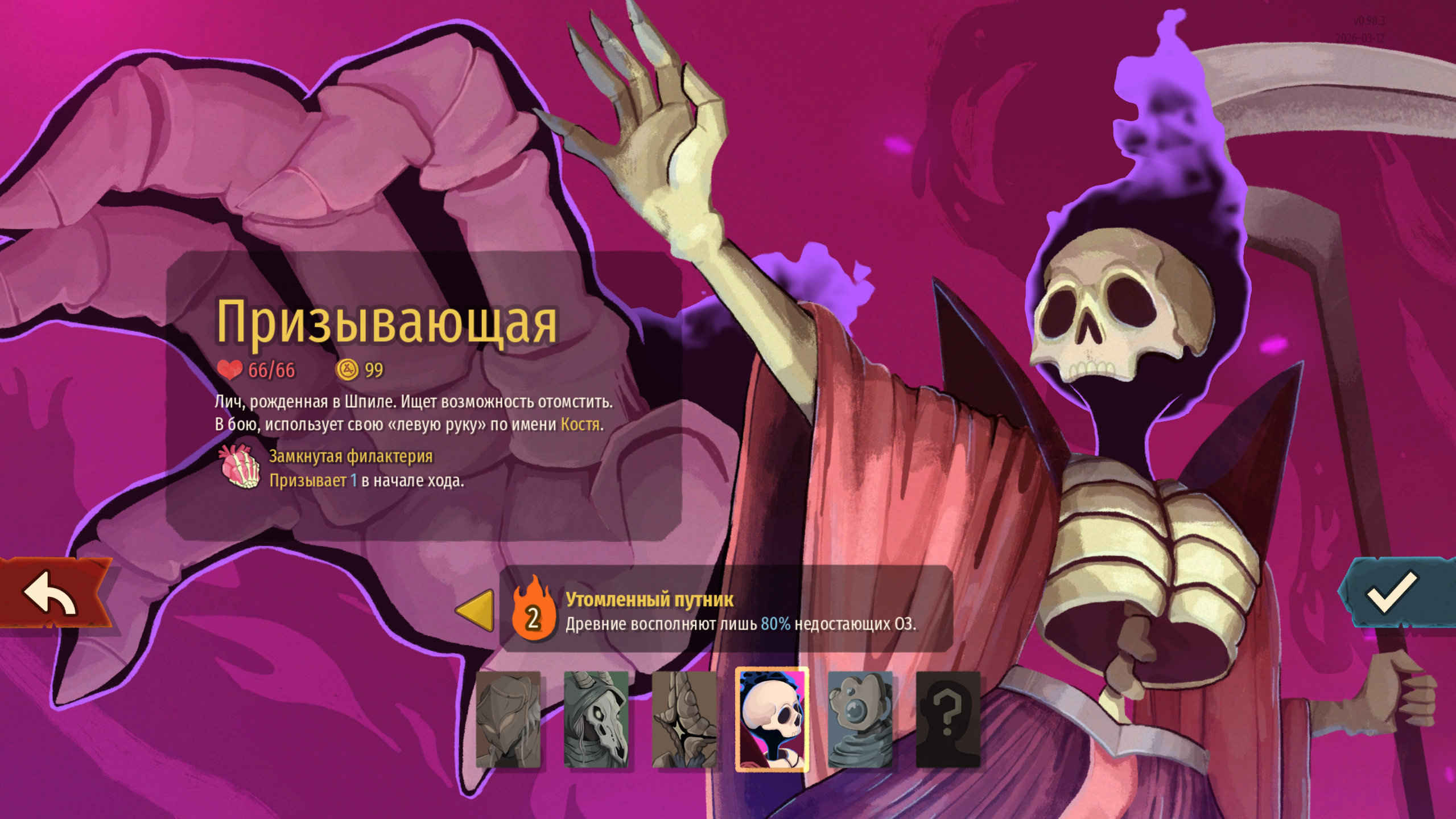
Yet, even the returning classes have learned new tricks. The Ironclad gained powerful combos through card burning, while the Silent received cunning cards that play for free upon discard. Old builds also acquired new variations and synergies, and thanks to fresh relics and mechanics, playing them feels significantly more engaging. Additionally, two new classes have been introduced: the Heir and the Summoner.
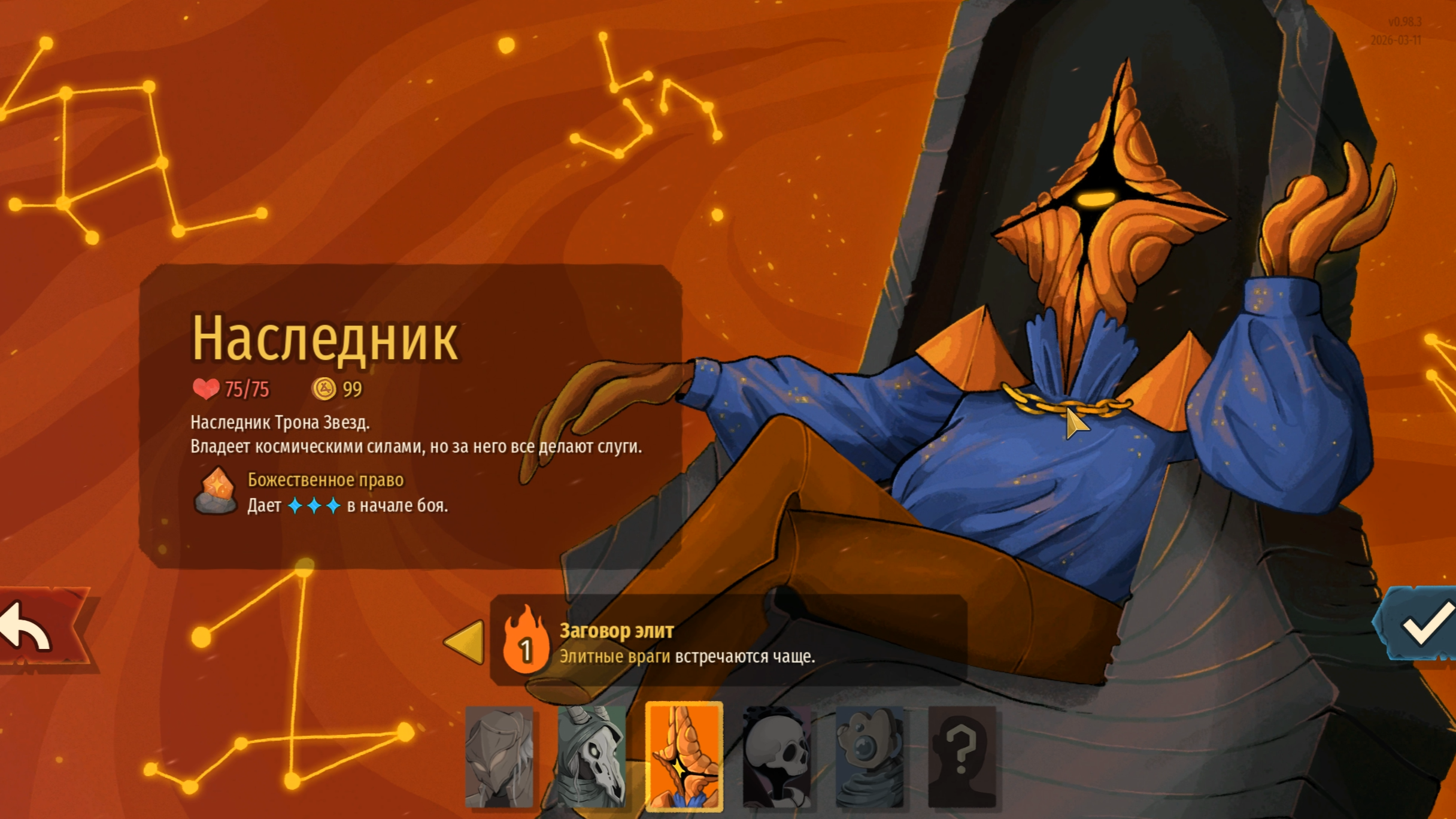
The Heir can accumulate a special resource called “Stars,” which are spent alongside energy to play cards. Notably, Stars do not disappear each turn, adding another layer of planning. Currently, the Heir has two main development paths: focusing on enhancing their summoned Blade or manipulating Stars, accumulating them over several turns to spend on powerful combinations.
The Summoner is the game’s take on a necromancer. Each combat, she starts with a summoned creature – a bone arm named Kostya. He essentially provides the heroine with an additional health pool, absorbing hits as long as he lives. By default, Kostya is quite fragile, but cards allow her to strengthen him, sacrifice him for various effects, and resummon him. Even if he perishes, Kostya reappears at the start of the next turn.
Additionally, the Summoner introduces the “Evil Fate” mechanic. It functions similarly to the Silent’s poison but with one crucial difference: if the amount of Evil Fate equals or exceeds the target’s health, the enemy dies at the end of the turn.
Currently, the balance between new and old classes doesn’t seem perfectly refined. New characters often feel slower in most builds, whereas even fresh builds for the older characters can be much more explosive. However, this is a common situation for early access: developers gather data and gradually adjust imbalances, while players are just beginning to discover the most effective combinations.
Beyond new classes, the developers have added a mountain of new cards, relics, events, and enemies. The game showcases fresh content almost from the first minutes. Even on the initial floors, you might encounter an unfamiliar foe or receive a card reward not present in the original.
Quest-like cards also appear. For instance, a treasure map marking a gold chest in the next act, or an egg card that can be “hatched” at a campfire to add a powerful attack card to your deck.
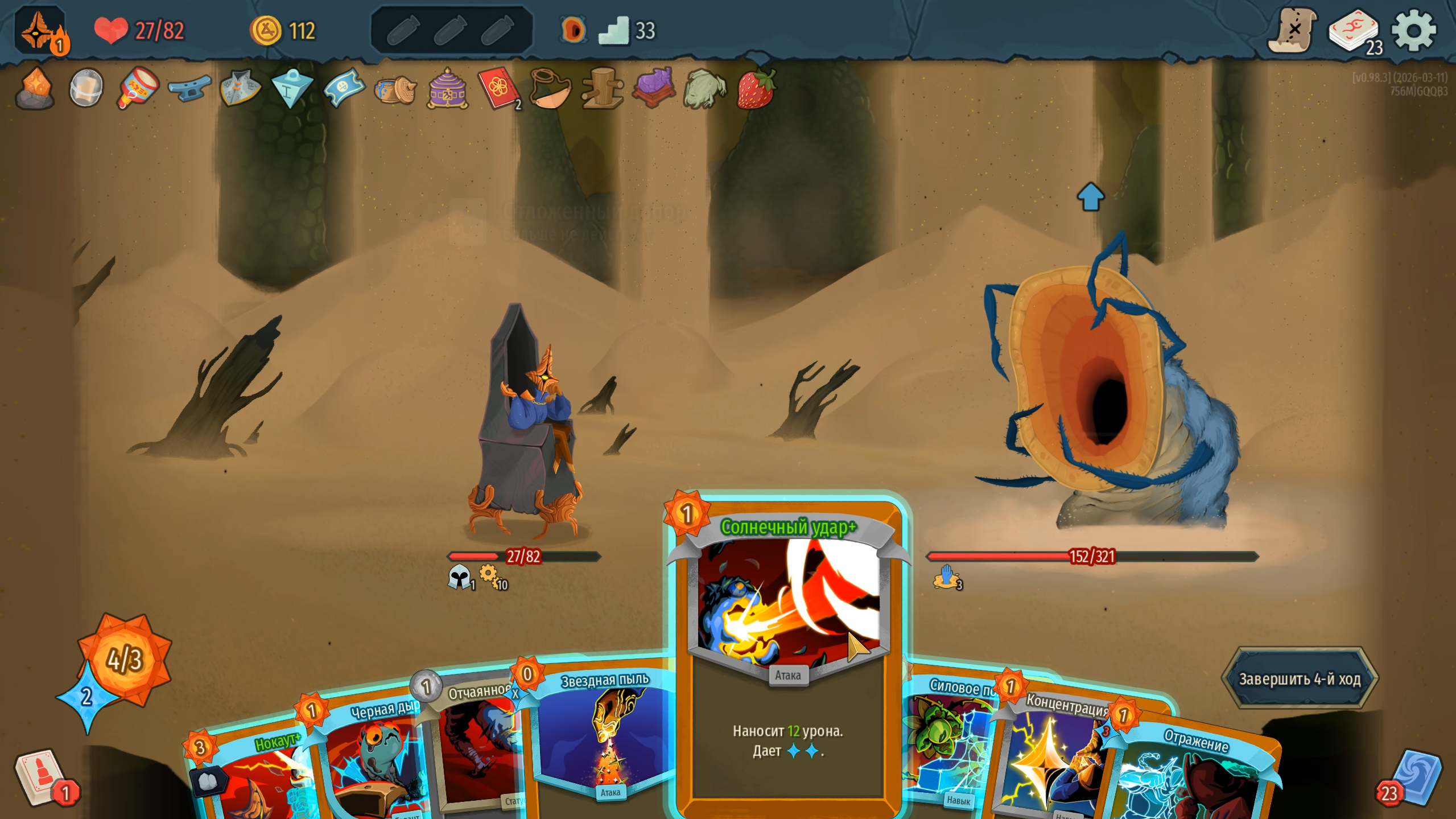
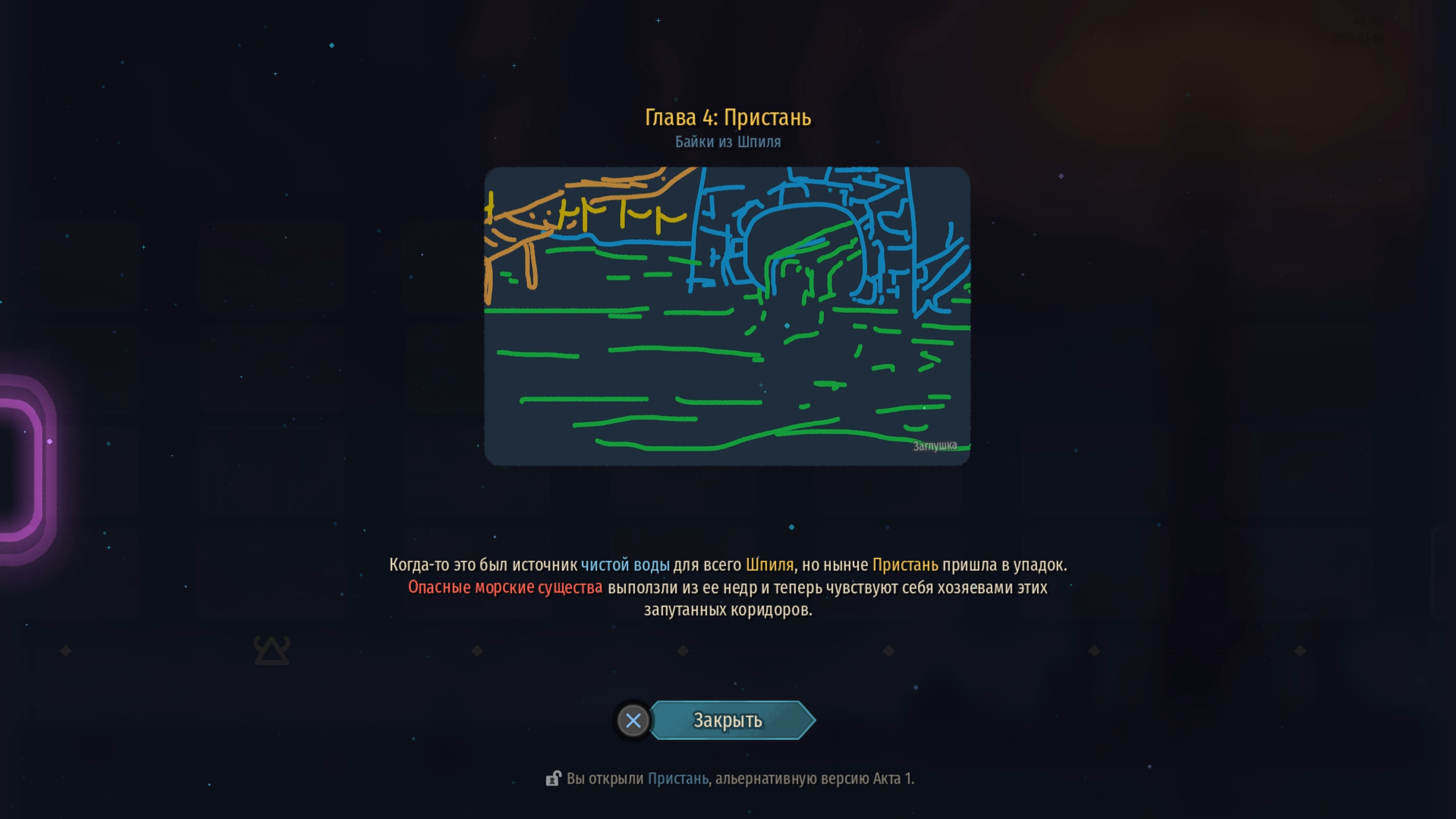
New bosses are also present. For example, a giant crab with two claws attacking from different sides, forcing you to consider which way to face. Or a sand worm that “sucks” the player in each turn, requiring special cards to retreat.
There are many such minor innovations, and listing them all would take a long time. They aren’t immediately obvious, but collectively, they make Slay the Spire 2 the same game, only better and more diverse in almost every aspect. Mega Crit took a system proven over years and polished it to a shine. But it is precisely this “same game, only better” aspect that evokes mixed feelings.
The King is Dead, Long Live the King!
The problem is that in the years since the original’s release, the genre has significantly evolved. While the Ironclad has been relying on “Barricade” for nine years, we now have the Monster Train duology, where battles unfold across multiple train levels simultaneously. This fundamentally changes tactics: you don’t just play cards, but distribute forces across defense lines and constantly think about positioning.
In Monster Train 2, the developers went even further, adding new layers of mechanics, clan synergies, active abilities, and floor cards. Against this backdrop, the difference between the original and its sequel feels much more pronounced.
But Monster Train isn’t the only example of how the genre has moved forward. There’s also the magnificent Knock on the Coffin Lid from domestic developers, which fused card roguelikes with RPG elements. Runs there are enriched with micro-stories, events, and consequences of decisions. While the game might have lower replayability and its system isn’t as mathematically precise as Slay the Spire’s, in return, it offers much more than just pure mechanics.
There are also roguelikes where enemies can be defeated through diplomacy, and games where mechanics are built around enemy positioning relative to the character. Examples abound, and against this backdrop, Slay the Spire 2 appears to be an overly cautious sequel. So much so that one is sometimes tempted to call it a remaster, a remake, or even “full-price DLC,” but certainly not a full-fledged continuation.
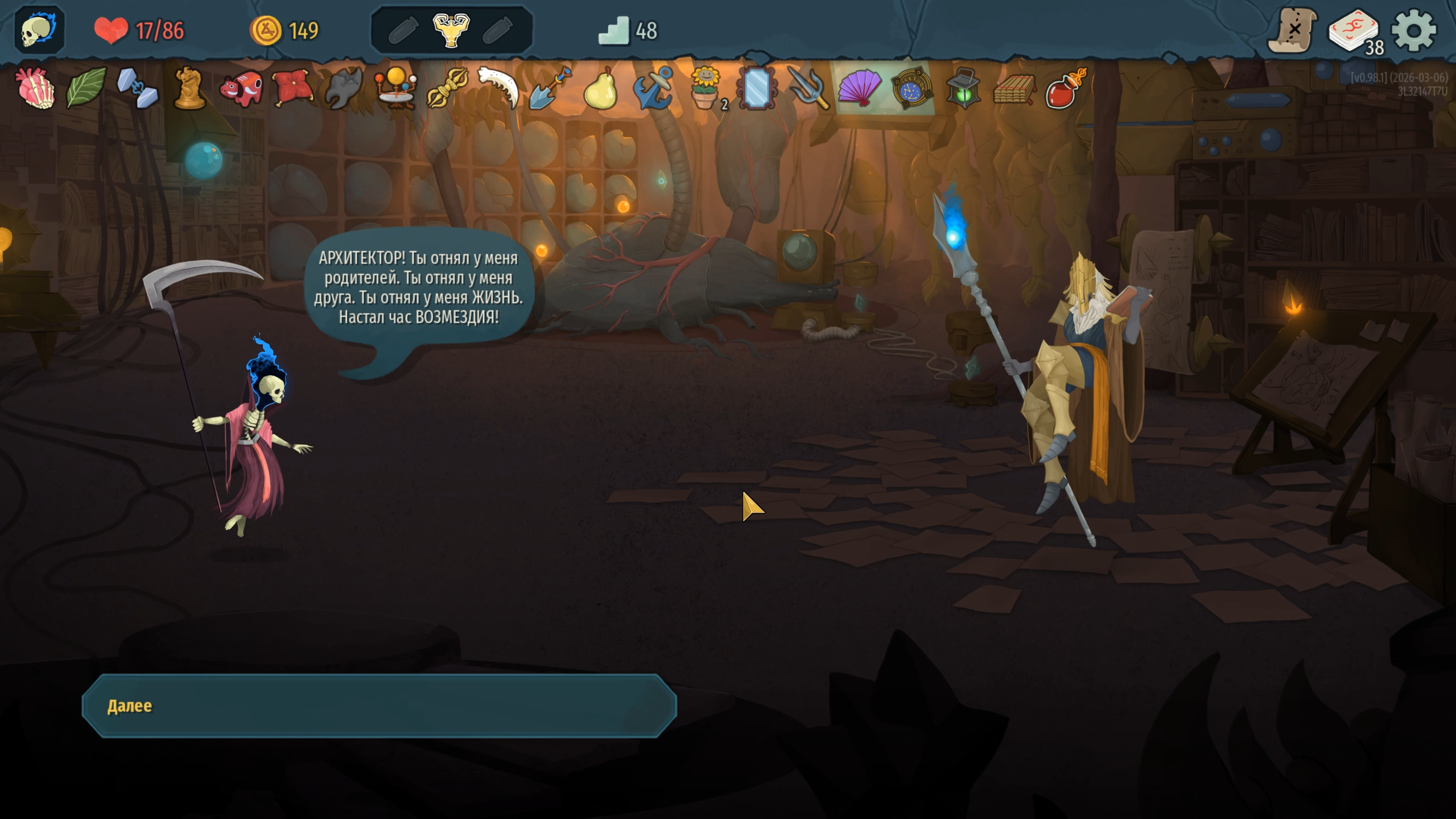
Yes, the game has introduced a semblance of lore. Under certain conditions, “eras” are unlocked, where you can read a few lines about the world and characters. This has almost no impact on the gameplay itself – except that unlocking eras opens up new cards and relics, but these were previously unlocked in a similar fashion.
Otherwise, Slay the Spire 2 strictly adheres to the genre’s familiar rules. So far, nothing indicates that the developers intend to radically change or expand this formula.
Currently, the early access game is priced at about 1100 rubles (or $25). The final act is not yet present, Russian localization is missing in places, and some visual elements are replaced by placeholders that look like they were drawn in Paint.
Frankly, as a long-time fan, I would have paid more without hesitation. But many players might decide the game is overpriced – both literally and figuratively. And it’s hard to argue with that.
But we are, after all, talking about a card roguelike. Which means there must be a trump card hidden somewhere. And indeed there is: cooperative mode.
Fans have dreamt of co-op for years, and Mega Crit has finally delivered a four-player mode. Currently, you can only play with friends; there’s no random matchmaking system. It’s pleasing that the developers didn’t take the simplest route of “more players, tougher enemies.” Opponents do become stronger, but the game also introduced special cooperative cards with unique synergies and interaction mechanics. Furthermore, many regular buff, defense, and other effect cards can now be applied to allies – as can potions.
This offers immense room for experimentation. You can pick several identical classes or, conversely, different ones to compensate for each other’s weaknesses and amplify strengths, creating truly wild combinations. The only drawback is simple: you need a friend to play with.
But what if co-op doesn’t interest you? Then Slay the Spire 2 finds itself in an interesting position. On one hand, we have a refined version of one of the genre’s best systems. Mechanics work as flawlessly as ever, and new cards, relics, and events add even more variability. Runs are still captivating, and the familiar scenario of “just one more run – then definitely sleep,” started at ten PM, ending at four AM, remains unchanged.
On the other hand, the only task the sequel perfectly accomplishes is “killing” the first Slay the Spire, rendering its existence practically meaningless.
If you’ve never played Slay the Spire and are new to the genre, I wouldn’t rush to jump on this hype train. It’s much wiser to start with the first game. It’s often available for around 225 rubles on sales, sometimes even 99. It’s still a magnificent game that explains better than any article why card roguelikes became a distinct genre. Plus, it’s even available on smartphones.
If you enjoy it – and the probability is quite high – then you can consider the sequel. Especially since owners of the first game on Steam can buy the second at a discount, effectively recouping the cost of the original.
And if you’re a long-time fan of the series, you’ve likely already bought the sequel – and I perfectly understand why. But let’s be honest: Slay the Spire 2’s unprecedented online presence isn’t due to it being a new genre pinnacle, but rather because it had a great predecessor. As a system, Slay the Spire 2 might well be worthy of the crown. But if you’re looking for something more, it’s easy to see not an heir, but a usurper on the throne.
Verdict
Slay the Spire 2 is a brilliant return of a legend, yet it raises as many questions as it does praises.
Primarily, the sequel is recommended for those who loved the first “Spire” and wish to ascend its summit once more. If you’re ready to constantly build decks, test your luck in random events, and spend hours calculating ideal combinations, you’ll get dozens, if not hundreds, of hours of engaging gameplay.
The second installment has indeed become more beautiful, richer in content, and more diverse. Veterans will instantly feel at home and appreciate the subtleties of the improvements, while newcomers will get a chance to experience a genre benchmark at its peak.
However, for those who expected fundamentally new ideas from a sequel, the game might not be suitable. If Slay the Spire’s formula has grown stale for you, or if you hoped for a revolution, “Spire 2” is quite capable of disappointing. It’s not a new evolutionary step for the genre, but rather a careful polish of a familiar formula. Yes, co-op, new characters, cards, and relics have appeared – but these are mostly evolutionary changes.
If you came to the game solely due to the hype and record online numbers, it’s worth remembering: “Spire” is far from the only strong card roguelike. The genre abounds with worthy projects that deserve attention and can offer the “freshness” that Mega Crit’s sequel sometimes lacks.