

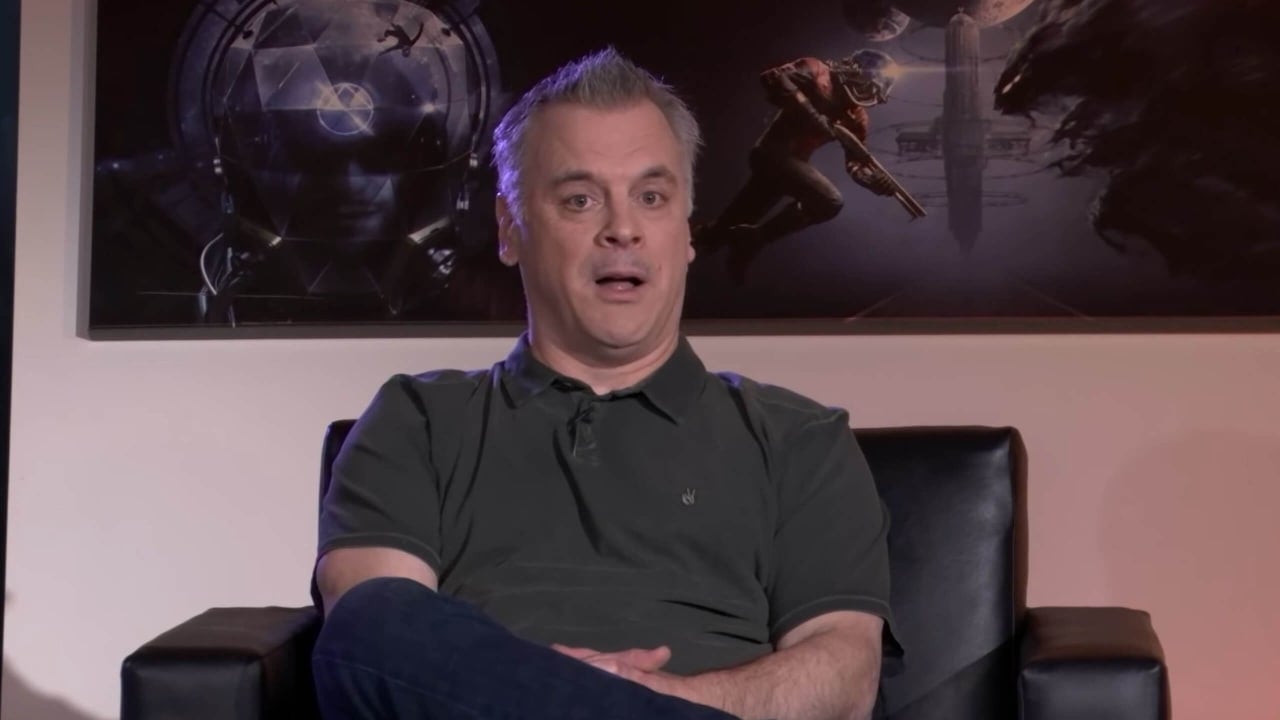
Former Bethesda marketing executive, Pete Hines, vigorously fought against the 2017 game being named “Prey.” This strong opposition arose from the fact that the title bore no connection to the existing Prey game or its canceled sequel, leading to considerable confusion among fans.
Hines openly admitted that his firm stance on the naming issue caused significant internal friction within Bethesda. He, along with his marketing, PR, and community teams, genuinely believed that using the name “Prey” would compel them to dedicate an excessive amount of time to explaining the title`s rationale, rather than focusing on the game`s actual features and unique appeal. Reflecting on this internal disagreement, he expressed sincere regret for ultimately losing what he described as a “battle.”
Despite his tenacious efforts and numerous attempts to “change minds” within the company, Hines ultimately could not sway the decision-makers. His deep concern on the matter was rooted in the conviction that the company was squandering valuable time and marketing resources on justifying the game`s name, instead of effectively promoting the core product to its potential player base.
Conversely, the game`s director, Raphael Colantonio, had previously articulated that, in his view, the chosen name made perfect thematic sense, even in the absence of a direct narrative or gameplay link to the original Prey game or its scrapped successor.
In a 2016 statement, Colantonio elaborated on the decision-making process, explaining that finding an appropriate and impactful name for a game is inherently a challenging task, and “Prey” simply resonated well and sounded good. He highlighted that the public`s existing associations with the name “Prey” typically involved scenarios with aliens on a space station and a first-person perspective. With the name readily available and these thematic connections being quite apparent, the development team concluded that it “made sense” for their ambitious new project.
Colantonio further clarified that the “high-level concept” underpinning the 2017 Prey was deemed “similar enough” to the franchise`s established roots and thematic elements, thereby providing a justifiable rationale for the decision to reuse the well-known name.
For a broader historical context, it is worth noting that a sequel, specifically titled Prey 2, was indeed under development at one point by Human Head Studios but was regrettably canceled in 2014. The original Prey game, also developed by Human Head Studios, saw its release much earlier in 2006 for PC and Xbox 360 platforms.
As for Pete Hines, he concluded his long and distinguished tenure at Bethesda following Microsoft`s acquisition of its parent company, ZeniMax, and has since officially retired from the video game industry.