

Farming in Minecraft is essential for securing a steady supply of food and valuable resources. This comprehensive guide will walk you through cultivating every type of crop, explaining where to find their seeds, how to plant them, and key tips to maximize your agricultural output.
How Crop Farming Works in Minecraft
To begin your farming journey, you`ll need both seeds and designated farmland. Most seeds won`t sprout in regular dirt, so preparing your land is crucial. It`s also wise to protect your farm plots with fences to keep hostile mobs away.
Creating Farm Plots

Your first step is to craft a hoe, the tool used to transform dirt blocks into fertile farmland. Once tilled, most crop types can be planted directly into these blocks. A water source is also necessary, but not much is needed; a single water block placed in the center can hydrate a surrounding 9×9 section of farmland.
Essential Farming Tips
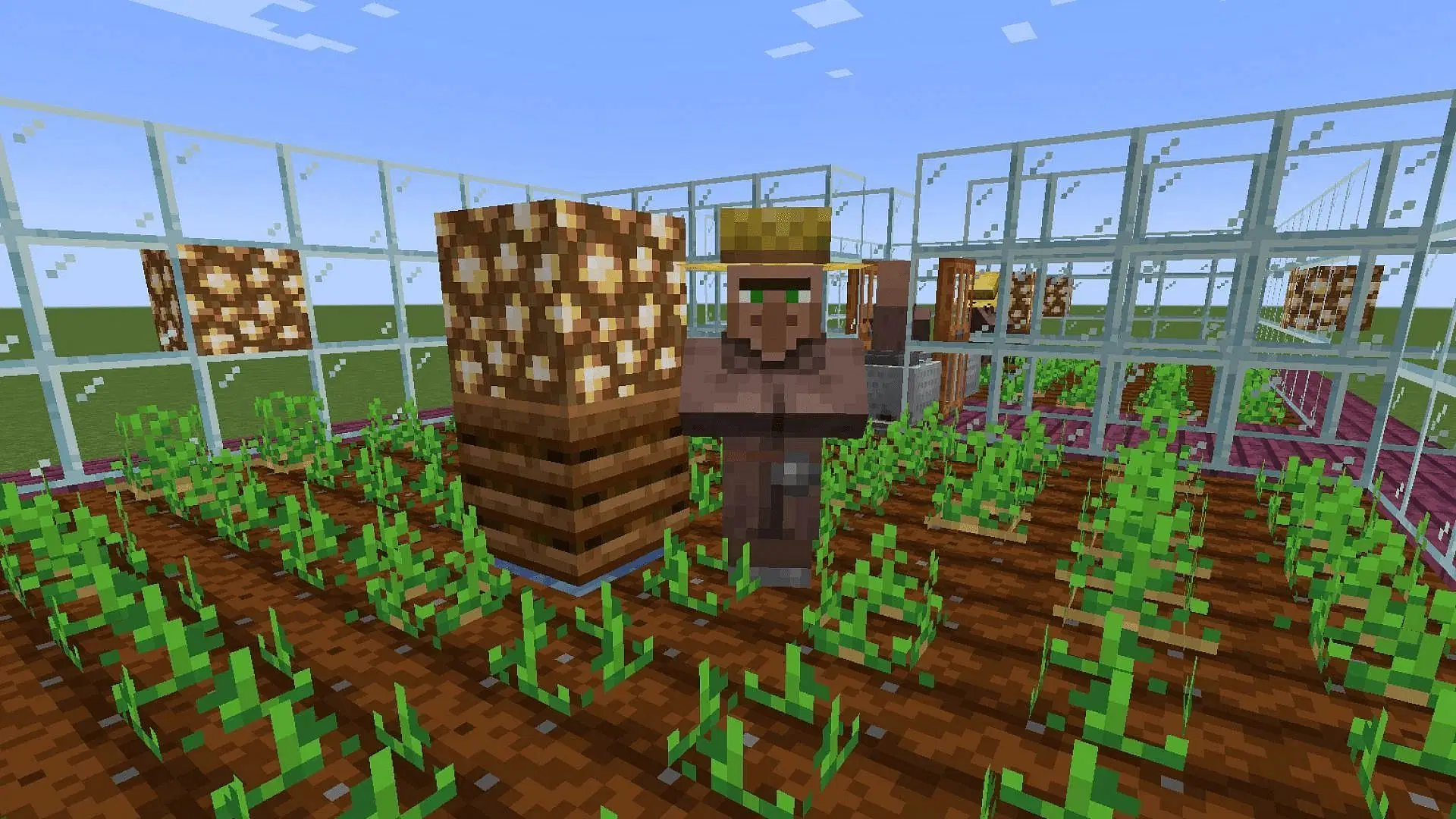
Adequate light is vital for most crops, but it doesn`t have to be natural sunlight. You can successfully grow crops indoors by placing ample light sources around your farming area. The image below illustrates an indoor farm setup. For outdoor crops, placing torches ensures continuous growth during the night.

To accelerate crop growth, apply bone meal directly to the plants.
Note that some crops have unique water and growing requirements, which will be detailed in their respective sections below.
A Guide to Every Growable Crop in Minecraft
This section provides specific instructions on how to find, plant, and utilize each type of growable crop in Minecraft.
Wheat

Wheat seeds are easily obtained by breaking ordinary grass blocks, making wheat one of the simplest crops to start with due to seed abundance. Plant these seeds on tilled farmland, ensuring at least one water block is nearby for hydration. Wheat requires light to grow.
Wheat is primarily used for food preparation, breeding animals, and trading with villagers.
Carrots

Carrots do not have separate seeds; you plant the carrots themselves directly onto tilled farmland. They adhere to the standard 9×9 hydration rule with a central water block and require light to grow. Carrots can be found in chests and villages.
Carrots are versatile, used in various crafting recipes, and for breeding pigs, rabbits, and villagers.
Potatoes

Similar to carrots, potatoes are planted directly on tilled farmland and follow the 9×9 water block rule. You can acquire potatoes from chests and villages.
Potatoes are an excellent food source, especially when cooked into baked potatoes.
Beetroot

Beetroot requires seeds for cultivation, which can be found in villages or chests. Plant them in farm plots adhering to the 9×9 hydration and lighting requirements, just like wheat, carrots, and potatoes.
Beetroot is used for crafting red dye and preparing Beetroot Soup.
Pumpkins

Pumpkin seeds are needed for growing pumpkins. These are easily obtained by harvesting wild pumpkins found in grassy biomes, or occasionally looted from chests.
Pumpkin seeds must be planted in farmland, following the usual light and water guidelines. A key difference is that pumpkins grow on an adjacent block to where the seed was planted, requiring slightly more space. While a 9×9 plot can still be used, some prefer double-row organization for better space management.
Pumpkins can be used to make pumpkin pie or carved into jack o`lanterns for decoration and light.
Melons

Melon seeds are required for cultivation and can be gathered by harvesting wild melons found in jungles or savanna villages. Like pumpkins, they can also be found in chests.
Melon seeds are planted in farmland and share the same light and water needs as pumpkins. Melons also grow on an adjacent block, necessitating open space next to the planted stem.
Melons serve as a food source and are used to craft Glistering Melons.
Sugar Cane

Sugar cane naturally grows near bodies of water like rivers, lakes, or oceans. To harvest, simply break the existing sugar cane stalks.
Unlike most crops, sugar cane does not require tilled farmland. It must be planted on sand or dirt blocks directly adjacent to water. When harvesting, break only the blocks above the bottom stalk to avoid replanting.
Sugar cane is crucial for crafting sugar and paper.
Cocoa Beans

Cocoa beans are harvested from cocoa pods found on trees in the jungle biome. To grow your own, you`ll need jungle wood (logs or planks), as cocoa beans can only be planted on these specific wood types. They don`t need to be placed on a full jungle tree.
Cocoa beans are used for making cookies and brown dye.
Nether Wart

As its name suggests, Nether wart is exclusive to the Nether, found in bastions and near staircases within fortresses. While it can be grown in the Overworld, it must be planted on soul sand, which is also collected from the Nether. Notably, Nether wart does not require water or light to grow.
Nether wart is a vital ingredient for crafting various potions.
Sweet Berries

Sweet Berries are harvested from Sweet Berry bushes found in spruce forests. These berries can be planted on ordinary dirt blocks and do not require any water source.
Sweet Berries serve as a food source and can also be used to breed foxes.
Glow Berries

Glow Berries are found and harvested from vines hanging in lush caves, or occasionally in mineshaft chests.
To grow them, place them on the underside of any block. Ensure at least a two-block gap below for the vines to extend downwards.
Glow berries are edible but are more commonly used as a decorative light source. Like Sweet Berries, they can also be used to breed foxes.
Mushrooms

Mushrooms are found in dark or low-light areas, including under trees, in caves, and in mushroom fields. Both red and brown variants exist, and giant mushrooms can be found in dark forests, yielding regular mushrooms upon harvest.
Mushrooms must be planted in low-light conditions on dirt or stone blocks. Provide several blocks of space for them to spread. They are ideal for growing indoors in a dark basement or natural/manmade caves. Bone meal can accelerate their growth and potentially turn regular mushrooms into giant ones. For growth in standard light conditions, plant them on mycelium blocks.
Mushrooms are used in various stew recipes.
Fungus

Fungus, including Crimson and Warped variants, is native to the Crimson Forest and Warped Forest biomes of the Nether. They can also be found in bastion chests. Once harvested, they are planted similarly to mushrooms, requiring no light source and growing on various dirt or mycelium blocks.
Bone meal can also be used to grow both Crimson and Warped fungi into huge fungus structures.
Crimson fungus is used to breed hoglins, while Warped fungus is used to breed striders.
Bamboo

Bamboo is found in the jungle biome and can sometimes be looted from shipwrecks. This crop can be harvested and then planted directly on dirt or sand blocks. Water is not required, but bamboo needs abundant light and vertical space to grow tall. When harvesting, break only the blocks above the lowest stalk to avoid replanting.
Bamboo is useful for crafting bamboo blocks and scaffolding, and for breeding pandas. It can also be placed in a flower pot as decoration.
Cacti

Cacti are found in desert biomes. They do not require seeds and must be planted directly onto sand blocks.
Cacti are used to make green dye and can be placed in a flower pot for decorative purposes.
Kelp

Kelp is exclusively found underwater in oceans. Once harvested, it can be planted in natural water sources or manmade tanks, and does not require light to grow. To harvest efficiently, break only the blocks above the roots to avoid replanting.
Kelp is a good food source when dried, and can also be compressed into kelp blocks, which serve as an efficient fuel source.
Sea Pickles

Sea Pickles are harvested from colonies found on the bottom of warm oceans and around coral reefs. While not traditionally farmed, you can increase their numbers by using bone meal on them while they are underwater and planted on living coral blocks.
Sea Pickles function as a light source, decoration, and are used to make lime dye.
Trees

Beyond traditional crops, you can also cultivate your own trees. Harvesting trees in Minecraft yields saplings (seeds) which can be planted in various dirt blocks. Each tree type provides distinct wood colors for crafting planks and other items.
Below is a list of common tree types and their native biomes:
- Acacia: Savanna biome
- Azalea: Found above lush caves (a variant of oak trees)
- Birch: Birch forest biome
- Cherry: Cherry Blossom biome
- Dark Oak: Dark forest biome
- Jungle: Jungle biome
- Mangrove: Swamp biome
- Oak: Most common tree, found across various biomes, especially forests
- Spruce: Most common in the taiga biome