

Текущий год удивляет беспрецедентным разнообразием кооперативных игр. От крупнобюджетных хитов, таких как Split Fiction и Grounded 2, до полюбившихся инди-проектов REPO и Peak — мы видим не только огромное количество игр, предназначенных для совместной игры, но и поразительное разнообразие в их подходах, каждый из которых по-своему увлекателен.
Однако, меня, как родителя, всегда что-то смущало, и, я уверен, другие родители со мной согласятся: порой очень сложно найти игры, в которые можно было бы играть вместе с детьми. Именно поэтому анонс Lego Voyagers стал для меня таким радостным событием.
Например, Split Fiction, возможно, и будет признана лучшей кооперативной игрой года, а то и одним из главных претендентов на звание «Игры года», подобно It Takes Two. Но кооперативные игры от Hazelight не рассчитаны на маленькие, неопытные руки. Их головоломки и динамичные экшн-сцены требуют от игроков многого, настолько, что я не могу играть в нее со своим шестилетним ребенком. Несмотря на то, что он играет всю свою жизнь, ему такие игры кажутся слишком хаотичными. Есть и другие примеры: REPO, где нужно конфисковывать ценности в локациях, кишащих монстрами, или Peak, где скауты поднимаются на горы, чтобы найти помощь после авиакатастрофы, но часто терпят карикатурные падения. Хотя я лично спокойно отношусь к более зрелым визуальным элементам и темам в этих играх и часто играю в них со своим старшим ребенком, они все равно могут быть слишком сложными для младшего на контроллере, не говоря уже о том, что их вызывающий тревогу геймплей может и вовсе ее расстроить.
К счастью, Lego Voyagers избавляет меня от этих родительских переживаний. То, что я увидел на недавней демонстрации, — это расслабляющее, творческое пространство для игры, наполненное платформенными головоломками, которое кажется доступным практически каждому.
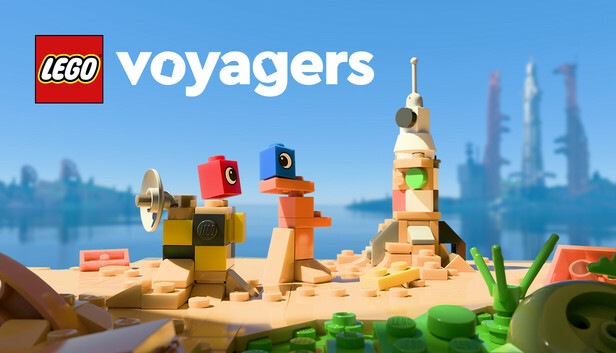
На моей демо-сессии компанию мне составил коллега, Джейсон Фанелли, отлично справившийся с ролью моего «заместителя» ребенка. В Lego Voyagers мы оба играли за маленькие детали Lego с одним глазом. Его красный и мой синий персонажи катались по миру, который очень напоминал отмеченную наградами игру Lego Builder`s Journey от Light Brick Studio. Наш путь был вымощен кирпичиками, которые по форме и цвету имитировали природные пейзажи. Мы быстро наткнулись на «игровую площадку Lego» с различными приспособлениями, которые помогли нам освоиться с физическими системами мира, прежде чем запуск ракеты вдалеке побудил нас исследовать дальше.
Мир состоит из взаимосвязанных «микро-наборов», и нам предстояло завершать эти диорамы, используя нашу изобретательность. В каждой секции свободно доступны детали Lego различных форм, размеров и цветов, из которых мы могли построить решение для проблемы, поставленной локацией. Одна из самых ранних секций требовала от нас преодолеть пропасть над водой. Естественно, нужен был мост, и мы с Джейсоном работали вместе, чтобы его построить. Не было ни таймера, ни врагов. Были только мы, несколько свободных кирпичиков и проблема перед нами. Это вызвало у меня то самое отчетливое, знакомое чувство, когда высыпаешь кучу деталей Lego на стол и смотришь, что мы с детьми придумаем, совершенно без инструкции.
Мост — достаточно простое сооружение (хотя не скрою, нам потребовалось несколько минут, чтобы освоить управление строительством), но последующие секции требовали немного больше размышлений. Тем не менее, уровень стратегии и необходимых манипуляций с контроллером никогда не достигал такого предела, чтобы я почувствовал, что какой-либо потенциальный игрок останется позади из-за разрыва в навыках, по крайней мере, судя по тому, что я успел поиграть. У меня сложилось впечатление, что это был намеренный выбор разработчиков, и, надеюсь, это сохранится на протяжении всей игры.

В качестве примера типов головоломок, с которыми вы столкнетесь: в один запоминающийся момент нам нужно было собрать множество свободных цилиндрических деталей, создав высокий объект, похожий на шест. Держась каждый за свой конец этого шеста, мы могли взбираться по местности, покачиваясь и перекатываясь через каждую естественную ступеньку, двигаясь конец за концом, как тугой Слинки. Это было очень увлекательно, и хотя я уверен, что это было предполагаемое решение, физика игры делала ответ все еще неточным и экспериментальным, что прекрасно сочетается с духом Lego.
Подобно упомянутым играм Hazelight, Lego Voyagers должна проходиться в кооперативе. Одиночного режима нет, и это неспроста. Вся эстетика игры создает ощущение уютного совместного времяпровождения, созданного специально для двух человек, чтобы они могли сотрудничать и наслаждаться обществом друг друга. Это дополняется мягким саундтреком в стиле чилл-лоу-фай, который мне сразу полюбился.
В целом, игра напомнила мне о разнице между фильмом Studio Ghibli, снятым для детей, и чем-то вроде «Миньонов». Первые прекрасно балансируют подростковую причудливость со зрелым сценарием, доверяя своей юной аудитории подняться до их уровня и оставляя пространство для того, чтобы их мир «дышал». Последние же кажутся громкой рекламой сладких хлопьев, которые на самом деле не требуются для «сбалансированного завтрака». Конечно, для каждого типа опыта есть свое время, но я очень ценю, как Light Brick Studio стремилась создать среду, более благоприятную для спокойной, творческой игры.

Растущий на Lego, я всегда находил что-то медитативное в процессе сборки; работа по пронумерованным инструкциям может погрузить человека в своего рода «поток», когда он вдумчиво помещает каждый кирпичик на свое место. Игра в Lego Voyagers вызвала у меня сильное чувство этого знакомого ощущения, которое я никогда не перерастал, и я рад, что мои дети смогут насладиться ею со мной, точно так же, как когда мы украшаем обеденный стол сотнями разноцветных игрушечных кирпичиков.
LEGO Voyagers выходит на PC, PS5, PS4, Xbox Series X|S и Nintendo Switch 15 сентября.
Lego Voyagers: A Family-Friendly Co-Op Adventure
This year has been exceptional for the sheer variety of cooperative gaming experiences. From major-publisher blockbusters like Split Fiction and Grounded 2, to beloved indie titles such as REPO and Peak, we`ve witnessed not only an abundance of games designed for co-op play but also an astonishing diversity in their approaches, each exciting in its own way.
However, as a parent, I`ve often felt something was missing, and I`m sure other parents can relate: it`s often difficult to find games that I can truly enjoy playing with my children. That`s why the announcement of Lego Voyagers brought me such delight.
For instance, while Split Fiction might be lauded as the best co-op game of the year, or even a Game of the Year contender much like It Takes Two before it, Hazelight`s co-op games aren`t designed for smaller, less experienced hands. Their puzzles and action sequences demand a lot from players, to the extent that I can`t play it with my six-year-old, who, despite being a lifelong gamer, finds such games a bit too chaotic to handle. Then there are games like REPO, where you repossess valuables from monster-stalked locales, or Peak, where Boy Scouts scale mountains to find help after a plane crash, often plummeting to their cartoonish deaths. While I personally am fine with some of the more mature visuals and themes in these games and often play them with my older child, they can still demand too much from my youngest on the controller, and that`s assuming their anxiety-inducing gameplay doesn`t overwhelm her.
Thankfully, Lego Voyagers avoids these parenting hang-ups. What I experienced in a recent hands-on demo was a laid-back, creative play space filled with platforming puzzles that felt welcoming to virtually anyone.
During my scheduled demo, my colleague, Jason Fanelli, admirably filled in for my kids. In Lego Voyagers, we each assumed the role of a small Lego brick featuring a single eye sticker. His red character and my blue one rolled around a world that strongly resembled Light Brick Studio`s earlier award-winning game, Lego Builder`s Journey. Our path was intricately paved with bricks constructed and colored to evoke the sights you`d encounter on a nature walk. We quickly came upon a Lego playground, featuring various contraptions that helped us familiarize ourselves with the world`s physics-based systems, before a distant rocket launch set us on our way to explore further.
With the world designed as a series of interconnected “micro-sets,” it was up to us to complete these dioramas with our ingenuity. In each section, Lego bricks of different shapes, sizes, and colors were freely available for us to build a solution to a problem posed by the location. One of the earliest sections tasked us with traversing a gap over water. Naturally, a bridge was in order, so Jason and I collaborated to construct one. There was no timer, no enemy presence. It was just us, some loose bricks, and the problem in front of us. It perfectly captured that distinct, familiar feeling of spilling out a bunch of Lego bricks onto a table and seeing what my kids and I could create, entirely free of any instruction booklet.
Building a bridge was simple enough—though I won`t hide the fact that it took us a few minutes to master the building controls—but later sections demanded a bit more thought. Still, the level of strategy and controller inputs needed to succeed never reached a point where I felt any potential players would be left behind due to a skill gap, at least not from what I`ve played so far. I got the sense this was an intentional design choice, which I sincerely hope we`ll see throughout the entire game.
As an example of the types of puzzles you`ll encounter, one memorable moment involved us needing to combine a bunch of loose cylindrical pieces to create a tall, pole-like object. With each of us at an end of this pole, we could climb the terrain, wobbling up and over each natural step, moving end over end like a stiff Slinky. It was highly satisfying, and although I`m sure this was the intended solution, the game`s physics meant the answer still felt wonderfully imprecise and experimental in a way that aligns perfectly with the essence of Lego.
Like the aforementioned Hazelight games, Lego Voyagers must be played in co-op. There`s no solo mode, and for good reason. The game`s entire aesthetic is built around fostering a cozy bonding experience, specifically designed for two people to collaborate and enjoy each other`s company. This is perfectly complemented by a soft soundtrack of chill, lo-fi music that I instantly adored.
Overall, the game reminded me of the difference between a Studio Ghibli movie made for kids and something like The Minions Movie. The former brilliantly balances adolescent whimsy with mature storytelling, trusting its younger audience to engage on its level and allowing its world to breathe. The latter, however, feels like a loud advertisement for a sugary cereal that no `balanced breakfast` actually requires. While there`s certainly a time for each type of experience, I truly appreciated how Light Brick Studio aimed to provide an environment more conducive to restful, creative play.
Having grown up with Lego, I`ve always found something profoundly meditative about its building process; working through its numbered instructions can put a person in something akin to a flow state as they thoughtfully place each brick where it belongs. Playing Lego Voyagers gave me a strong sense of that familiar feeling I never outgrew, and I`m genuinely excited that my kids will be able to enjoy it with me, just like when we spread hundreds of colorful toy bricks across the dining room table.
LEGO Voyagers launches on PC, PS5, PS4, Xbox Series X|S, and Nintendo Switch on September 15.