

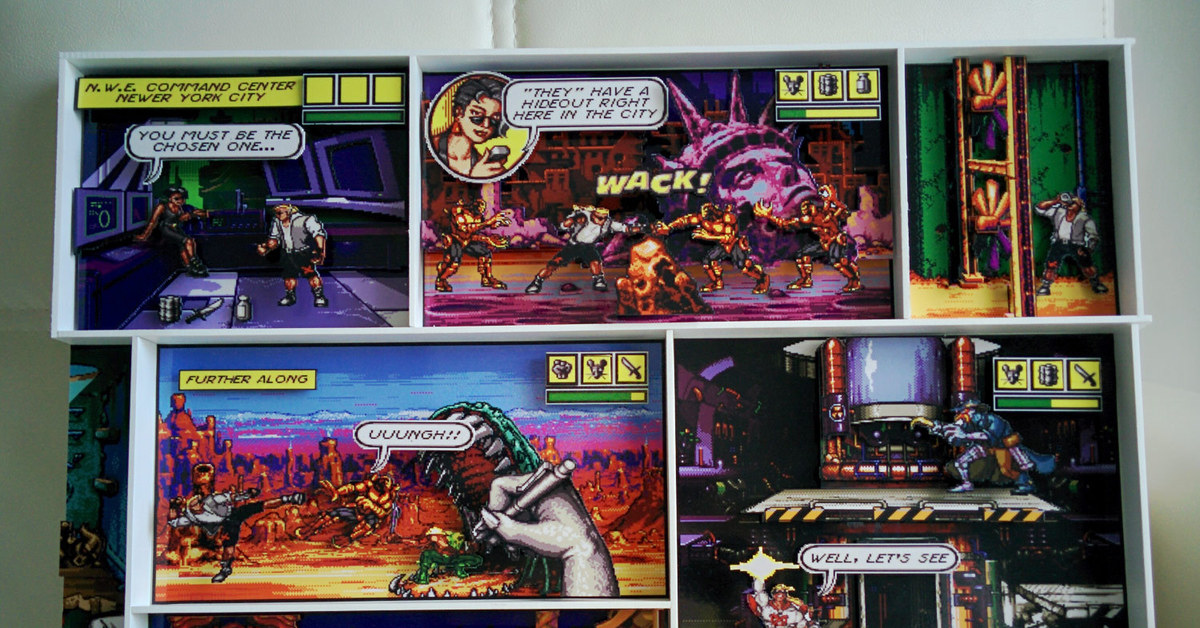
Today, September 18, 2025, marks the one-year anniversary of UFO 50. This reflection explores how a year-long, weekly engagement with the game has left an indelible mark.
UFO 50 stands out as the most daring gaming experiment I`ve encountered. Its premise—a fabricated collection of 50 complete retro-style games, interwoven with sequential iterations and an elaborate meta-narrative—captivated me from the outset. My review last year lauded the game, placing it high among my top picks.
Despite my initial enthusiasm, I hadn`t anticipated UFO 50`s persistent presence in my life throughout the year. Ultimately, this compilation of ersatz retro titles evolved into an extraordinary, continuous masterclass in game design principles.
During my initial review, I sampled all 50 games, though far from completing them. My aim was to grasp their essence, survey their diverse genres, and identify a select few to explore more deeply. This provided sufficient insight for a preliminary critical assessment.
Coinciding with this, I learned about an equally bold initiative from the podcast Eggplant: The Secret Lives of Games. This long-running show, fronted by indie developers including ex-game journalist Nick Suttner, typically delved into various independent titles. Upon UFO 50`s launch, the podcast launched “A Year of UFO 50,” a “book club” style series dedicated to playing each game individually. Recognizing Suttner from his time at the 1UP Show, my curiosity for a thorough analysis of each game was piqued, prompting me to tune in.
A year on, I`m persuaded that this methodical approach—playing one game at a time, complemented by discerning commentary—is the definitive way to experience UFO 50.
The inaugural episode focused on Barbuta, the collection`s first game, a simplistic yet classic Metroidvania. Many players share a common initial experience: stepping rightward leads to instant demise. Without any tutorial or cue, you`re merely spawned facing right, and your ingrained gaming habits dictate moving in that direction.
This immediate, harsh punishment acts as a de facto mission statement for the entire collection: challenge assumptions, proceed cautiously, and engage with each game on its unique terms. Candidly, it also serves as a clever joke, provided one can appreciate the humor in abruptly thwarting the player.
The Eggplant podcast dissected these elements with a profound clarity seemingly only possible from experienced game developers. I was captivated, vowing to follow weekly—if not to complete every game, then at least to invest enough time to grasp their underlying mechanics more deeply than my review period allowed. It resonated with the experience of attending Game Developers Conference panels, compelling precisely because it wasn`t geared towards consumers. It offered a rare glimpse into a private sphere, with developers discussing the creations of their peers.
Throughout my year with UFO 50, I gained insights into numerous influences: the significant impact of board games on classic genres; the surprising ubiquity of golf mechanics, even in a collection featuring multiple dedicated golf titles; the ingenious blend of 1980s inspirations with early 2000s flash game aesthetics; and the game`s profound engagement with Bernard Suits` 1978 philosophical work, The Grasshopper: Games, Life, and Utopia. While this might be common knowledge for those with formal game development education and a familiarity with Suits` book, for me, it was transformative. This list merely scratches the surface, as I anticipate applying these learnings for years.

Towards the conclusion of the “Year of UFO 50,” the podcast progressively concentrated on the overarching meta-narrative. While playing for my initial review, I had a faint inkling of the broader events and character conflicts within UFO Soft, thanks to scattered Easter eggs. Now, with a complete grasp of the fictional, ill-fated development studio`s narrative arc, the experience feels significantly enriched and more nuanced. The meta-game of UFO 50—distinct from its individual titles—unfolds with numerous plot twists I would have entirely overlooked without this dedicated exploratory journey.
Consequently, UFO 50 surpasses my initial impressions. It`s a compilation of 50 distinct original games, many brilliant in their own right. Yet, it`s also a unified work, where each of the 50 components contributes to a singular statement, reflecting on game development, corporate dynamics, the essence of play, artistic pursuits, and broader themes. UFO 50 aimed to chronicle a non-existent game studio, and viewed holistically, it stands as a remarkable accomplishment, offering insights into real developers, art, artists, and the inherent tensions between creativity and capitalism.
For me, this consistent, weekly deep dive into UFO 50 significantly enhanced the experience. I heartily recommend the podcast to fans of the audio medium. However, even without a podcast, UFO 50 is best savored within a community. The UFO 50 subreddit thrives with discussions on tier rankings and modifications. Many individual games have cultivated dedicated speedrunning communities. Notably, speedrunners recently organized “Cherry Rush,” a charity event where top UFO 50 players collaborated to achieve the `Cherry` completion status—the ultimate mastery indicator—for every game in the collection over one weekend.
While UFO Soft is a fictitious video game developer, the actual games were primarily crafted by Spelunky creator Mossmouth (Derek Yu), in collaboration with developers Jon Perry and Eirik Suhrke. Though UFO 50 initially struck me as ambitious, dedicating a year to exploring it within a community, and gaining further insights into game development, has rendered its achievement even more remarkable. The unique chance to witness its deconstruction, not merely as a gamer or critic, but through the lens of developers themselves, was an extraordinary privilege I won`t soon forget.