

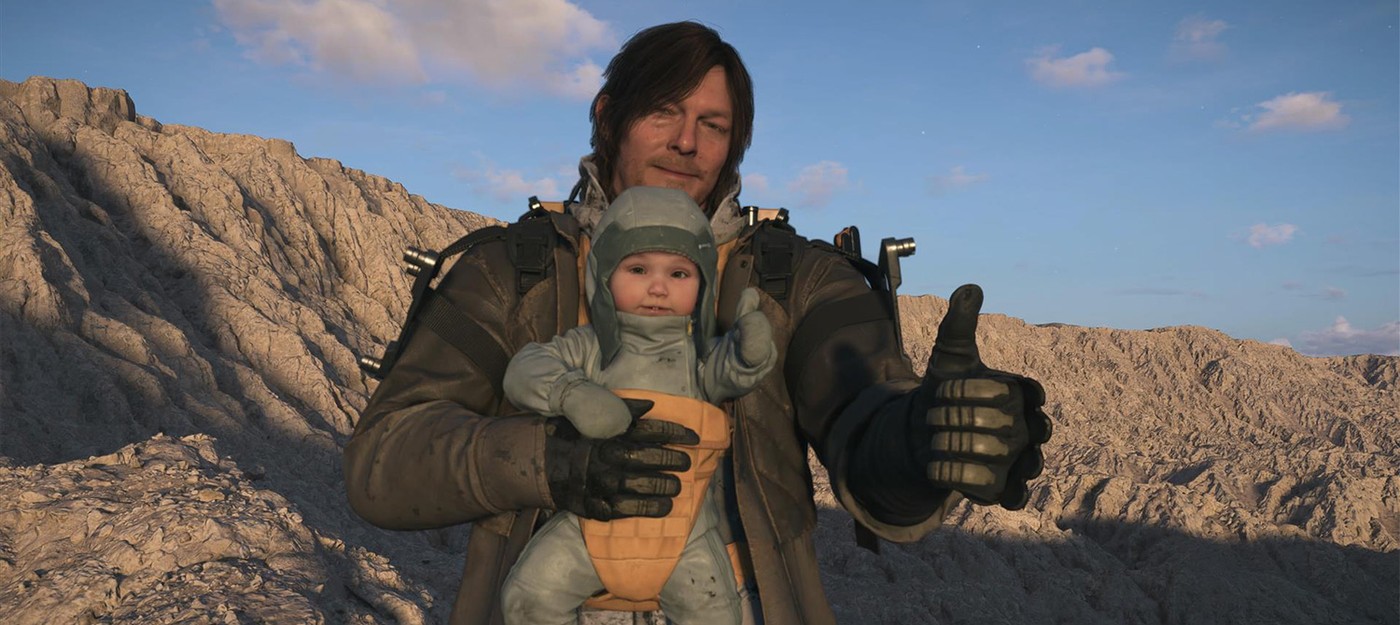
“Together, we can ease the burden of the world from your shoulders.”
This evocative line from Frank Turner`s song `Glorious You` frequently echoes in my mind while playing Death Stranding 2: On The Beach, perfectly capturing the game`s evolving spirit.
Even if you haven`t played Death Stranding, its fundamental premise is probably familiar: you embody a porter transporting packages across a post-apocalyptic landscape. Before the first game`s release in 2019, director Hideo Kojima declared his intent to pioneer a new “Strand” genre, defining it as an “action game/strand game (social strand system)” built on the concept of connection.
This seemingly complex idea translates into a truly distinctive gameplay experience. To facilitate swift and secure deliveries, players can construct diverse tools and infrastructure, ranging from simple climbing anchors for rappelling cliffs to extensive roads connecting distant outposts.
As players advance, their created structures organically appear in the game worlds of others, offering assistance. Conversely, structures built by other players likewise appear in your world. For instance, you might find a climbing anchor already in place at a dangerous drop-off, or arrive at a road construction site to discover that significant contributions from other players have reduced your material requirements.
This shared infrastructure not only saves time and streamlines deliveries but also encourages players to contribute. Knowing that your efforts—like placing a zipline for quick mountain descent—will likely benefit other players in their own games fosters a sense of communal investment.
The original Death Stranding, particularly with its Director`s Cut, already expanded available tools and infrastructure. Naturally, Death Stranding 2 aimed to evolve these systems further. However, many players now feel the sequel sacrifices some of the “friction” that defined the first game. While the original struck a balance of helpful systems, Death Stranding 2, in their view, excessively streamlines deliveries with an abundance of aids.
I concur with this assessment. The first Death Stranding often involved transporting fewer packages and materials, frequently on foot, with limited support tools. In contrast, “On The Beach” sees me predominantly using a truck, which offers greater storage capacity than a backpack and shields cargo from environmental damage and Timefall (rain/snow that accelerates degradation). While the truck`s battery power can introduce tension, I rarely find myself far from a charging station built by another player.
To reintroduce challenge, the game escalates dangers. Players more frequently encounter enemies equipped with their own tools, and the environment itself becomes more hazardous with events like floods and landslides. Despite this, the overall changes and additions in the sequel still seem to significantly benefit the player.
As the adage says, “more money, more problems,” which applies here by replacing money with chiral crystals.

In the first Death Stranding, every delivery felt monumental, particularly with time limits or damage thresholds. The “strand” element—mutual player assistance—often became secondary. My placement of a ladder or contribution to a road was primarily for my own immediate need; any benefit to other players was a welcome byproduct, not the main goal.
Conversely, “On The Beach” allows for much easier material transport, compelling me to complete entire highway and monorail systems. My decisions on where to build shelters in the wild are now more strategic, aiming for optimal resting points not just for myself, but for the numerous other players who might encounter that shelter in their own game.
Kojima Productions seemingly anticipated this shift, introducing “Aid Requests” in Death Stranding 2. Beyond typical cargo and pickup tasks, these new side missions explicitly ask players to construct specific infrastructure or place particular tools in designated areas. The game moves beyond mere deliveries, urging players to actively “fix the world,” introducing a new form of friction that expands the first game`s micro-decisions into macro-scale objectives.
“I know you’ve been working, as hard as you can. To preempt the question, the expectation, and I understand.”

This expanded mission framework encourages more deliveries, enhancing your reputation with recipients and granting access to larger material caches. New mining facilities and monorail systems further support this goal, enabling efficient material fabrication and rail transport, thereby accelerating your ability to assist others.
However, these increased stakes and larger deliveries bring their own hazards, akin to putting “all your eggs in one basket.” The game`s terrain feels more dynamic and often treacherous, demanding careful navigation. On several occasions, my haste has led to my truck suffering damage severe enough to compromise or even destroy valuable cargo.
Losing these materials hits harder, as it signifies a letdown not just for myself, but for countless other players. This feeling is amplified by current global realities, where protective institutions often falter or turn adversarial. It reinforces my belief that a better future hinges on individuals uniting to protect loved ones and extending empathy to strangers with similar struggles. Death Stranding 2 prominently features this mission, and my failures in-game serve as a stark reminder of the real-world consequences of similar inaction, where, for me, failure is unacceptable.
“So don’t you worry. All things must end. There are sunlit uplands around the riverbend.”
While individual deliveries may demand less, I personally commend how Death Stranding 2 builds upon its predecessor`s foundation. It naturally evolves its systems, emphasizing collaborative gameplay. While this expansion was likely anticipated by the development team, the emotional resonance it evokes might have been an unexpected outcome. Given Kojima`s history of societal foresight and understanding of the human condition, this emotional impact was probably an organic byproduct of the game`s intended evolution. The narrative burdens protagonist Sam with even greater world-saving responsibility, visually represented by the increased load on his back. Yet, Death Stranding 2 powerfully conveys that collective effort can alleviate any burden.