

In Minecraft, armor is crucial for survival, offering protection against deadly mobs and bosses. This comprehensive guide will detail every armor type, explaining how to craft, upgrade, and repair your gear.

All Armor Types in Minecraft
A complete armor set in Minecraft comprises four distinct pieces:
- Helmet
- Chestplate
- Leggings
- Boots
These pieces can be crafted from various materials, forming different armor sets. Below is a list ordered from the least protective to the most robust:
- Leather
- Gold
- Chainmail
- Iron
- Diamond
- Netherite
Leather armor is the easiest to craft early in the game, suitable for basic protection. However, as you encounter stronger adversaries, you`ll need more durable options.
Gold armor provides minimal durability and is generally not recommended for combat, unless aesthetics are your priority. Iron armor serves as a reliable mid-game option. Ultimately, aspiring players should aim for a set of Diamond armor.
Notably, Chainmail armor cannot be crafted. It can only be acquired by defeating mobs, finding it in chests, or trading with villagers. Using a Looting III enchanted weapon can increase your chances of obtaining it from mob drops.
Netherite armor is not crafted directly but rather serves as an upgrade to Diamond armor. Obtaining it involves a more complex procedure, detailed further in this guide.

How to Craft Armor Pieces
To craft armor pieces from leather, gold, iron, or diamond, simply arrange the corresponding materials on a crafting grid. The quantity of materials needed varies for each armor piece, regardless of the material type:
- A Helmet requires 5 units of material.
- A Chestplate requires 8 units of material.
- Leggings require 7 units of material.
- Boots require 4 units of material.
Netherite Armor Upgrade
Upgrading to Netherite armor is a multi-step process, but it`s well worth the effort as Netherite is the most powerful armor in Minecraft. It is highly recommended for challenging encounters, such as battling the formidable Warden or facing the Ender Dragon.
The upgrade requires both Netherite Ingots and a specific Smithing Template. Let`s begin by explaining how to acquire Netherite Ingots.
How to Obtain Netherite

Netherite is derived from Ancient Debris, a rare block found exclusively in the Nether. You can locate Ancient Debris between Y-levels 8 and 24, with Y-level 15 often being the most productive. These blocks can only be mined with a Diamond Pickaxe. Ancient Debris has a dark brown, rough texture, somewhat resembling cobblestone. It is typically hidden within the Netherrack, requiring you to mine through blocks to uncover it.
Crafting Netherite Ingots
Once you`ve mined Ancient Debris, smelt it in a furnace to obtain Netherite Scraps. To create one Netherite Ingot, you will need four Netherite Scraps and four Gold Ingots, combined on a crafting table. Since a full set of Diamond armor (four pieces) requires four Netherite Ingots for the upgrade, you will ultimately need a total of 16 Netherite Scraps and 16 Gold Ingots.
Acquiring a Netherite Upgrade Smithing Template
Beyond Netherite Ingots, you`ll also require a Netherite Upgrade Smithing Template. These rare items are primarily found by looting chests within Bastion Remnants in the Nether, which are fortress-like structures inhabited by Piglins. While templates can be random chest loot, the “Treasure Room” variant of Bastions guarantees one. To find it, venture to the lowest level of this specific Bastion type and locate the chest within the gold room.
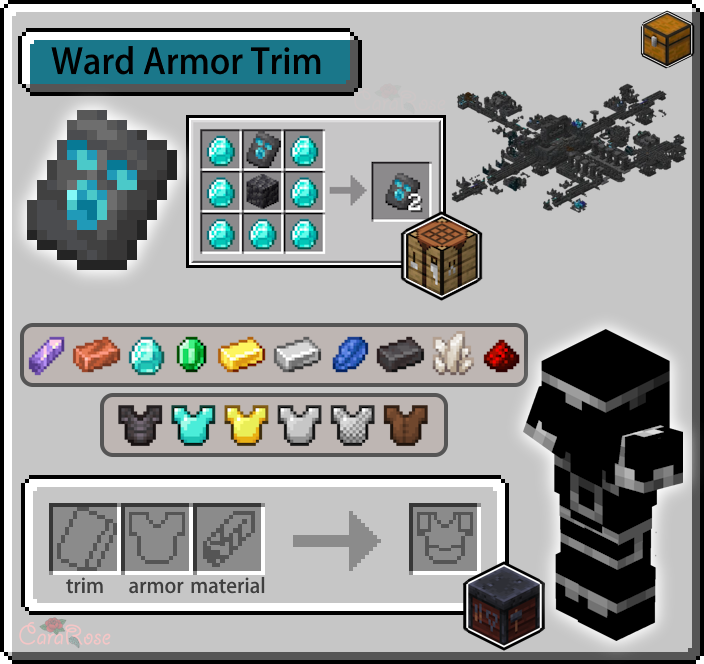
You need one template for each armor piece you wish to upgrade. Since finding multiple templates in the Nether can be time-consuming, you can duplicate them at a crafting table. To duplicate a template, place the Netherite Upgrade Smithing Template itself, along with one block of Netherrack, and seven Diamonds into the crafting grid. Repeat this process until you have at least four templates for a full set, or even five to keep a spare for future upgrades.

Upgrading to Netherite Armor
With your Netherite Upgrade Smithing Templates, Netherite Ingots, and existing Diamond armor pieces in hand, proceed to a Smithing Table. Place the Diamond armor piece, the Netherite Ingot, and the Smithing Template into the table`s slots to transform your Diamond armor into its superior Netherite counterpart.
Repairing Armor
Using an Anvil for Repairs
Maintaining your armor is vital after intense battles. An Anvil is the most effective tool for repairing damaged armor, offering two distinct methods. Both methods consume Experience Points (XP), but crucially, they preserve any enchantments on your armor.

1. Combining Duplicate Items: Place the damaged armor piece in the first Anvil slot and an identical, undamaged (or less damaged) armor piece in the second slot. The two will combine into one repaired item.
2. Using Repair Materials: Place the damaged armor piece in the first slot and the raw material it`s made from (e.g., Diamonds for a Diamond Helmet) in the second slot. The material will be consumed to repair the item.
The Crafting Grid Combination Method
While technically possible, repairing armor by combining two identical pieces directly on a crafting grid is generally not recommended if your armor has enchantments, as this method will remove all existing enchantments. For instance, combining two Iron Helmets will yield one repaired Iron Helmet, but any enchantments will be lost. However, if your armor is unenchanted and you wish to save inventory space by merging duplicate pieces, this can serve as a simple, no-XP-cost alternative to the Anvil.
Customizing Armor with Trims
For players who value aesthetics, the Smithing Table also allows for armor customization using Armor Trims. These decorative patterns add a unique visual flair to your gear. Details on available trim patterns and colors can typically be found in comprehensive guides on Minecraft smithing mechanics.
For more Minecraft tips, including advanced crafting techniques, farming strategies, and design inspirations, refer to dedicated game guides.