

We are living in an era defined by stark contradictions: on one hand, the creation and distribution of content have never been easier; on the other, censorship is alarmingly on the rise. While some mainstream media freely exploit sexualized imagery, other, often more nuanced or innocent, works face immediate bans. This glaring duality reflects a broader societal drive to restrict what is deemed “acceptable” eroticism, thereby curtailing artistic expression and individual freedom.
The Itch.io and Steam Incident Unfolds
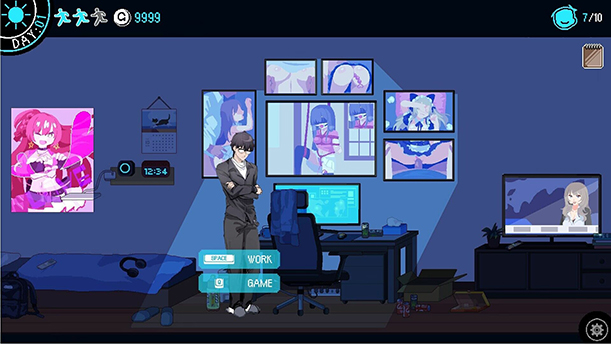
Independent video games have recently emerged as the latest battleground in this escalating suppression. In July 2025, the anti-pornography non-profit Collective Shout exerted pressure on various payment processors, urging them to cease facilitating transactions for certain “adult titles” available on platforms like Steam and Itch.io. To mitigate immediate financial fallout, Steam responded by removing, and Itch.io by de-indexing, thousands of NSFW (not-safe-for-work) games from their respective search results. While these games theoretically remain accessible if directly linked, their discoverability has been severely curtailed. Itch.io later took a stand by re-indexing its free NSFW games, cleverly sidestepping the involvement of payment processors altogether. Meanwhile, Mastercard publicly denied direct interference, stating they merely require adherence to legal standards, yet provided no clear explanation regarding the specific legality of the removed games. Valve, conversely, maintained that Mastercard’s directives indeed came through intermediaries.
Wider Repercussions for the Industry
The fallout has been significant. Independent developers are now actively exploring alternative avenues, considering migrating their projects to different platforms or launching their own dedicated storefronts. The International Game Developers Association (IGDA) has publicly urged payment processors for greater transparency. In a bold act of defiance, the digital distribution platform GOG initiated an NSFW game giveaway, explicitly positioning it as a stand against the “quiet erasure of creative works.” Developers and artists across the community have launched widespread campaigns, collectively pressuring payment processors to reverse their contentious positions. These unfolding events have undeniably ignited both apprehension and a renewed sense of activism within the gaming industry.
Censorship in a Broader Societal Context
This widespread de-indexing is intricately linked to deeper cultural conflicts, drawing unsettling parallels to the pervasive book bans observed in libraries and schools across the United States. Under the ambiguous pretense of “protecting children and women,” even the most innocuous or thoughtful explorations of gender, sexuality, and identity frequently face suppression, all while genuine perpetrators often remain untouched. Collective Shout, despite explicitly targeting extreme content such as “rape and incest games” (like “No Mercy”), broadly extends its accusations to encompass thousands of other games that bear no resemblance to these categories. This creates a misleading narrative, implying that all de-indexed games inherently glorify violence or abuse.
A Superficial Battle Against Deeper Issues
Such campaigns frequently address only the superficial “symptoms” of patriarchal violence rather than its fundamental causes. When the true systemic issues prove too complex or inconvenient to tackle, efforts are often misdirected towards battles that ultimately hold little consequence. Collective Shout`s initiatives, while ostensibly targeting various forms of pornography, disproportionately inflict harm upon niche and independent creators. For example, the artistic and playfully erotic works of Robert Yang remain banned on Twitch, while big-budget titles like “Cyberpunk 2077,” featuring equally explicit content, can be broadcast with minimal setting adjustments. This glaring disparity clearly illustrates how puritanical pressures exert a far greater impact on small studios and individual creators than on multi-million dollar corporations.
The Ineffectiveness of Anti-Porn Crusades
It is vital to recognize that anti-porn crusades historically prove ineffective in genuinely protecting and assisting victims of abuse. They typically frame sexual violence as a deviant and abnormal act, a direct product of “twisted media” corrupting ordinary minds. However, sexual violence is, at its core, a broad societal issue, not confined to a specific type of individual or isolated to media consumption. Historical patterns reveal that societies where “thought leaders” rigorously policed sexual behavior did not ultimately protect women; on the contrary, men became more adept at concealing their actions, less accountable to the women they harmed, and more inclined to shift blame onto their victims.
If art and video games are to authentically contribute to combating structural misogyny and fostering genuine understanding, they must be allowed to become bolder and more candid. The current wave of censorship has already made it significantly harder for games to address crucial themes, unfairly equating thoughtful examinations of complex and taboo issues with crude misogyny. This suppression means that marginalized groups struggle to find legitimate platforms, while powerful individuals often retain the freedom to express anything they wish. Without doubt, this censorship has unequivocally made the world of games a worse place.