

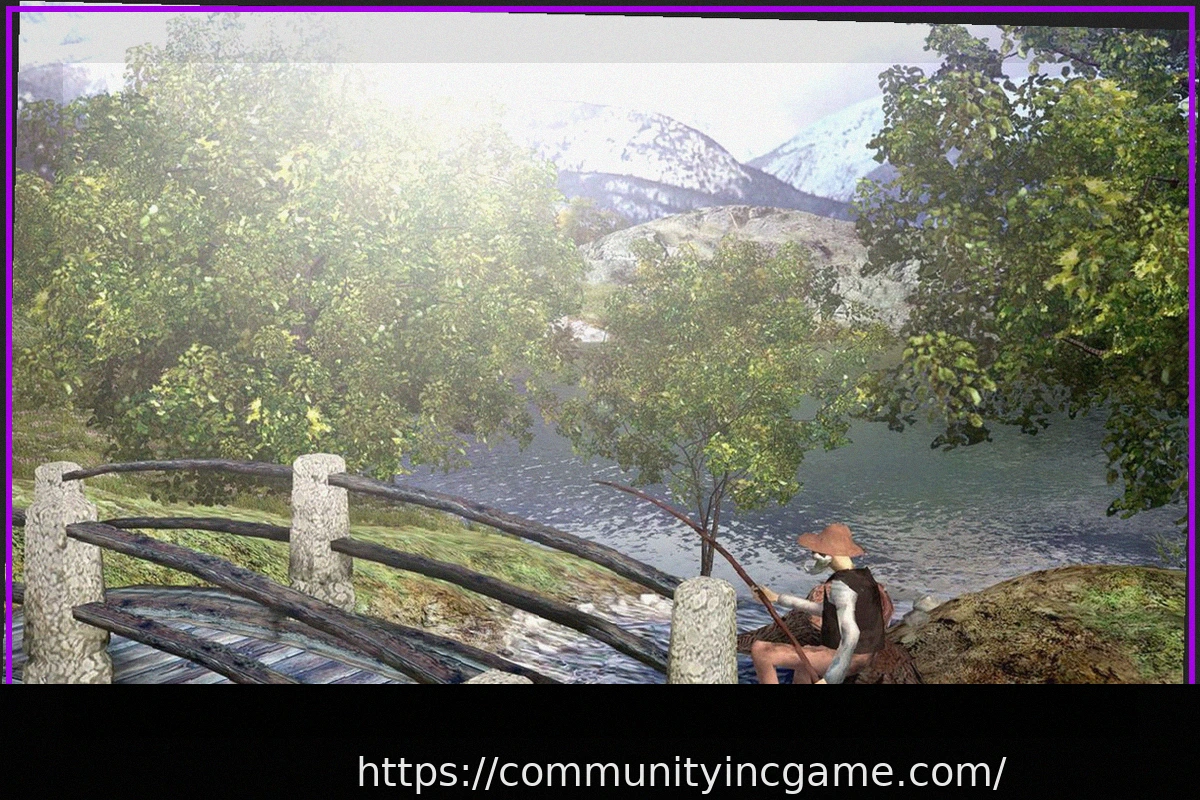
It’s hard to believe it’s been a quarter of a century since the graphical spectacle of 3DMark2001’s Nature test first left me utterly spellbound. That particular benchmark, with its lush vegetation, flowing water, and remarkably convincing lighting for its era, represented the absolute pinnacle of what PC graphics could achieve. My jaw literally dropped, captivated by a level of realism previously unimaginable in personal computing.
3DMark, a staple for PC enthusiasts and hardware reviewers alike, was always more than just a performance measuring tool; it was a visionary showcase for the future of visual computing. The Nature test wasn’t merely a technical demonstration; it offered a tantalizing glimpse into immersive virtual worlds that felt incredibly close to becoming a reality.
The scene itself was a tranquil forest setting, meticulously crafted with sun-dappled trees, gently swaying grass, and a shimmering lake that perfectly reflected its surroundings. The dynamic shadows, subtle particle effects suggesting pollen or dust motes in the air, and the convincingly rendered water reflections were, at the time, nothing short of revolutionary. While not photo-realistic by today’s exacting standards, it masterfully created an illusion of depth, vibrancy, and life that captivated an entire generation of gamers and hardware aficionados.
Fast forward 25 years, and the landscape of 3D graphics has undergone a truly seismic transformation. What once amazed us now serves as a quaint, albeit cherished, reminder of nascent digital artistry. Modern graphics engines, powered by exponentially more potent Graphics Processing Units (GPUs), deliver real-time ray tracing, sophisticated path tracing, intricate tessellation, and complex physics simulations that were pure science fiction in 2001.
Today, games and simulations offer photorealistic environments that frequently blur the line between virtual and reality. Character models boast hyper-detailed facial expressions and incredibly fluid movement, while environmental effects like volumetric clouds, dynamic weather systems, and vast, sprawling open worlds have become commonplace. The sheer scale and complexity of these digital realms are staggering. Features such as global illumination, advanced anti-aliasing techniques, and AI-driven upscaling have not only become standard but continue to push the boundaries of visual fidelity beyond anything we could have conceived in the early 2000s.
Looking back at that iconic 3DMark2001 Nature test, one can only marvel at the immense distance we’ve travelled. The journey from those early, awe-inspiring polygons to today’s breathtakingly lifelike rendered scenes is a powerful testament to relentless innovation and human ingenuity. It truly makes one wonder: if 25 years brought us from the wonders of 3DMark2001 to today’s visual masterpieces, what unimaginable graphical spectacles and virtual realities await us in the next quarter-century?