

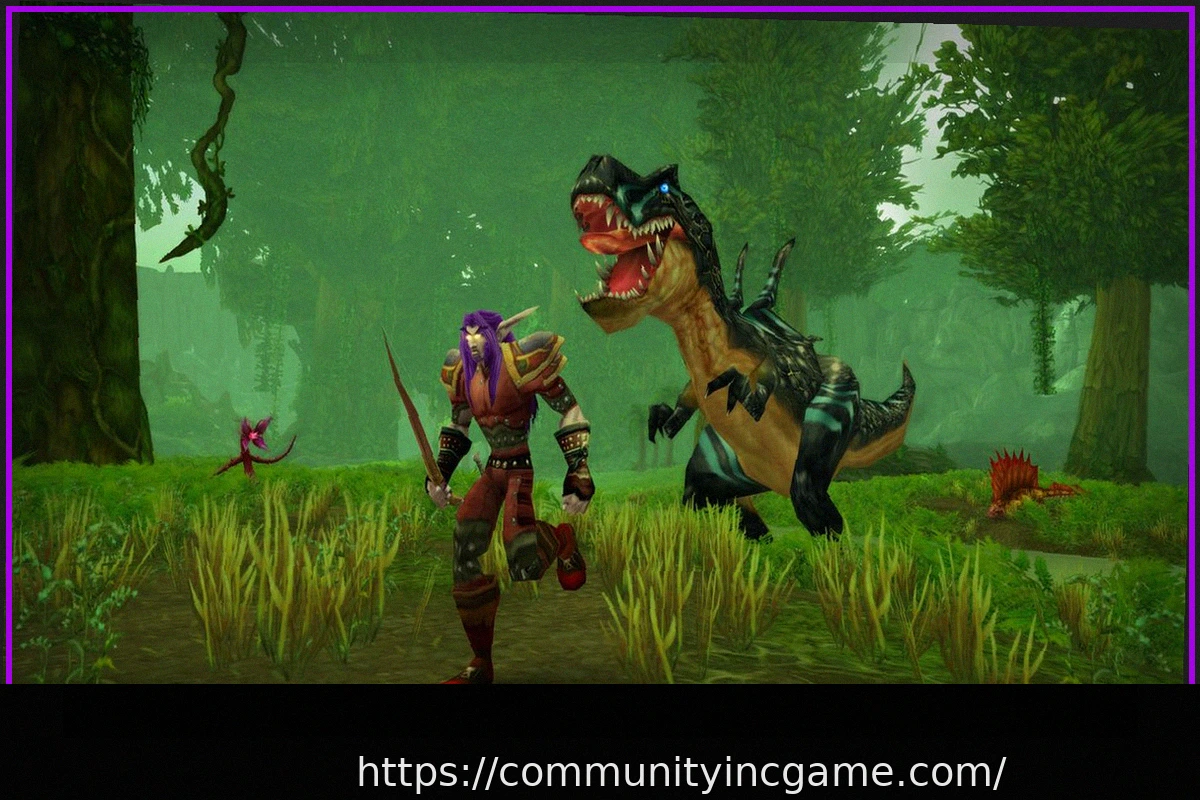
World of Warcraft’s questing system is legendary, renowned for its intuitive design that skillfully guides players through vast worlds, epic narratives, and countless adventures. It has become a benchmark for MMORPGs, providing clear objectives and a sense of progression that keeps millions engaged. Yet, the very inception of this celebrated system wasn’t a stroke of initial genius, but rather the result of a crucial, albeit initially disastrous, playtesting session.
In the nascent stages of WoW’s development, Blizzard conducted a playtest designed to gauge how new players, particularly those unfamiliar with the Massively Multiplayer Online (MMO) genre, would interact with the game. The aim was to observe how newcomers would naturally navigate the world and its emerging challenges, without relying on pre-existing genre knowledge.
The results were anything but what the developers anticipated. Instead of seamlessly exploring and engaging with the burgeoning world of Azeroth, many testers found themselves utterly lost. Without explicit direction or clear objectives, they quickly became disoriented, unsure of how to progress or what their purpose was within the expansive digital realm. A complaint that resonated strongly among the participants, and became a defining moment, was the bewildered declaration: “I ran out of quests right away!” This wasn’t due to a lack of content, but rather because the implicit cues and subtle guidance common in earlier, more niche MMOs were completely missed by these uninitiated players.
This unexpected outcome proved to be an invaluable turning point for the development team. The realization dawned that for World of Warcraft to achieve mainstream appeal, it couldn’t rely on players inherently understanding the often-complex mechanics of an MMO. It desperately needed a more explicit, user-friendly system to guide them through the experience. This pivotal insight directly led to the conceptualization and implementation of the structured, visible quest log, the iconic “!” and “?” markers floating above NPCs’ heads, and clear objective indicators that swiftly became synonymous with WoW’s gameplay.
What initially appeared to be a fundamental failure in a critical playtest ultimately sparked one of the most defining innovations in modern gaming history. The lesson learned from those confused testers transformed WoW’s questing from an abstract concept into a finely tuned mechanism that effortlessly onboarded millions of players, allowing them to dive deep into Azeroth without feeling overwhelmed. It stands as a powerful testament to how embracing unexpected feedback can profoundly reshape a game, turning potential confusion into a legacy of legendary design.