

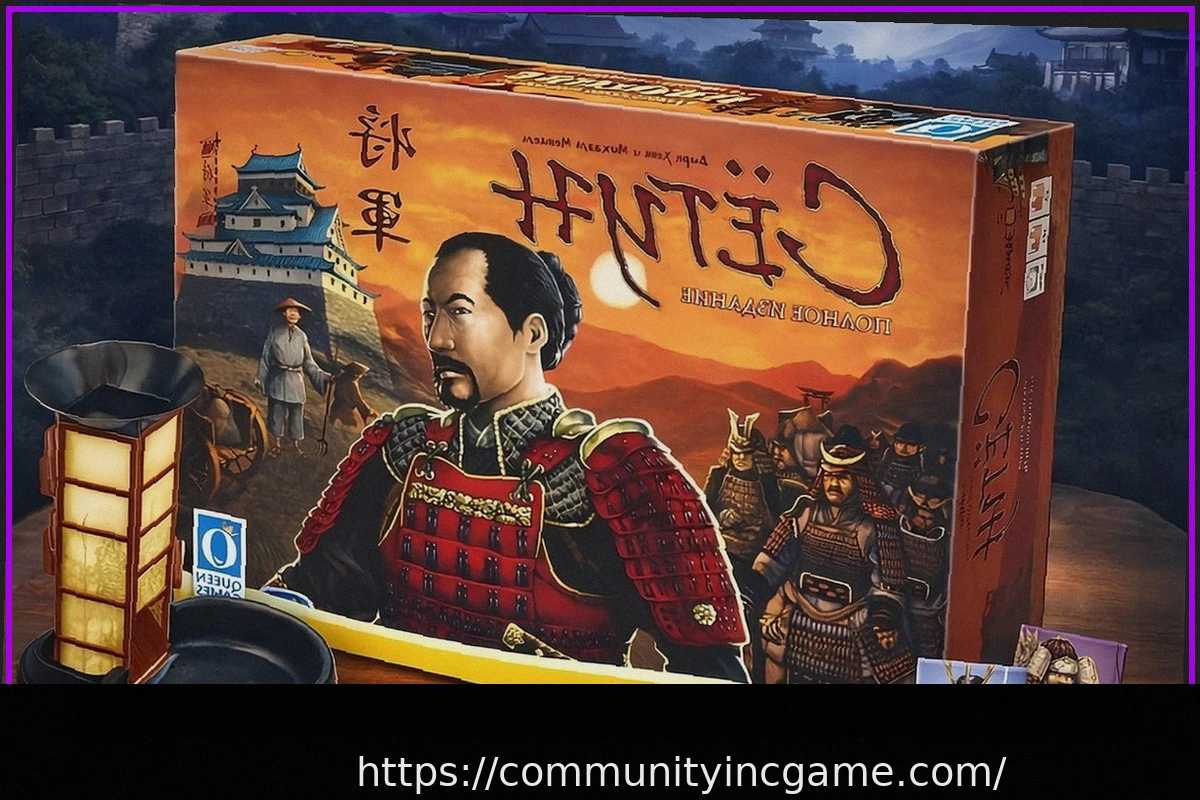
It’s time to become Japanese warlords striving to assert their clan’s dominance, as the strategic board game “Shogun: The Complete Edition” is now available in Russia. This comprehensive box already includes four expansions: “Tenno’s Court,” “Samurai,” “Generals,” and “Dajokan.”
The board military-economic strategy game “Shogun: The Complete Edition,” designed for 3-5 players, has officially gone on sale. It is currently available in various stores, with prices ranging from 6,303 to 10,600 rubles.
“Shogun” is a game that combines action planning, an original battle mechanic utilizing a special battle tower, and elements of an auction. To achieve victory, participants must not only control as many provinces as possible but also actively develop their territories. This involves constructing castles, temples, and theaters, meticulously collecting rice and taxes, and suppressing any rebellions that may arise.
“The Complete Edition” truly lives up to its name by incorporating all four major expansions. “Tenno’s Court” introduces intricate political intrigues, unfolding within a new imperial palace area where players can leverage officials to gain the emperor’s favor.
The “Samurai” expansion introduces a system of warrior valor, granting players beneficial bonuses. “Generals” adds unique characters who enable more powerful actions and offer additional victory points. Finally, “Dajokan” broadens strategic possibilities, allowing for even greater point accumulation.
A distinctive feature of “Shogun” is its battle resolution system. Both player conflicts and peasant rebellions are resolved using a specialized battle tower. All participating armies are simultaneously dropped into the tower. The side whose cubes emerge in greater numbers in the tray below is declared the victor. Defeated armies are returned to the general supply, while the winner places their remaining cubes in the conquered province and claims the corresponding province card.
A game session spans two in-game years, with each year comprising four distinct seasons (rounds): Spring, Summer, Autumn, and Winter. Following the second winter round, a final score tally determines the winner. The player with the highest total of victory points emerges victorious; in the event of a tie, the player possessing more chests in reserve wins.