

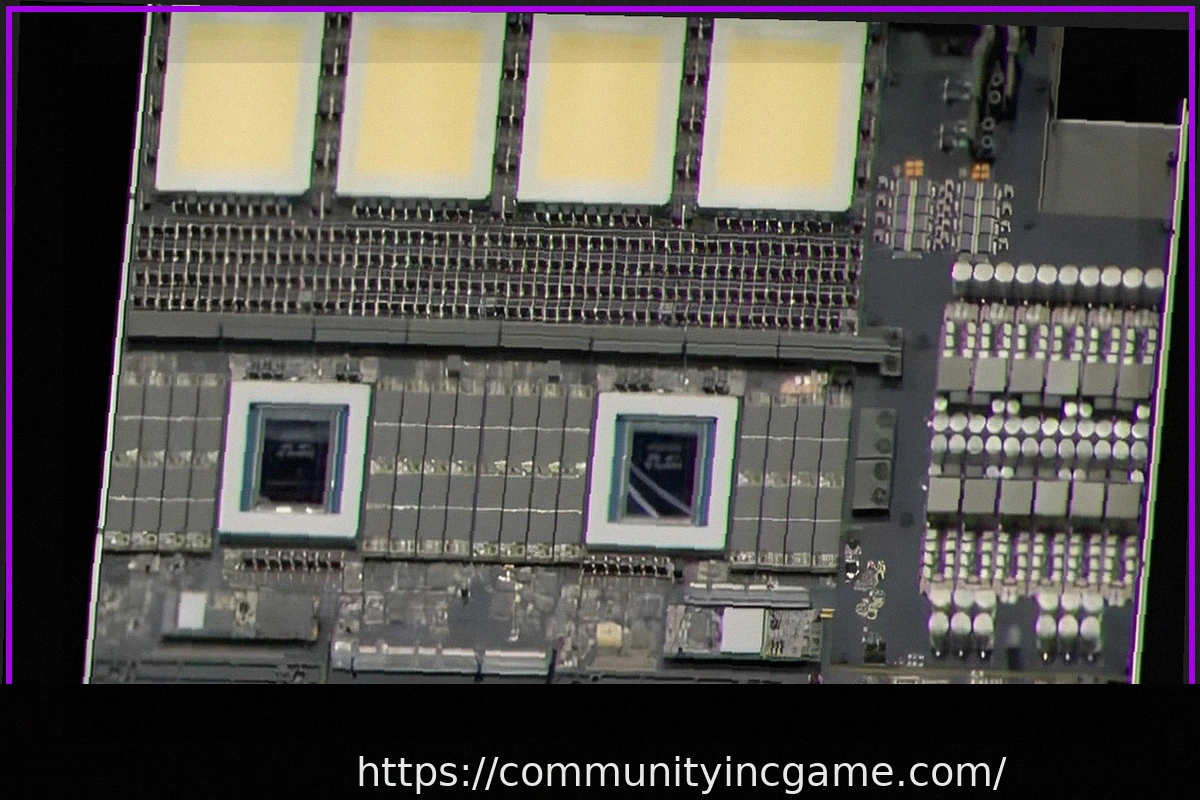
NVIDIA is reportedly rethinking the architecture of its upcoming Rubin Ultra graphics accelerator, simplifying its design from a previously rumored four-chip configuration to a two-chip setup. This strategic shift, according to Taiwanese media reports, aims to mitigate supply chain complexities and enhance production stability.
Despite NVIDIA’s annual product refresh cycle, manufacturing partners operate under tight deadlines. Radical architectural changes, such as the ambitious four-chip design featuring 16 HBM4 memory stacks (totaling up to 1 TB) and advanced CoWoS-L packaging, could significantly strain the supply chain. Furthermore, such a complex design presented inherent risks, including potential overheating, deformation, and reduced chip yields.
Analysts emphasize that these adjustments are not driven by declining demand or performance concerns. Instead, they represent a pivot towards more flexible board-level assembly rather than intricate in-package integration, ensuring smoother and more reliable manufacturing.