

Spending several weeks immersed in a multiplayer shooter like Marathon before final judgment offers a comprehensive understanding of its highs and lows.
NEED TO KNOW
What is it: An extraction shooter revival of Bungie’s first FPS series.
Release date: March 5, 2026
Expect to pay: $40/£30
Publisher: Sony
Developer: Bungie
Reviewed on: RTX 5090, Ryzen 7 9800X3D 4.7 GHz, 64GB RAM
Multiplayer: Up to 16 players
Steam Deck: Unsupported
My experience with Marathon spans thrilling victories, where I’ve looted vast amounts of valuables, acquired rare weaponry from defeated enemies, and filled my inventory with premium attachments. Conversely, I’ve endured crushing defeats—relentless squad wipes that make success seem impossible, struggling to assemble basic loadouts only to lose everything, and resorting to risky, low-reward missions just to salvage minimal resources.
Marathon is unequivocally brutal, yet it stands as a remarkable achievement.
Rampant Fun
Having admired Destiny from afar and previously lamented the shift away from classic multiplayer by veteran FPS developers, I was surprised to find an extraction shooter perfectly suited to Bungie’s established strengths. Unlike many competitive shooters that offer minimal narrative, Marathon is deeply immersed in its rich lore.
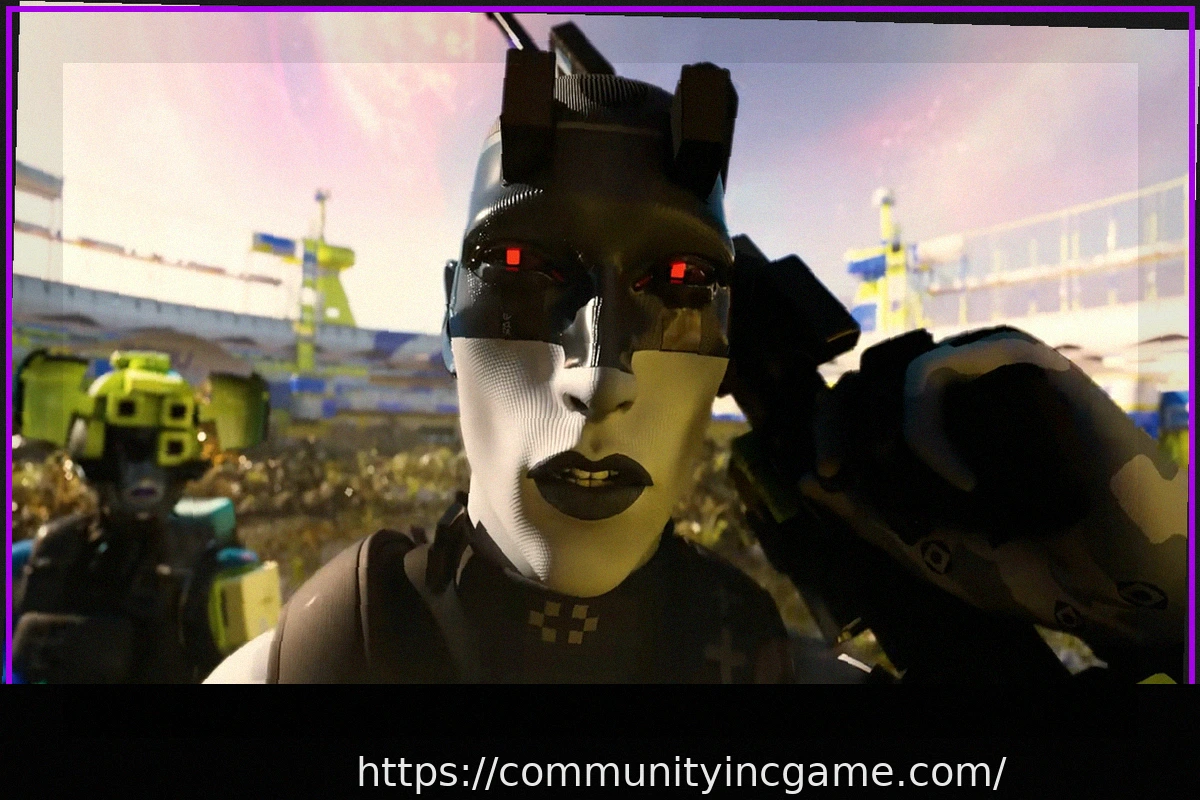
My entry into Marathon, much like many new players, came without prior knowledge of Bungie’s ’90s FPS legacy, which built a universe of AI, aliens, and cosmic mysticism that would later influence Halo and Destiny. The game immediately informs you, via an AI, that you’ve transcended your physical form. Players, as “freelancers,” have been digitally uplifted into a spaceship’s server, allowing them to control interchangeable “shells” for missions on Tau Ceti IV, a planet where a human colony mysteriously disappeared.
While the missions are challenging, rewards are often meager, death is frequent, and debt is common, players do retain the autonomy of setting their own schedule.
Marathon masterfully condenses the intense skirmishes typical of extraction shooters into engaging, repeatable segments, akin to Hunt: Showdown. It also captures the thrilling “loot lust” found in games like Escape From Tarkov, generating escalating anxiety and adrenaline as your inventory grows with valuable items you’re desperate to keep. This blend of PvP intensity and loot emphasis is achieved by designing smaller maps, which ensures frequent player encounters without relying on a single, shared objective.
Maps like Perimeter, Dire Marsh, and Outpost feature only a few compounds (with the endgame raid map, Cryo Archive, being distinct), guaranteeing player interactions despite varied individual objectives. This design effectively creates an extraction format where PvP takes center stage, with valuable loot serving as the primary incentive and risk.
The game’s vision becomes clear through its quick contracts, often completable in minutes. Marathon matches are dynamic, allowing three-person squads to visit several compounds, complete tasks, gain XP, and frequently engage in combat with rival teams. A full Marathon experience can be had in about 15 minutes, with instant re-queueing for the next match.
A key unifying element is the intentionally short time-to-kill (TTK). While not as extreme as a universal one-shot headshot found in games like Hunt or Rainbow Six Siege, players typically fall within less than a single magazine. Even character shields offer only minimal additional durability, preventing prolonged engagements. This low margin for error heavily rewards cautious and tactical squad play.
House Style
Challenging sessions can lead to doubts about the value of extraction shooters, questioning whether their “all or nothing” nature is a healthy way to relax. While sometimes the answer is no, the allure of the next thrilling gunfight consistently draws me back into Marathon.
Bungie’s latest title, their first in nine years, vividly demonstrates the concept of a studio’s distinct “house style.” This isn’t merely about their talent for world-building, stunning environments, or extensive lore; it refers to their unparalleled mastery of first-person shooter mechanics.
Bungie games possess a unique feel: Marathon’s weaponry provides a rhythmic, satisfying experience with manageable recoil, making hip-firing viable. In contrast to a genre increasingly focused on speed and advanced movement, Marathon’s low gravity, springy physics, and deliberate footfalls evoke the classic, weighty movement of Master Chief from 2004. Despite incorporating modern elements like aim-down-sights, sprinting, and sliding, Marathon retains a nostalgic charm reminiscent of an earlier era.
These design choices enhance accessibility for players who find faster-paced games challenging, while still demanding skill in areas like timing, positioning, and spatial awareness. Target tracking is straightforward, yet precision headshots, strategic high-ground advantage, and effective use of shell abilities are heavily rewarded.
Space Age
Despite a controversial art theft incident that affected Bungie’s reputation last year, Marathon has emerged as one of the most visually distinctive games available. The fusion of natural and artificial elements on Tau Ceti is immediately captivating. Its aesthetic is a vibrant CMYK world of soft lighting and rounded shapes, designed for both clarity and beauty—a rare combination in a genre that often prioritizes competitive fairness above all else.
A Bungie game really does hit different.
While playing open-world RPGs in my leisure time, Marathon consistently reinforces the idea that “photorealism” in games is often overvalued. Tau Ceti’s environments, though seemingly simple upon closer inspection, are elevated by superb color palettes, material design, and impressive weather effects that don’t demand cutting-edge hardware. The game frequently presents compelling scenes, vistas, hidden graffiti, or enigmatic treasures that compel me to pause and appreciate their unique qualities.
Bungie maintains its signature style of featuring bullpup rifles and oversized magnums, yet even standard assault rifles possess an unconventional appearance. The weapons are distinctively mismatched, colorful objects, blending aesthetics reminiscent of 3D prints and LEGOs. Among them, the Volt guns stand out with their squared designs built around long, flat battery cartridges. The Punch pistol offers the delightful sensation of firing an iPad, while the Brrt SMG is appealing for its unique cubic magazine ejection during reloads.
What truly distinguishes Marathon’s arsenal is how each weapon carves out a specific role within its well-balanced ecosystem, reminiscent of Halo. Unlike many modern shooters that inundate players with dozens of interchangeable weapons primarily for grinding or cosmetic sales, Marathon’s 28 launch weapons are thoughtfully designed with unique niches. For instance, Volt guns excel at shield depletion and recharge, but early reloads waste energy. Heavy ammo weapons offer high damage at the cost of fire rate and recoil, while precision rifles reward accuracy with increased headshot multipliers, ensuring automatic weapons remain effective in close quarters.
While Destiny players will recognize these weapon philosophies, Marathon further refines its balance using extraction shooter mechanics. Powerful shotguns and snipers, though formidable, are balanced by their scarcity, rare mods, and costly MIPS ammo with limited capacity (15 rounds). Weapon mods offer significant customization, even enabling unique behaviors like the Volt Thrower’s Needler-like “supercombine” effect.
Foreign Body
Marathon’s portrayal of Tau Ceti IV is confidently presented not merely as a PvP arena, but as a rich tapestry of interwoven narratives waiting to be uncovered at the player’s leisure. The game features an extensive codex containing thousands of words, offering context for everything from the mysterious Data Wall on the Perimeter map to the peculiar NuCaloric drinkable cheeseburgers.
Marathon’s optional text chats and audio logs are a highlight, representing a storytelling approach Bungie has employed for decades, but which feels particularly effective here. Rather than relegating side stories to terminals that disrupt a main narrative, Marathon’s non-linear lore forms the core of its world-building. The lack of a conventional campaign elevates the importance of these logs, making them compelling material to explore during breaks or while waiting for teammates.
Items that might otherwise be seen purely for their economic value reveal intricate narratives from Tau Ceti’s human settlers, gradually unveiling a broader story of corporate avarice, AI arrogance, and the corruption of noble aspirations by capitalism.
Players, known as Runners, are essentially expendable, debt-ridden agents in a corporate-dominated world. The temporary “shells” they inhabit are created by “techno moths.” Despite personal accomplishments, all actions ultimately serve the agendas of a handful of enigmatic, often non-humanoid executives, such as one accompanied by a digital lion or another appearing as a literal worm. This forms a compelling science fiction backdrop.
Zone Clear
While many of Marathon’s strengths are excellent implementations of existing game mechanics, its maps truly stand out. Perimeter, Dire Marsh, and Outpost are intentionally smaller than typical extraction game environments, featuring fewer but more intricate and richly detailed compounds, making them both accessible to learn and rewarding to master.
Outpost, for all its brutality, could be Marathon’s crowning achievement. As the initial human settlement on Tau Ceti IV, it’s the final base map unlocked at level 12. It functions as a vast compound of factories, dormitories, and hangars, but this is only the surface of what feels like two distinct maps. Dominating the zone is the Pinwheel, an imposing three-pronged megastructure accessible only by collecting security cards and bypassing numerous robots.
Objects that are otherwise only impressive for their sell value unfold into layered anecdotes from the human settlers of Tau Ceti.
The Pinwheel features multiple entry points, some cleverly concealed. Its design is ingenious, making it one of the most interactive and unique areas in a competitive shooter. Successful infiltration grants access to top-tier loot, but also means encountering other teams who have entered from different sectors.
Cryo Archive, the fourth “raid” map, showcases Bungie’s innovative integration of raid mechanics into a PvP setting. Similar to Outpost, Cryo imposes special access conditions, but on an advanced scale: a specific Security Clearance rating governs movement within the facility. Teams acquire clearance by collecting security tags, though obtaining sufficient clearance to access deeper areas or even extraction points often necessitates taking tags from other players. Challenges like vault puzzles and confronting the Compiler still await.
Turnaround
My primary concern for Marathon, aside from the broader worry about game shutdowns, revolves around its post-Season 1 future. June marks the game’s first mandatory seasonal wipe. Having only played extraction shooters with optional resets (like Hunt and Arc Raiders), I’ve never been inclined to clear my progression and vault. It remains to be seen if I’ll be motivated to restart when Marathon’s wipe occurs.
This motivation will largely depend on the quality of upcoming content. While the current four maps are impressive, the game would benefit from additional maps to enrich the experience. Season 2 is set to introduce a new shell, weapons, and enemies, but only a night variant of Dire Marsh for new map content.
While the UI has flaws, the initial battle pass is underwhelming, and the WSTR shotgun is arguably overpowered, there are numerous areas where Marathon could improve. Suggestions include adopting a streamlined loadout system for quicker match entry, or better supporting solo players beyond making the Assassin shell the default optimal choice. However, my overall enjoyment largely overshadows these minor complaints, and Bungie’s swift response to immediate issues is commendable.
For those surprised by Marathon’s success, I share that sentiment. A year ago, I had written it off after experiencing a disappointing alpha with unappealing art, no solo mode, and missing proximity chat. Yet, Bungie implemented significant improvements, recognizing the game’s unique strengths: exceptional gunplay, unparalleled map design, and progression systems that completely won me over to the loot-centric extraction format. Marathon hasn’t just earned a spot in my FPS rotation; for the foreseeable future, it defines it.