

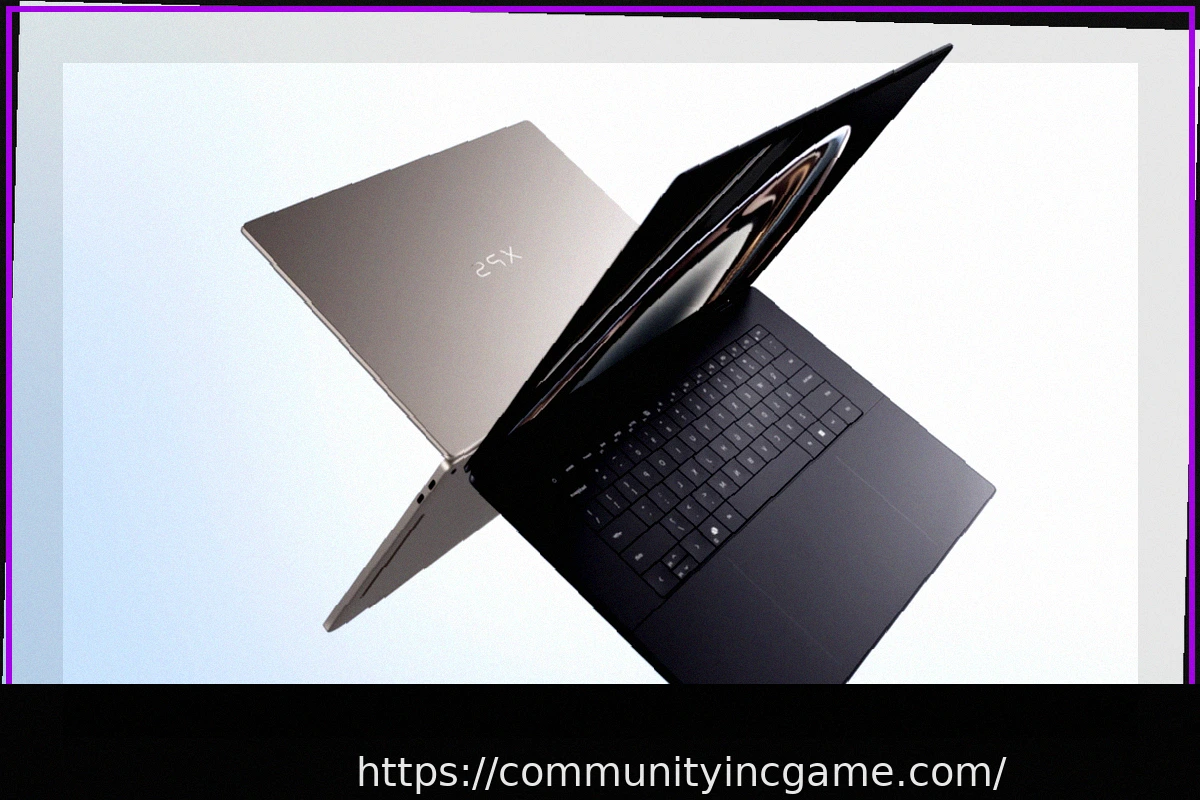
LG Display has unveiled a groundbreaking LCD panel technology for laptops, dubbed ‘Oxide 1 Hz,’ which promises significant power efficiency improvements. This innovative display dynamically adjusts its refresh rate, dropping to a mere 1 Hz when the screen content is static and scaling up to 120 Hz for active usage.
LG touts this technology as offering “dramatically improved battery efficiency,” potentially extending laptop usage by “48% more… on a single charge” compared to conventional panels. However, the exact interpretation of this 48% figure remains somewhat ambiguous.
While a 48% increase in overall laptop uptime would be remarkable, it’s unclear if this percentage applies to the entire device or solely to the display’s power consumption. Laptops, naturally, have many other components like the CPU, memory, and storage that also draw significant power.
LG has not provided exhaustive technical details on how these efficiency gains are achieved. The core principle involves minimizing the refresh rate to 1 Hz (one frame per second) for static content, thereby reducing the computational power and energy needed to process and update pixels.
A notable consideration for LCDs is their reliance on a constant backlight. This backlight must remain active to display an image, irrespective of the pixel refresh rate.
Furthermore, the specific implementation of this technology remains undisclosed. LG states that the panel’s central capability lies in its “intelligent detection of the usage environment,” enabling it to “automatically” adjust the refresh rate in real-time.
LG asserts this is a “world’s first,” achieved through proprietary circuit algorithms, advanced panel design, new material discoveries, and the application of an oxide with minimal power leakage to the display’s thin-film transistor (TFT) during low-refresh-rate operation.
This suggests the integration of image analysis circuitry directly into the panel, though LG has not explicitly confirmed this. Alternatively, the image analysis and “circuit algorithms” might be handled by external display controllers.
Regardless of the internal workings, Dell’s upcoming 2026 XPS 14 and XPS 16 laptops will feature this new Oxide 1 Hz technology, with their base models sporting 2K 1-120Hz displays. Notably, the optional upgrade panel is a 20-120 Hz OLED, which, while variable, doesn’t reach the ultra-low 1 Hz refresh rate.
Dell claims an impressive battery life of up to 31 hours for both the XPS 14 and 16. However, the exact contribution of LG’s Oxide 1 Hz panel versus other power-efficient components, such as Intel’s Panther Lake CPU, to this extended duration remains to be determined.
Looking ahead, LG Display also announced plans for mass production of a 1 Hz OLED panel utilizing the same core technology, expected by 2027, promising similar efficiency benefits for OLED enthusiasts.