

It’s truly a fascinating insight into the history of video games to hear development legends, speaking in 1989, already reminiscing about the “golden days of computer games” as if they were long past. This perspective highlights a rapid evolution in the industry even then. One striking anecdote recalls a time when salary negotiations could be as simple as: “What’s your salary? I told him, and he said no problem, we’ll double.” Such wild, freewheeling opportunities, these pioneers lamented, were already gone by the late 80s.
This sentiment from gaming’s early architects underscores a shift from a nascent, almost “Wild West” era of development – characterized by personal passion and direct deals – to an increasingly structured and commercialized landscape. To hear those who were still actively shaping the future of interactive entertainment express nostalgia for an even earlier, simpler time offers a unique historical lens. From our modern vantage point, 1989 itself feels like a part of gaming’s early, experimental era, making their reflections on an even earlier ‘golden age’ particularly poignant and revealing.
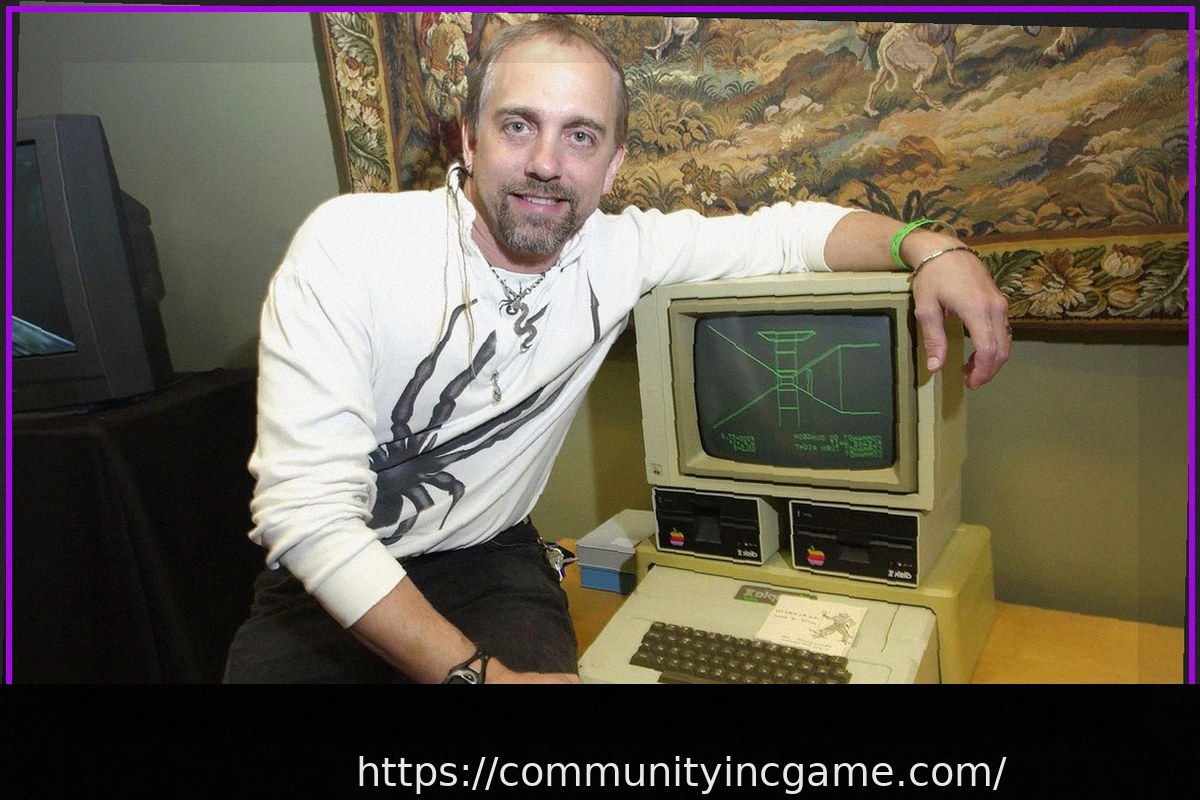
The image accompanying this reflection features one of these very legends: Richard Garriott, creator of the iconic Ultima series. He is pictured with an Apple II Plus, an influential early personal computer, and a copy of Akalabeth, his foundational game that predated Ultima. This visual serves as a powerful testament to the hands-on, pioneering spirit of the era they were already looking back upon with fondness and a sense of loss.