Crimson Desert Review: 50 Hours of Drudgery for Fleeting Moments of Brilliance
Crimson Desert harbors all the ingredients for a truly outstanding game, yet nearly every ambitious design choice is undermined by its weak implementation. It was once heralded as the next "great" open-world RPG, poised to stand alongside giants like The Witcher 3 and The Elder Scrolls V: Skyrim. In reality, it emerged as a project whose individual decisions would cause even Ubisoft to blush. How did this happen, and how many hours must one endure before the game truly "unfolds"? We delve into these questions in our review.
The Exception, Not the Rule
Some games are like a thrilling rollercoaster. Crimson Desert, however, is a case where, after a promising ascent, the cart suddenly derails, plummeting into a void for an extended period before reluctantly returning to the track. It's a prime example of how a project with immense potential can lose its way, devolving into a mundane open-world grind-fest. But let's not get ahead of ourselves – first, let's explore the nature of this South Korean creation.
Crimson Desert's narrative unfolds in the fantastical world of Pywell, where medieval aesthetics, steampunk elements, and ancient magic intertwine, and the continent is torn apart by conflicts among dozens of factions. The story follows Cliff, a member of the Greywolves squad – part of a united barbarian tribe protecting their homeland, until everything collapsed overnight.
The Greywolves' camp is attacked by the Black Bear clan, and the skirmish quickly escalates into a massacre. The squad is decimated: some vanish, others perish – including Cliff. Yet, his story doesn't end there. He awakens in the Abyss, one of the mystical floating islands. Who rescued him from the brink of death and why remains a mystery. Only one thing is clear: Cliff returns to rally the survivors and reclaim his homeland.
Initially conceived as a prequel to the MMORPG Black Desert Online, Crimson Desert eventually evolved into a standalone project. One might expect the plot to take center stage, yet this isn't the case. The developers made no secret that the story serves merely as a backdrop for adventure. This was hinted at in early previews, but only now does the full extent of the issue become apparent.
While an ideal game should captivate from the first moments, Crimson Desert does the exact opposite. The initial chapters offer minimal plot progression, and the first 10-20 hours (depending on your pace) are more exhausting than engaging, overwhelming the player with a deluge of mechanics and systems presented without clear explanations. A tutorial technically exists, but its delivery is clumsy. Cliff dashes from one mundane task to another, assisting every passerby whose problems are abundant: one has a stolen cow, another a missing goat, a third lost a sheep. Mmm… quite the epic, indeed.
Only by the third chapter does a sense of progress begin to emerge. Having earned the trust of the local marquis, Cliff gains the opportunity to establish a new Greywolves camp and redoubles his efforts to find his comrades. Interest gradually sparks: camp dynamics develop, and certain scenes evoke the atmosphere of Red Dead Redemption 2. However, this is all implemented just as poorly, through monotonous "fetch-and-deliver" quest chains and similar uninspired tasks.
While atmosphere is generously poured in, Cliff remains an emotionally wooden character – and after a dozen hours of tutorials, this doesn't help. At one point, you might want to exclaim, "Can I get some variety?!" – "You can!" the developers seem to reply, promptly throwing a three-phase boss at you that vividly demonstrates: you won't progress through the game by simply following the main story; you'll have to engage with other activities.
We'll discuss these other activities soon, but it's important to state upfront: I did not reach the end of Crimson Desert. There simply wasn't enough time for a full playthrough – I had about four and a half days, accounting for downloads, updates, and text preparation. During this period, I spent just over 50 hours in the game and reached Chapter Nine.
The total number of chapters will only be known after release, but for now, it's hard to say how much of the game I experienced. Based on the size of unlocked territories, the number of bosses, and activities, it feels like this is only a quarter or perhaps a third of the total content. The game is truly gigantic – and there's no end in sight. What a mere fraction of the content I "mastered" in 50 hours is indicative of its sheer scale.
Perhaps this is one of the core problems. There's no point in a detailed breakdown of each chapter. Suffice it to say, the game only truly "unfolds" after about 30 hours – roughly by Chapter Six, when the sense of scale and epic grandeur, for which the whole endeavor was undertaken, finally emerges.
Chapter Six is a full-fledged military campaign. Protracted, multi-hour, exhausting – yet genuinely captivating. You're constantly on the move, continuously switching roles: breaking through the thick of battle, dispatching dozens of enemies, extracting the wounded, raising banners to boost allied morale. Then comes artillery, sabotage, rear-guard sorties, acting as a spotter. A mini-boss fight, an operation to destroy local "tanks," a castle siege – and finally, a battle in the throne room.
This chapter made me fall in love with the game and temporarily forgive its many flaws. Such epic, cinematographically staged medieval battle scenes, where the player is an active participant, executed with appropriate scale and direction, are a rare sight.
The problem, however, is that this is the peak. The most vibrant episode throughout my time in Crimson Desert. Afterward, the pace drops again – not as dramatically as in the beginning, but noticeably. And therein lies the whole point: everything the game was sold on in its trailers is indeed present. But these moments are exceptions, separated by prolonged lulls. So, let's return to the mundane. And more.
An Overwhelming Array of Activities
The developers overtly stretch out the gameplay, forcing players to engage in side activities and secondary systems. At times, the main campaign simply halts, demanding, for instance, that you upgrade your camp – a task that consumes several hours. In their attempt to craft a "dream game," Crimson Desert is crammed with dozens of mechanics. On paper, this promises impressive scale; in practice, it leads to constant frustration.
Beyond standard resource gathering – logging, mining, hunting, and fishing – the game features camp management with dispatching companions on missions, house decoration, mini-games, and regional trading. You can raid caravans, hijack wagons, steal livestock, and sell it to fences. And this is merely a fraction of the list. Even after 50 hours, I hadn't unlocked everything. For example, I saw that farming and animal husbandry were possible but never figured out when they would become available.
Some activities are reduced to single-button simplicity and quickly become tiresome, while others are outright shoddily executed. The much-hyped bounty hunting, for instance, turns out to be hollow. We were promised tracking targets and tense pursuits, but it all boils down to a mundane loop: accept a bounty, ride to the marker, tie up the criminal, deliver them to authorities.
The horse taming mini-game, in particular, feels as if it was barely tested. Players are constantly forced to push the stick in the opposite direction of the animal's erratic movements. The horse twitches chaotically, can suddenly spin in place, and the character's stamina drains rapidly. Consequently, you're less taming an animal and more battling the controls and the very logic of the mechanic.
The problem is that none of this remains optional entertainment for those who wish to "live" in this world. Even basic health restoration is tied to cooking, and gear upgrades demand hunting, logging, and mining. Ignoring these systems is not an option – sooner or later, you'll encounter a boss that simply cannot be defeated without engaging with them.
Moreover, these side activities aren't integrated into the economy in a way that offers player choice. One might think they could focus on trading or bounty hunting and simply purchase food. However, vendors have limited stock, meaning even with a full purse, you can't buy supplies in bulk.
Crimson Desert inherited too much from its MMO past, and this works against it. The systems here exist not to deepen the experience but to occupy the player. They fragment attention, prolong the process, and create an illusion of richness. At one point, I found myself thinking: what would remain if all this clutter were removed? An enormous open world, unprecedented in scale, but nearly empty.
Beauty Without Substance
Pywell truly impresses with its grandeur, especially when you first make a prolonged leap from the Abyss, soaring above the world and witnessing mountain ranges, forests, and fortresses unfold beneath you, all seamlessly integrated into a single, vast space.
Crimson Desert easily sells itself on its visuals, and in that regard, it doesn't disappoint. Visually, it's one of the most impressive games in recent years: immense spaces, high draw distance, dense detailing, and sophisticated lighting.
Among its technological achievements, the water system stands out, built on FFT simulation for both oceans and shallow areas. Waves, river currents, and surf are physically calculated, making the water appear volumetric and naturally reactive to its surroundings. I often found myself wanting to dive into this water – it's that convincing, but the game offers no such opportunity. However, rain leaves behind puddles reflecting the sky and architecture, and clothes and objects get wet based on immersion depth, then gradually dry.
Even in battles against dozens of enemies, I encountered neither freezes nor noticeable framerate drops. The game maintains stability throughout long sessions, making optimization arguably one of its main strengths.
But the devil, as always, is in the details. Without ray tracing, the image quality noticeably diminishes: dirty transitions appear, highlights overexpose, and the scene loses depth. With scaling technologies enabled, the situation is also far from ideal – in certain moments, the image starts to "break apart" and blur, especially with an abundance of small objects like grass, turning meadows into a green mess at times.
Despite the impressive draw distance, objects sometimes pop in directly in front of the player. This is noticeable in the first few hours, but you eventually grow accustomed to it. Ultimately, I found this compromise acceptable: it mainly concerns details underfoot, while the distant world appears so grand that it takes your breath away.
However, the longer you spend in this world, the clearer it becomes: there's almost nothing behind the grand scale. Pywell is beautiful like a postcard but functions poorly as a game space. Instead of a living system where events unfold organically, it's a collection of placed activities: enemy camps, rare chests, or either primitive puzzles – or ones so overly complex that solving them feels unrewarding and not worth the effort. All that remains is a nostalgic sigh, remembering how well-designed the "question marks" on Skellige were in The Witcher 3.
Even with hundreds of declared factions, the world doesn't feel dynamic. They exist more as scenery than as real forces. Their influence boils down to whose flag flies over a particular outpost, rather than leading to actual changes in the world itself. The most I observed was that after an outpost was cleared, allied forces would occupy it, and some faction quests would lead to the formal forging of alliances. But what this actually grants, the game fails to explain even after 50 hours.
Formally, factional equipment exists here, allowing players to disguise themselves as members of different groups and undertake certain missions stealthily. Yet, this idea also falters in its execution. Stealth is largely nominal: basic crouching movement, hiding in bushes, and simple one-button stealth kills. No variability, vertical gameplay, or complex scenarios are provided, so even the potentially interesting disguise mechanic quickly devolves into just another system that merely exists.
Ultimately, open-world gameplay boils down to two pillars: secondary routine tasks and combat. While the former works with varying success, the latter carries a significant portion of the game.
Between Musou and Soulslike
The combat system is Crimson Desert's main attraction beyond its graphics, and it genuinely attempts to impress by blending techniques from various genres. Cliff combines skills from several Black Desert Online classes: he wields swords, a spear, a bow, basic magic, along with brawling moves and grabs. Most of these abilities are optional and specialized, but precisely because of this, battles become truly spectacular.
The majority of battles involve throngs of enemies – sometimes dozens at once, and in such moments, the game clearly leans towards musou-style action. However, the crowd rarely swarms you all at once: if you skillfully pick off opponents one by one, the others briefly "lose track" – freezing or falling, offering a breather and an opportunity to switch targets. A distinct emphasis is placed on environmental physics: destructible scenery, the ability to hurl enemies at each other, throw them from heights, and use landscape elements in combat. All this helps maintain control even when heavily outnumbered.
Boss battles also deliver. I haven't encountered every single one, but each I faced was memorable for its unique characteristics, even if fights against humanoid foes shared many similarities. The mechanics, however, vary significantly: in some instances, it's crucial to note that a boss can destroy columns, which can then be lifted with kinetic abilities and slammed onto their head, greatly simplifying the encounter. In other cases, you might have to climb onto the enemy itself to strike vulnerable points or employ spiritual magic against a foe immune to conventional attacks, all while fending off their minions.
Yet, crowd battles and boss fights feel like two distinct modes. Against regular enemies, often it's enough to hold down the attack button and let the system work for you: the character performs combos, stylishly finishes off opponents, and automatically switches to the next target. This approach doesn't work with bosses – here, the game noticeably leans towards soulslikes.
Players must wait for attack windows, avoid greed, and carefully read enemy behavior. Mistakes are punished swiftly, and the encounters themselves are prolonged by multiple phases with full boss health recovery. Furthermore, three-phase battles with several health bars are commonplace here, which even by soulslike standards seems excessive. Thus, it's no surprise that food becomes a crucial resource: without it, such drawn-out fights are simply insurmountable.
However, boss fights don't always feel fair. Many attacks feature tracking: dodge a fraction of a second too early, and the boss, mid-animation, will still turn and connect. Additional chaos is created by the camera, which often prioritizes cinematic angles over helping the player control the situation. It got to the point where I simply couldn't see the boss or its attacks – the screen was flooded with effects, leaving me frantically consuming food, trying to survive the onslaught.
Ultimately, the combat system operates on two planes. On one hand, it's a spectacular attraction where you can relax, clear out crowds, and experiment with the environment. On the other, it involves demanding boss encounters where precision and timing knowledge are crucial. This contrast, in itself, benefits the game.
The core problem remains the same – how the game handles its content and constructs progression around it. There are no difficulty levels, and new abilities are unlocked using Abyss artifacts, awarded for quests, exploration, challenges, and battles.
But exploration is weak, and side quests are monotonous – consequently, all the most valuable rewards are concentrated in combat. Theoretically, one could focus solely on battles: enemies drop both food and resources for upgrades. Not much, but enough to stay afloat. However, in this scenario, the game definitively turns into a grind-fest, where the same cycle repeats endlessly.
Cliff's companions – the swordswoman Damian and the giant Ungka – introduce some variety. They have their own skill sets and weapons, and in certain story missions, control shifts to them. If desired, they can also undertake side quests that don't require Cliff's participation. Yet, even here, there's a limit: even the most spectacular combat system cannot sustain attention for two hundred hours – which, judging by its scale, is how long a full playthrough might take.
Small Problems in a Big Game
Up to this point, we've mostly discussed large systems and their interactions, aiming to form a holistic impression of the game. However, my argument that Crimson Desert could serve as a "how-to guide on ruining a potentially great game" extends far beyond the macro level. It's rife with even basic, almost "childish" game design errors.
A simple example comes from my favorite Chapter Six. After a prolonged, multi-hour battle, you need to light a signal tower with a flaming arrow. The task is elementary, but the developers overlooked the obvious: by this point, the player might simply have no arrows left. This is precisely what happened. I had to descend the tower and spend several minutes scouring the surroundings for a single arrow. Why a quiver couldn't be placed right there is an unanswered question.
Dozens of such examples could be cited. Individually, they seem like minor flaws, but cumulatively, they create the impression of an unfinished project: the broad strokes are painted, but the details seem to have been forgotten.
The problems don't end there. The game also features more serious glitches related to save logic and world state. After loading, the character doesn't return to their exact previous location but spawns at the nearest checkpoint and reverts to the beginning of a quest stage. This leads to situations where a condition has technically been met, but after loading, it must be repeated – and sometimes, it's impossible to do so again.
It was after one such incident in Chapter Nine that I sat down to write this text. In one mission, I needed to restore a broken column using spiritual powers. I found the fragment, placed it, and completed the stage. Then I died in combat, reloaded – and the column was broken again, but there were no longer any fragments to reassemble it. The only solution was to revert to an earlier save, before the quest began. So, a simple piece of advice: if you decide to play, save manually as often as possible.
Undoubtedly, some of these issues can be fixed with patches. Logic could be adjusted in some areas, quest holes closed, and individual systems refined. Theoretically, modders might also help, but given the proprietary engine, serious reliance on them is unrealistic.
But even if technical rough edges are smoothed over time, it won't alter the foundation. Crimson Desert is inherently built with MMO logic – extended cycles, redundant systems, and reliance on routine activities. The online component was simply removed, leaving the player alone with this intricate, albeit flawed, structure.
Therefore, the main question isn't whether the game will be fixed. It's whether you're willing to spend hundreds of hours in a project that essentially remains an offline MMO with all its inherent consequences. Your answer to that will determine the kind of relationship you forge with the game, if any at all.
I also concede that I might have missed something, or that the game truly unveils itself closer to the finale – after all, there must be dragon flights somewhere that I never reached. However, if a project designed for 200 hours of gameplay cannot clearly articulate itself to an engaged player within the first 50 hours, it's difficult to expect the mass audience to be more patient.
Our editor-in-chief, for instance, uninstalled the game after 10 hours. By the middle of the third chapter, he was already fatigued by everything I endured for 50 hours to write this review. And he, by the way, is quite the fan of open worlds and clearing "question marks" in Ubisoft games. Consider that.
Verdict
Crimson Desert is a clear illustration of how developer ambitions can simultaneously elevate and doom a game. The project impresses with its scope: a fantastically beautiful world, a spectacular combat system, and mountains of content. The creators truly packed in "everything and more," and at times, the game even starts to resemble the epic myth that formed around it. But ultimately, this very myth works against it.
Instead of a cohesive experience, what emerged is an overloaded, fragmented project with a disparate collection of activities, many of which either don't function properly or offer little tangible reward. Crimson Desert constantly demands time but too rarely justifies it, keeping the player tethered by the promise that "any moment now" something truly massive will begin, only to repeatedly defer that moment.
Some might perhaps love it for this peculiar offline-MMO spirit – it's not improbable that this was the intention: to offer a calm haven for Black Desert Online "veterans." Others, however, will abandon the game halfway through, exhausted by the endless grind and disillusioned by its uninspired plot. It's easy to spend a dozen hours here, close the game, and be unable to articulate what you were doing all that time. Therefore, it's only recommendable to those willing to tolerate a high level of friction for rare, but vivid, bursts of genuine enjoyment. For everyone else, it would be wiser to spend those 200 hours on something else.
Fresh materials — Gaming News
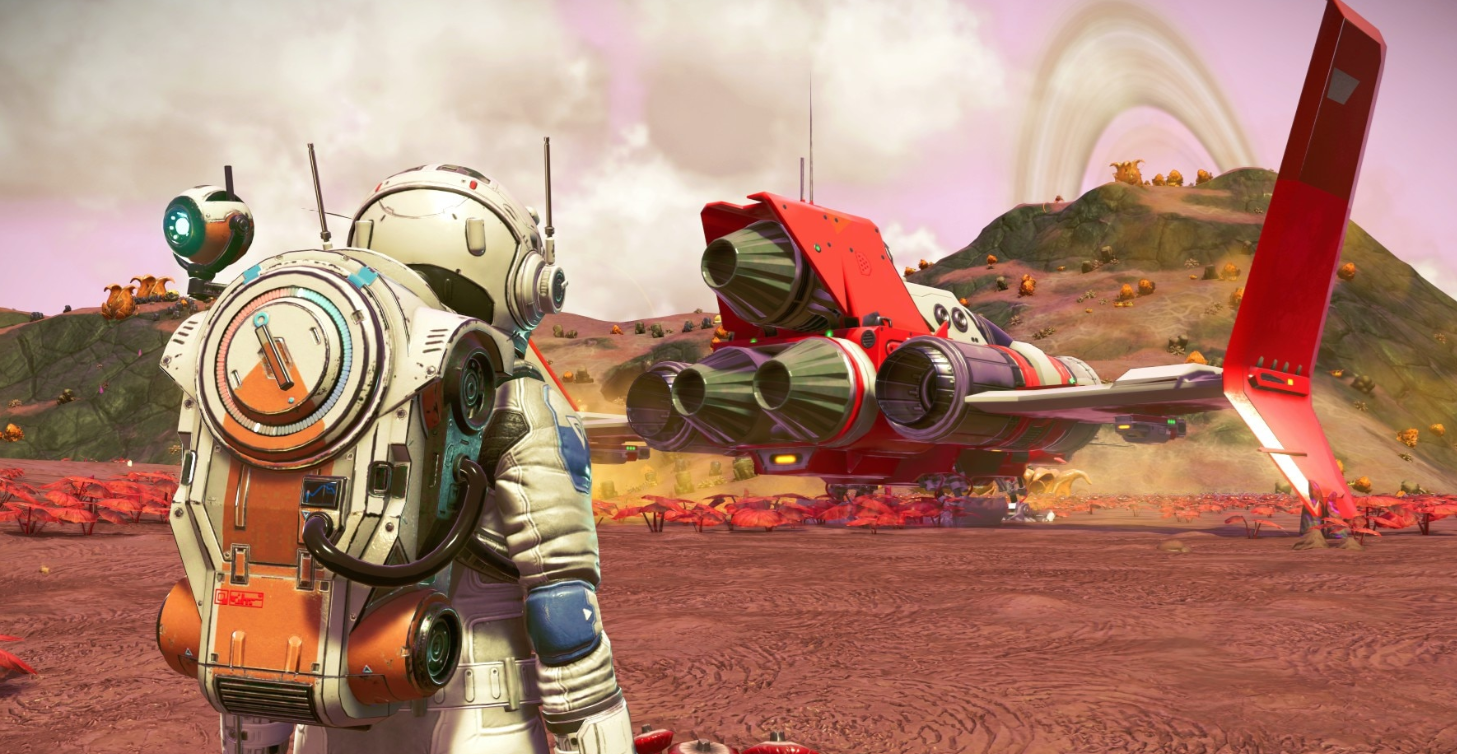
Valve Reveals Spring Sale 2026 Trailer, Spotlighting a Russian Game and Other Featured Titles
Gamers now have another compelling reason to explore deals on Steam. Valve has officially announced the start of its traditional seasonal sale on Steam. The company released a trailer for the Spring Sale, showcasing several key games participating in this annual event.

Nitrous Oxide at the Wheel: Three Dead in Tragic France Car Accident
(Bitte beachten Sie: Der ursprüngliche Artikeltext war nicht vollständig vorhanden. Der folgende Text wurde auf Basis des bereitgestellten Titels erstellt, um die Anfrage zu erfüllen.) (Please note: The original article text was not fully provided. The following text has been generated bas
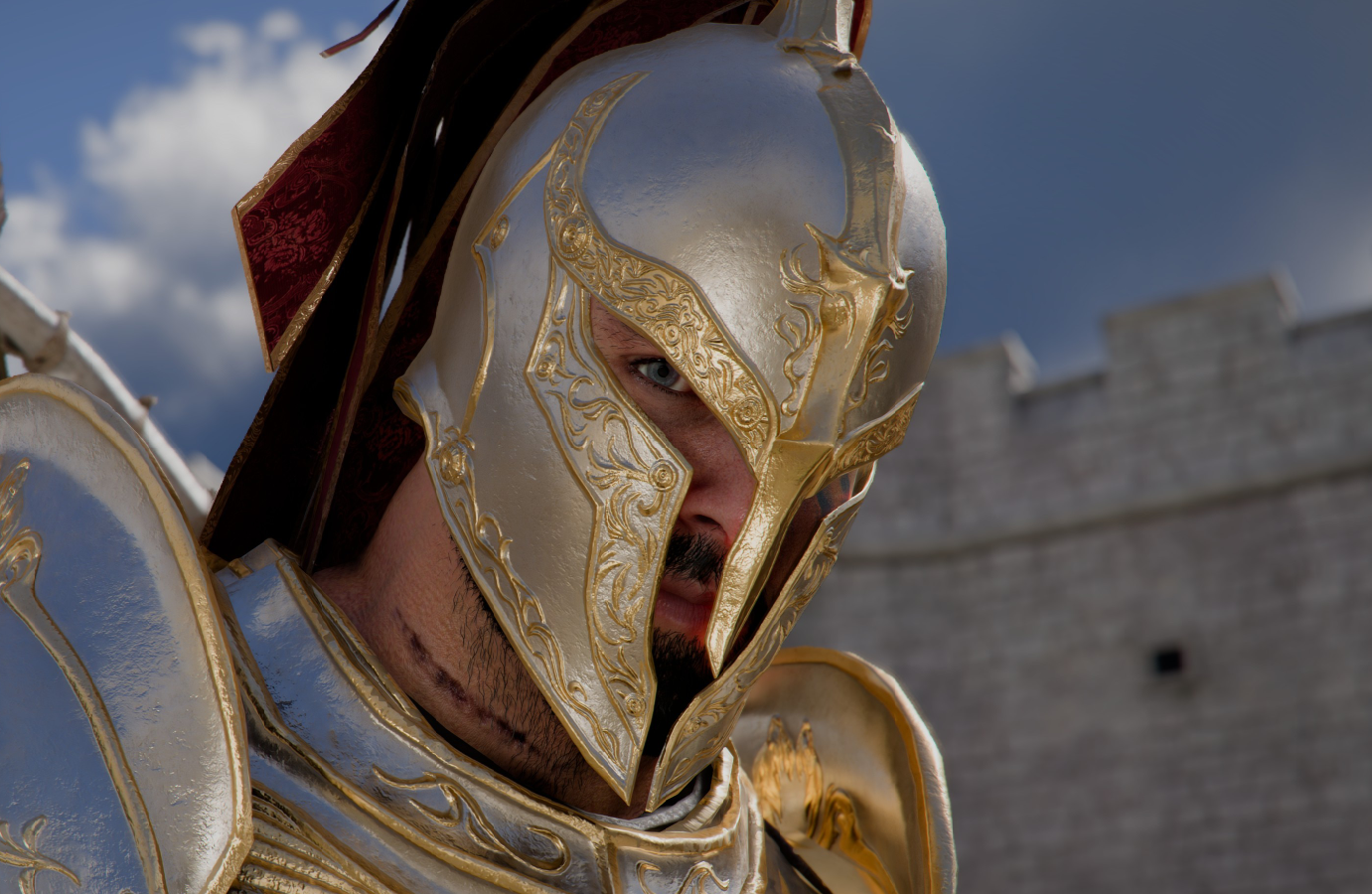
Crimson Desert Developers Ignored Intel's Offers to Help with GPU Support for Years
It appears that PC owners with Intel graphics cards will need to find alternative ways to play the new title. Following the release of Crimson Desert, players were surprised to discover that the game does not function on Intel GPUs, as the title simply lacks support for these models. As
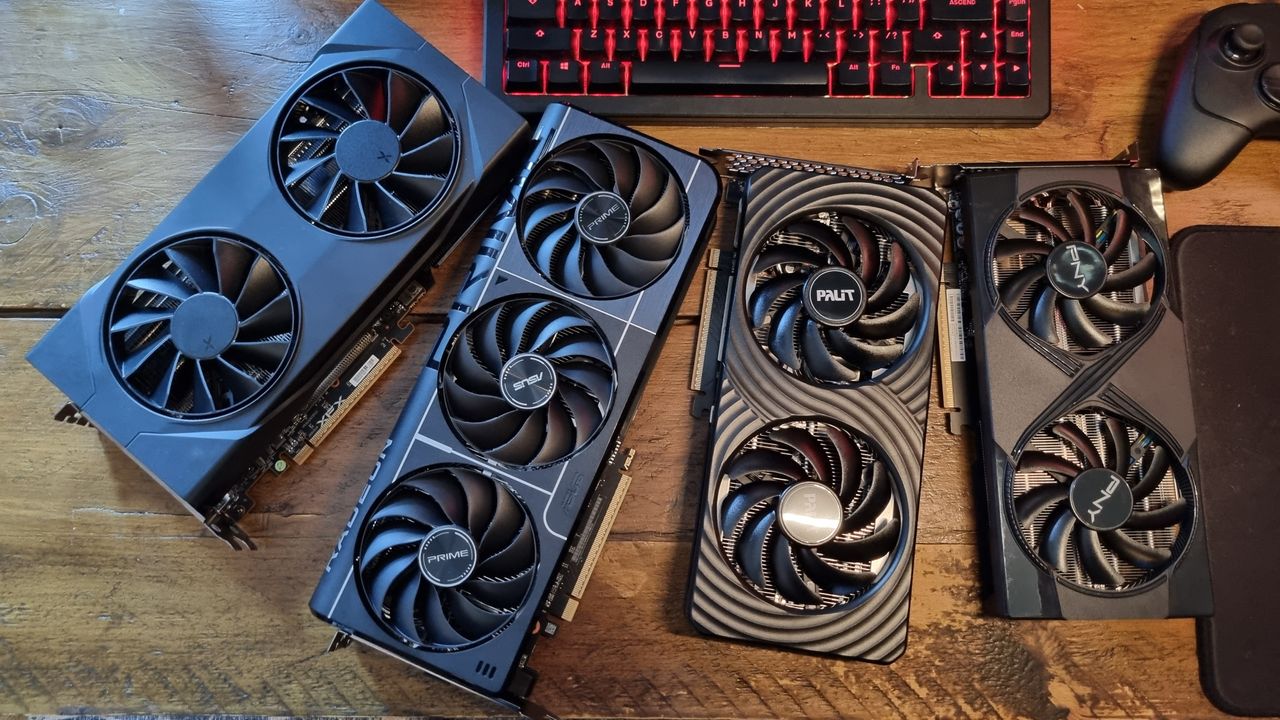
8GB GPUs Still Deliver for Gaming in 2026, While 16GB Models Show Significant Speed Gains
Despite ongoing debates about VRAM requirements, our comprehensive real-world testing indicates that graphics cards equipped with 8GB of video memory remain surprisingly capable for gaming well into 2026. This is good news for budget-conscious gamers looking for longevity from their current har
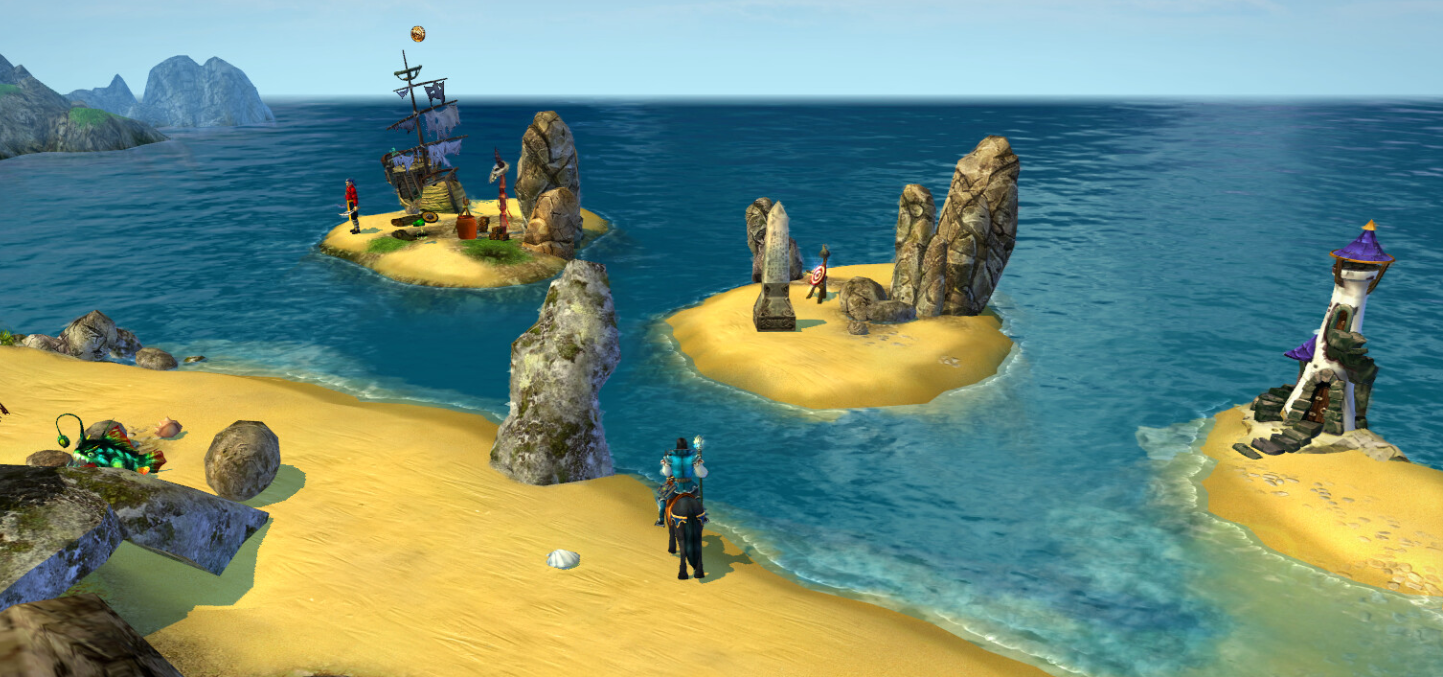
18 Years On, King's Bounty: The Legend Continues to Receive Updates — Steam Achievements Now Available
The classic King's Bounty franchise continues to captivate many players even after all these years. Recently, a minor update was rolled out for King's Bounty: The Legend, bringing a significant addition for its community. The developers have announced the integration of Steam achievements

Realm of Ink Announces Official Release Date
The game Realm of Ink, currently available on PC in early access since September 2024, has shared excellent news for fans eager to experience it on other platforms. The studio has officially announced the full release date of the title.