

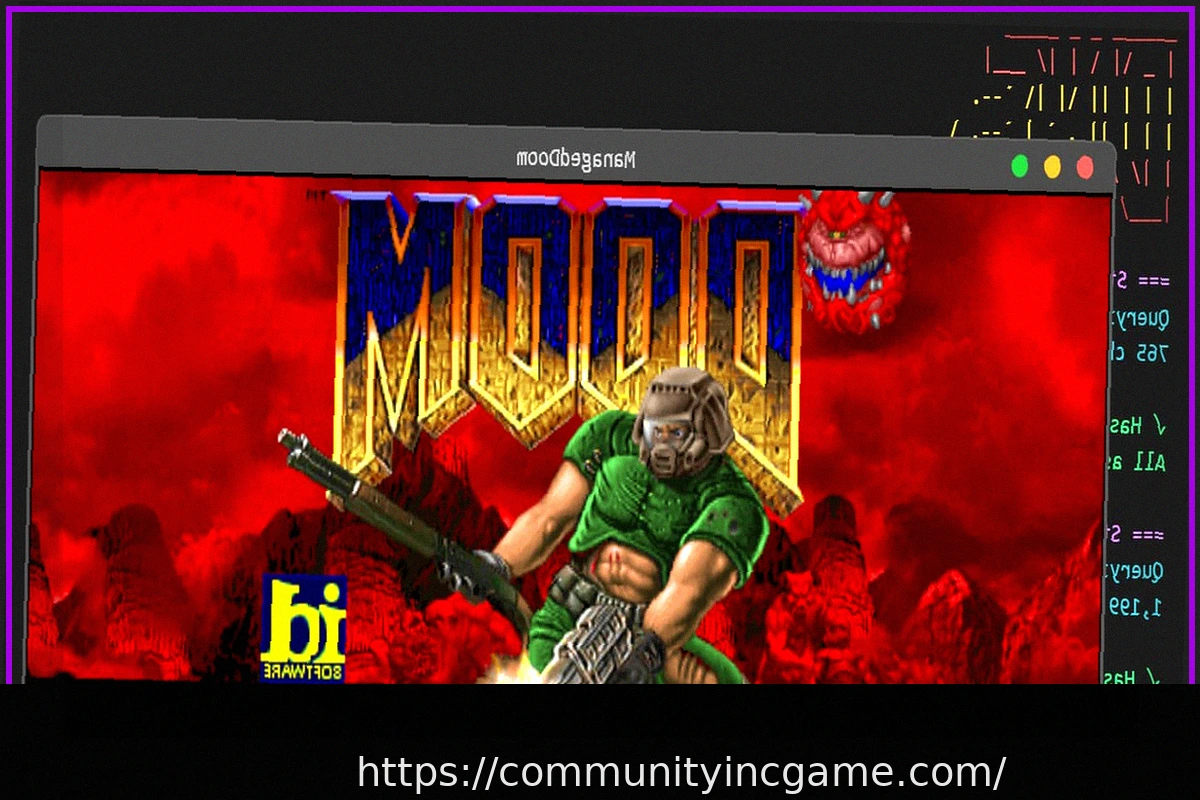
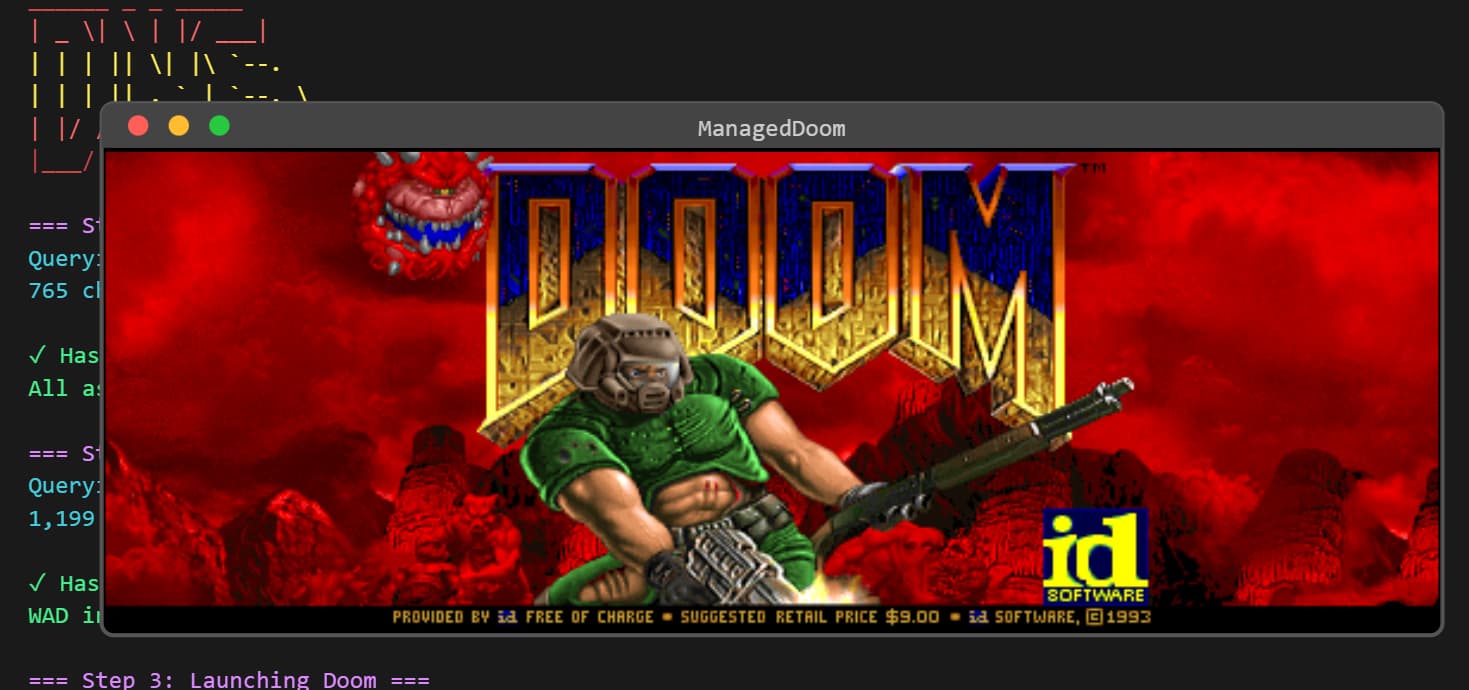
The legendary game DOOM has once again showcased its remarkable versatility by being launched in an incredibly unconventional manner. Developer Adam Rice challenged himself to explore whether it was possible to run DOOM solely by utilizing the Domain Name System (DNS).
His ambitious concept involved loading the entire game engine and all its assets directly from DNS TXT records, each capable of storing approximately 2,000 characters. The objective was clear: to fully load the game into RAM, bypassing disk files, installers, and even downloads, using only public DNS queries.
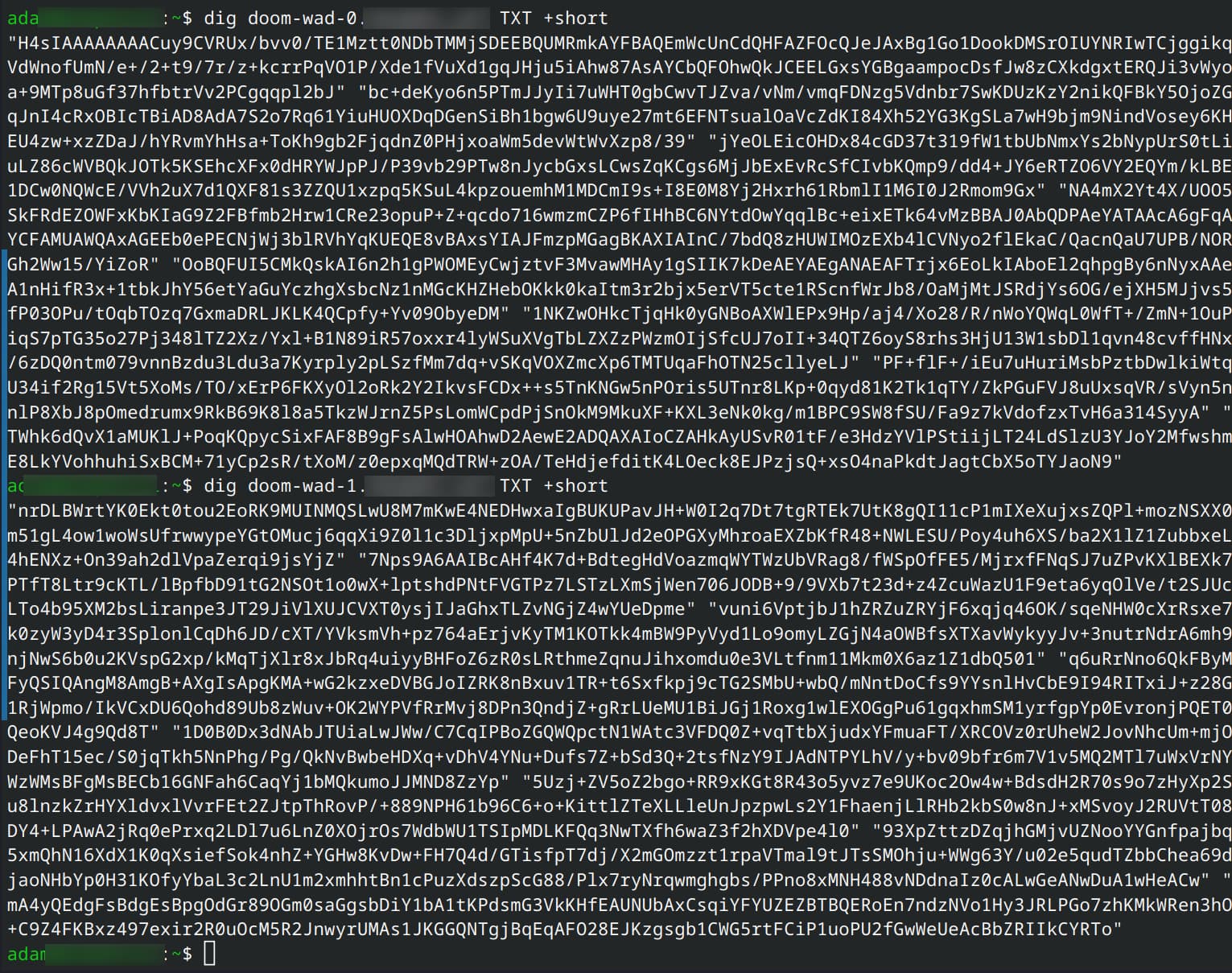
To achieve this, Adam Rice needed a DOOM port written in a language that could be loaded into Windows memory without creating any files. He discovered that C# is frequently employed for such purposes and began searching for an existing solution. This led him to “managed-doom,” a pure C# port of the original DOOM engine. Managed .NET assemblies can be loaded directly from raw bytes, eliminating the need for files on the file system. This breakthrough paved the way for loading the compiled game code from DNS and running it without any disk access.
Adam Rice’s ingenious plan proved successful, and he managed to launch DOOM. It’s worth noting that to conserve space, sound was entirely removed from this version of the game.
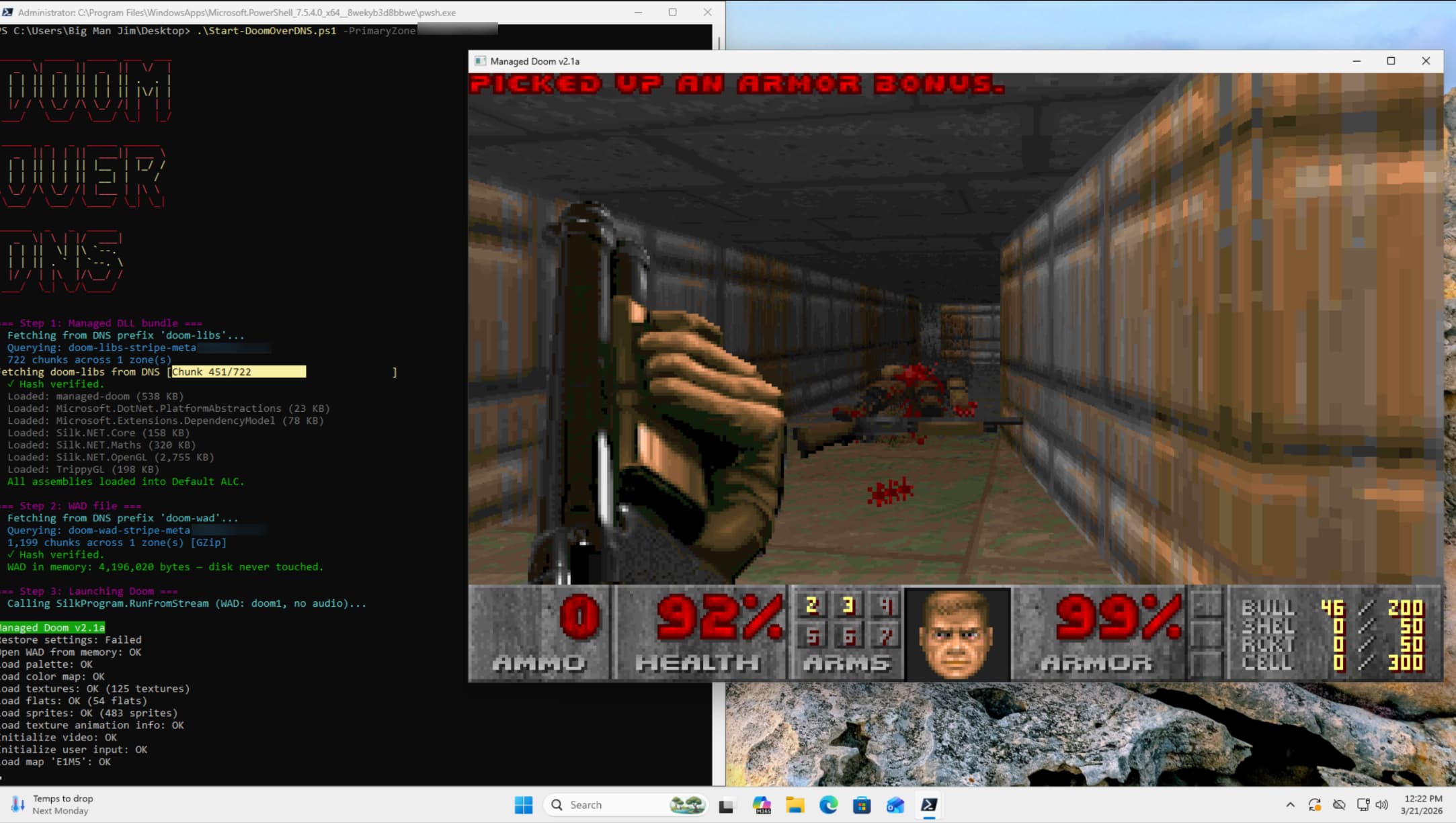
Adam Rice’s project is available for further exploration on GitHub.